Tuesday, May 4, 2010

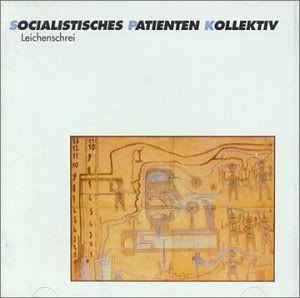
SPK, LEICHENSCHREI


Thermidor, 1982; reissued by Mute; available

14 tracks, 43:18

While I'm not the first to review it (see http://thetintinnabularium.blogspot.com/2009/02/spk-leichenschrei-1984.html , for example), I feel the need to assure everyone that this is indeed one of the finest early industrial releases.

Australia's SPK* were one of the first industrial bands. For this nightmare of an LP, SPK were Oblivion (a.k.a. main instigator Graeme Revell; various instruments), NE/H/IL (Neil Hill; electronics), and (James) Pinker (percussion). LEICHENSCHREI was their second LP, following some intense singles** and the primitive INFORMATION OVERLOAD UNIT album. Members allegedly worked in the mental health field, a theme that carries over to the music. A heavily percussive mass of sound is the result, with disturbing soundbites and samples weaving in and out of the mix. It's all very structured and rhythmic compared to most contemporaries, but that's the ONLY concession to accessibility. This is every bit as disturbing and grotesque as Throbbing Gristle, with the prominent rhythms doing little to blunt the impact of the other sounds and noises. Well, pehaps it's not COMPLETELY devastating; things calm down slghtly towards the end of the album. Highlights are hard to pick out, and the initial LP release was divided into two sides with no distinct tracks (one side ended in a lock groove). With that in mind, while it's harrowing, this is best experienced from start to finish. Be warned it's still every bit as paranoia-inducing as it ever was, and definitely be sure you're in the right frame of mind before playing this. I'd hate to see what could happen otherwise.

It's worth mentioning SPK's DESPAIR video here. This is essentially concert footage mixed with some truly nightmarish imagery. The parts with Revell tearing chunks off a skinned horse's head and chewing them onstage is one of the less disturbing images on DESPAIR, and while it's not grosser than many FACES OF DEATH-type collections, the atmosphere is absolutely nerve wracking and I've never been able to stomach the whole thing. If you think you can handle it, watch it, but be absolutely sure you know what you're getting into.

Revell would continue SPK with a revolving cast (plus his wife Sinan), eventually lapsing into fairly unexciting synthpop*** before disbanding. He currently does soundtrack works for major motion pictures, which isn't as surprising as it might seem. Hill took his own life two years later. Pinker appeared with a few other bands (most notably Dead Can Dance) and is apparently still active in music.

*For what it's worth, SPK stood for Sozialistisches Patienten Kollektiv for this album; the "Socialistiches" on the reissue is a misspelling. On other releases it's spelled out as Surgical Penis Klinik, SoliPsiK, SePpuKu, and System Planning Korporation.

**The compilation AUTO DA FE collects most of these tracks (including the particularly vicious "Slogun") along with some of the better synthpop-era tunes.

***With the exception of the excellent ZAMIA LEHMANNI: SONGS OF BYZANTINE FLOWERS, which shows Revell and company succeeding at ambient music.

Monday, May 3, 2010

Faust, FAUST IV


Virgin, 1973; available, and the 2007 remaster comes with a bonus disc (see review)

Disc 1 (or the album itself): 7 tracks, 44:19. Disc 2: 9 tracks, 57:04.

Faust surely need no introduction here, so let's get to the facts! For this reissue, Virgin have put FAUST IV proper on the first disc while loading the second with outtakes, alternate versions, and a Peel session. FAUST IV never really got the same degree of admiration that FAUST, SO FAR, and THE FAUST TAPES received; hopefully this set will change that! Containing such grade-A pieces as the noisy epic "Krautrock" and the moody VU-esque "Jennifer", this isn't Faust selling out or going for mainstream acceptance, no matter what reviews at the time claimed. Certainly "It's A Bit Of Pain" (which is a perfectly sweet folky tune interrupted by loud atonal synth buzzing), the folky "Läuft... Heisst Das Es Läuft Oder Es Kommt Bald... Läuft", and the bizarre proto-new wave/ska hybrid "The Sad Skinhead" are more listenable than anything off the first album or THE FAUST TAPES, but that's overlooking the fairly accessible SO FAR. In fact, not a single one of these seven tracks is unremarkable, and any of them COULD have been on an earlier album. That alone makes FAUST IV worth revisting, but the bonus disc REALLY seals the deal. The first three tracks are a Peel session from 1973, featuring a version of "Krautrock" along with the jazzy "The Lurcher" and a delightful piece of avant-pop called "Do So". While this IS available elsewhere, it's nice to have it with other period rarities. Those rarities include a previously unreleased "Piano Piece" which by itself would have made a truly lovely bonus with its swirling percussions and abstract vocal touches (plus the gorgeous piano, of course!). The rest of the disc consists of alternate versions, some of which are radically different from the released versions. For example, the extended version of "Just A Second (Starts Like That!)" stretches the two-minute original to ten and a half minutes of burning psychedelia. The other really notable alternate is "Jennifer:, with emphasis on the guitar instead of the bass and the ending trimmed. It's arguably better than the version that ended up on FAUST IV. If you already have the first three and weren't sure about this one, trust me, it's every bit as essential. If you're new to Faust, this might even be a good place to start. Oh, and once again: DEFINITELY go for the double-disc edition and not the single-disc!

Saturday, April 24, 2010

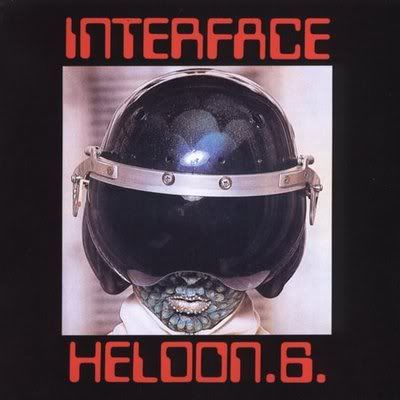
Heldon, INTERFACE


Cobra, 1978; reissued by Spalax and Cuneiform; available

CD: 8 tracks, 51:28

It was only a matter of time before Heldon got reviewed here. Essentially the brainchild of guitar/synth wizard Richard Pinhas, Heldon was one of many French acts that were oddly similar to krautrock. Named after a town in Paul Spinrad's THE IRON DREAM, the project is definitely Fripp worship of the highest quality; in other words, the influence is there, but Pinhas remains VERY distinctive in his approach. INTERFACE is Heldon's sixth album (in three years of existence!), and it was recorded with a core trio of Pinhas, long-term drummer/multi-instrumentalist François Auger, and keyboardist Patrick Gauthier. This is usually considered Heldon's strongest configuration, and with good reason. Long-term bassist Didier Batard shows up on a track as well. Song-wise, this finds Heldon at the peak of their creativity. The three short, almost disco-esque "Soucoupes Volantes" tracks on the original A-side are still astonishing electronic pieces that haven't aged one jot. The two longer A-side pieces, "Jet Girl" and "Bal-A-Fou", are equally impressive. The two-part "Jet Girl" sounds particularly grand, slowing down and changing slightly about halfway through while maintaining an evil pulse midway between motorik and space rock. The original B-side was occupied by the nineteen-minute title track, and what a track! Starting with minimal drum and synth atmospheres, Pinhas' piercing guitar eventually swoops in for the kill. Not a minute is wasted, even if the final bluesy notes are a little out of place. For the Cuneiform CD, two extracts of a live performance of "Interface" are sandwiched between the original sides. These snippets isolate particularly ferocious live takes on the piece, and they don't disrupt the flow whatsoever. While most Pinhas and Heldon releases are worthwhile, INTERFACE is a personal favorite and an excellent entry point.

Sunday, April 18, 2010

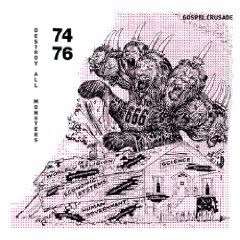
Destroy All Monsters, 74 76


Father Yod/Ecstatic Peace!, 1994; reissued by Compound Annex; available but limited

Three discs, each with its own title. Disc 1 ("Gospel Crusade"): 25 tracks, 71:19; disc 2 ("Crying In Bed"): 27 tracks, 69:11; disc 3 ("To The Throne Of Chaos Where The Thin Flutes Pipe Mindlessly"): 24 tracks, 66:54

When mentioned at all, Destroy All Monsters are generally considered a post-Stooges Ron Asheton project. With all respect due to the late Mr. Asheton, DAM were actually past their innovative prime by the time he joined! The original quartet of Mike Kelley, Cary Loren, Niagara, and Jim Shaw assembled in winter of '74 with the intent of deconstructing rock music. Inspired in equal parts by European experimentation, proto-punk a la Stooges and MC5, and the outer realms of jazz, they created a truly unique sound that can't readily be assigned to a specific era. That being said, ths box does indeed cover the years 1974 to 1976; there's no indication as to whether the material is presented chronologically, but that's okay. Sure, there's a few fairly straightforward proto-punkers featuring Niagara's sultry vocals like "Vampire", "T.H. Queen" and "You Can't Kill Kill"; also, the apparently live version of "Shakin' All Over" is surprisingly faithful to the original. Don't be fooled, though; these concessions to accessibility are few and far between. The majority of these tracks are pure experiments in sound, whether it's the nightmarish tape manipulations of "Mom's and Dad's Pussy" or the self-explanatory "Drone" and "Crunch Drone". There's also room for dubby sound explorations and primitive drum machine exercises, along with nearly every other experimental style you can think of. It's almost impossible to pick standouts, since there is a LOT of material to pick through and even the lesser tracks are impressive with enough repeat listens. Keeping in mind that this predated punk and industrial as genres (to say nothing of later developments such as no wave), this is incredibly ahead of its time, and it's even more amazing to think none of this got released until 1994! About the only comparable contemporaries were Cabaret Voltaire and Throbbing Gristle; there are definite similarities, but honestly all three were highly original outfits that started around the same time and were unaware of the others until later. In DAM's case, hardly anyone outside of the group itself was aware of their innovations until years later. Needless to say this comes highly recommended. While the reissue isn't as fancy as the original box, the music is all intact and it IS available again, and shouldn't that matter the most? Around '76 most of the members left except for Niagara, who continued Destroy All Monsters with new members (most notably Asheton and ex-MC5 bassist Michael Davis). This period of DAM is enjoyable, but don't expect it to sound a jot like the box. The original lineup has basically reformed and tours/records semi-regularly in their original proto-noise style.

Read the liner notes for this set (written by Mike Kelley himself) here: http://www.mikekelley.com/DAMthrone.html . http://www.mikekelley.com/compound.html has 74 76 for sale along with other DAM/Kelley-related products.

Sunday, April 11, 2010

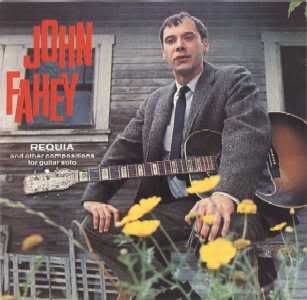
John Fahey, REQUIA


Vanguard, 1967; available

8 track, 44:46

The late John Fahey has always been one of my favorite musical enigmas. Mostly kown for redefining folk (and hating hippies and New Age!), he had a surprisingly adventurous side. REQUIA (subtitled AND OTHER COMPOSITIONS FOR GUITAR SOLO, which isn't entirely accurate) is one of his best early forays into experimental turf. The A-side is typical Fahey: raga/blues/folk fusion guitar excursions played with flair and that distinct Fahey touch. The long "Requiem For Rusell Blaine Cooper" and "When The Catfish Is In Bloom" are particularly delightful, and "Requiem For John Hurt" is pretty good too! The B-side is where it gets weird. The four-part "Requiem For Molly" dominates this side, and it calls Fahey's distaste for psychedelia into question. This epic finds Fahey accompanied by "special effects", IE, musique concrete! Bits and pieces of old blues records, lions roaring, seals barking, public speeches, and other found sounds float under Fahey's irresistible guitar. Oddly enough, the melody for "Part Three" is actually "California Dreaming"! The Mamas and the Papas aren't credited, but there's no mistaking it; in the end that's okay since it actually adds to the collage effect. The effects never really match up with the playing, and Fahey would complain later that he was drunk at the session and the tapes weren't properly cued. However, Fahey was also his own harshest critic, and the piece still sounds remarkable today despite its flaws. The album closes with the brief yet delightful "Fight On Christians, Fight On", leaving the listener wanting more. Luckily, there is a lot more! GUITAR VOL. 4, THE YELLOW PRINCESS, and THE LEGEND OF BLIND JOE DEATH are especially good early works that mix brave experimentation and gorgeous acoustic playing, while the late-period CITY OF REFUGE, THE MILL-POND, and WOMBLIFE would appeal to far more adventurous listeners with their severely dark and abstract nature (the former has particularly aggressive notes by Fahey; I repeat, he REALLY didn't like hippies!). The one-off collaboration with Cul De Sac, THE EPIPHAY OF GLENN JONES, is also quite listenable and interesting. There really isn't a bad Fahey album, but REQUIA is definitely a nice cross section of the man's many sides and is probably the best introduction to his marvelous catalog.

Monday, March 1, 2010

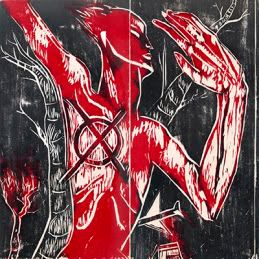
Circle X, CIRCLE X and PREHISTORY


Originally self-released with no label name, 1979; reissued by Dexter's Cigar; available but act quick

4 tracks, 11:35


Index, 1983; reissued by Blue Chopsticks; available

6 tracks, 35:57

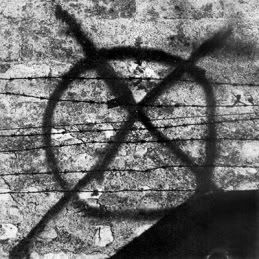
These two releases were recorded within two years of each other by the exact same lineup; both were also reissued on sublabels of Drag City owned by David Grubbs. That's where the similarities end. Circle X (originally, the symbol on the EP WAS their name) have a fairly complicated history. They originated in Louisville, moved to New York, moved again to Dijon, and then relocated back to New York! Loosely associated with no wave, they really were always in a universe of their own. For these two early releases, Circle X was David Letendre, Rik Letendre, Tony Pinotti, and Bruce Witsiepe.

The debut EP originally was completely unnamed except for the cover symbol. It was recorded in Dijon while the band members were living there. The Letendre brothers are credited with guitar and "drum", while Pinotti does vocals and Witsiepe plays guitar. You hardly notice the lack of bass at first; the guitars are gnarled and nasty, and one guitarist tends to play twisted noise rock riffs while the other provides either storms of distortion or feedback drones. The drumming is fairly varied, with each song having a different style. Pinotti brings a different vocal idea to each song as well. The original A-side consisted of the almost-straightforward "Tender" and the hardcore-with-an-arty-twist "Albeit Living". The former sounds uncannily like the FAR later Laughing Hyenas with its sludgy groove and hoarse screaming/shouting, while the latter begins with multiple voices speaking the lyrics before launching into a ferocious little rocker. The other side was even further out there: "Onward, Christian Soldiers" predicts the kind of slow and heavy noise rock that Swans et al would soon explore, and "Underworld" features a bagpipe-esque drone, Pinotti's alternately spoken and shouted vocals, and a wonderfully processed guitar that sounds like a malfunctioning amplifier playing itself. It's all at least a few years ahead of its time, and it's also the most no wave thing they ever did. An auspicious debut, to be sure, and very much worthwhile.

Two years later, the band was back in New York. The lineup was intact, but the sound sure wasn't! The newly rechristened Circle X Internationale had gone from noise rock to industrial. They expanded to using tapes, further percussion, and even a bass on the opening "Current". The sound is much spacier and loop-based than aggressive; the guitars weave in and out of the mix, with atmospheric percussion providing most of what little structure there is. Actually, the production is very close to the spectral qualities of dub, with heavy usage of reverb and delay. Pinotti has also changed his vocal style, mostly going for a much more pained and haunting tone midway between a sigh and a moan. With these musical surroundings, his voice is a perfect fit. While all six songs are amazing, the definite standout is a remake of "Underworld". Retaining the basic structure of the original while more than doubling its length, this version features Pinotti's vocals getting basically the same treatment as the guitar on the original to great effect, and guest Jason Huang's eerie organ helps to make it much more atmospheric and incredible than the already impressive first version. The spooky bass-driven "Current" and oddly catchy "Prehistory Part II" are particularly great as well, but this is definitely a completely solid album. Curiously, this wasn't released until '83, two years after it was recorded; maybe no label was ready for it yet. If you can only get one Circle X release, this should be it.

Both of these are available at Drag City's webstore, http://www.dragcity.com/store . Please be advised that most Dexter's Cigar titles are long out of print, and the Circle X EP may follow suit soon. PREHISTORY should be easily acquired. Either way, these are ten EXCELLENT songs without a drop of filler, so maybe just grab both and sleep easier!

Circle X took an extended hiatus until the early '90s, when they reformed minus David Letendre. They proceeded to make music with a revolving cast of drummers until 1995, when Bruce Witsiepe passed away. The out-of-print CELESTIAL from '94 is pretty interesting. Even better are the 10" on Fractal and the "33/Puerto Rican Ghost" single. The former features a live show from '79, a previously unreleased outtake from the same year, and two unreleased '94 tunes, while the latter single has them tackling a Mars medley.

Thursday, February 25, 2010

Steve Tibbetts, STEVE TIBBETTS


Frammis, 1977; reissued by Cuneiform; available

9 tracks, 34:44

Steve Tibbetts is an acquired taste. Some of his work is incredible, while some is decent but unremarkable. This, his debut effort, falls squarely into the former category. Made when he was still a teenager (and originally released on his own label), this is a seamless piece of space rock bliss. Tibbetts claims he graduated while making this and had to sneak back onto his former campus to finish it (they had a Moog and a studio, after all!). The majority of the tracks are Tibbetts alone, but Tim Weinhold adds percussion on a few. Tibbetts is credited with "instruments", tape effects, vocals (VERY sparingly used), and engineering. While there are distinct songs, they seamlessly blend into each other to make two loose suites. Some tracks, like the folky "Sunrise" and "Interlude", focus on Tibbett's acoustic guitar with slight electronic coloration. On the opposite end, tracks like the trippy "Alvin Goes To Tibet" and "Gong" are entirely electronic, and fine examples of the genre at that! "Desert" and "How Do You Like My Buddha?" combine synths, tape effects and guitars in nearly equal measures to stunning effect. This is the place to start with Tibbetts; all of his albums have something to offer, but he was never quite this consistently incredible again. Who says a debut has to be rough? Kudos as always to Cuneiform for their continued dedication to keeping amazing obscurities like this in print!

Friday, February 19, 2010

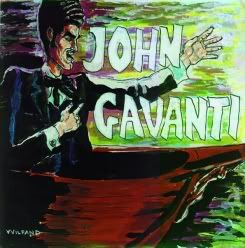
JOHN GAVANTI


Hyrax, 1980; reissued by Atavistic; available

14 tracks, 32:10

This would be the infamous "no wave operetta". I'm not sure who to credit this to; most sources list it as either Mars and DNA, Mars alone, or Sumner Crane. Some even list the band name itself as John Gavanti! Anyways, this bizarre concept album features a whole slew of New York no wave's finest. Sumner Crane of Mars does most of the singing; he also wrote the (included) libretto and contributes 3-string guitar(!), piano, and percussion. Also from Mars are Don Burg (see the Mars review for her other stage names; bass clarinet, abstract vocals) and Mark Cunningham (horns). Ikue Mori from DNA contributes strings and, on two tracks, percussion; on one of these tracks, DNA's Arto Lindsay and his brother Duncan also contribute percussion. The music itself is in a universe all its own. For the most part the tracks don't rely on guitar noise for their distinctive atmosphere, focusing instead on the assorted horns, bass clarinet, and string sounds. This actually is one of the closest things to free jazz in the no wave archives, since most of the arrangements are improvised around Crane's demented vocal performance, but it also veers towards avant-garde theatre. About Crane: His vocals are absolutely jarring on first listen, but they do grow on you. His style is best explained as a cartoonish monster/fake ethnic hybrid, coming somewhere close to a slightly more intelligible Joseph Spence. Given that the surprisingly coherent plot is a deranged remake of the classic opera DON GIOVANNI, his vocals are a perfect fit. However, I don't recall Don Juan seducing lionesses and grandmothers "in the beautiful autumn of life", but hey, artistic license. You really have to love an operetta with the classic lines "Oh Ancient Ocean!/You are nothing!/Vast you may be!/Next to me what are you?/I am beautiful pink and you are stinky green!" Did I mention the first thing John does, upon waking up in his volcano, is drink a glass of lava? Yep, you read that correctly. From that point on, Gavanti brags, boasts, travels the world, seduces literally EVERY female that catches his attention, is reunited with his long-lost assistant John Yellow, has his arm torn off by a white statue (but he has a spare at home, so it's alright!), and finally rides off into the sunset with the grandmother. Naturally, it's not quite as simple as that, but that's the general plot anyway. Burg contributes surprisingly tender lead vocals to "Mirror Mirror", and the track with the Lindsay brothers is a fairly straightforward samba piece, but the rest is pure avant-garde heaven for any experimental rock fan. It's worth noting that ths was recorded at Sear Sound studios, an all-vacuum-tube-equipment studio (most famous for being where Sonic Youth later recorded SISTER). You should definitely get the Mars and DNA retrospectives first before diving into this, but it certainly belongs in any good no wave/experimental collection.

Please visit the following link for Mark Cunningham's insight on the album, as well as some tidbits about the fan video (!): http://www.convolution7.ws/mark/bands/john.htm

Sunday, February 14, 2010

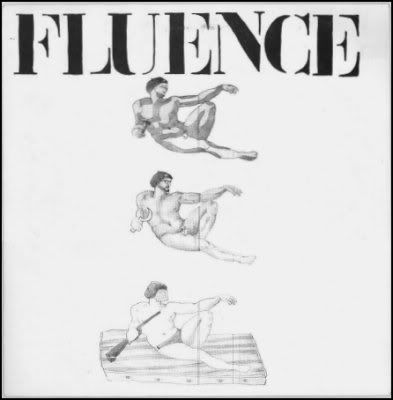
Fluence, FLUENCE


Pôle, 1975; out of print

3 tracks, 37:16

It's been a while since I reviewed something from Pôle Records! Fluence is essentially Pascal Comelade, assisted by different folks on different tracks. Side one consists mostly of the wonderfully titled "A Few Reasons To Stay - A Few Reasons To Split". Featuring a guest appearence from none other than Heldon's Richard Pinhas, this starts with a melodic and soft synth pattern that is soon accompanied by Fripp-esque guitar and what may be a treated guitar loop or a droning organ. It's a classic example of French-style '70s electronic rock, easily ranking with the best of Heldon, Ilitch, and Pôle's other artists. Finishing side one is "Barcelona Tango", featuring Ben Soussan and Ph. Besseme (unfortunately, only Pinhas is credited with any specific instrument; even Comelade's contributions are left unspecified). This is a short jazzy number, certainly enjoyable enough but very much out of place. "Schizo" occupies all of the second side, and it's every bit as cosmic as "A Few Reasons...". Comelade is assisted here by G. Ibanez and J.P. Barreda. Starting off with an electronic drone and several inventive synth vamps, it drifts along blissfully, soon accompanied by some truly soaring guitar. About midway, it gets a bit more chaotic, with the synth and guitar sounds battling it out over the drone to the very end. This too is a great song, and the obscurity of this release is a true shame. As with most things Pôle, a reissue is long overdue. Comelade continued to make interesting music and is still quite active today. His other work is very much worth checking out, but most of it is fairly hard to find. There IS a compilation called BACK TO SCHIZO (1975-1983) which has a five-minute excerpt from FLUENCE, but it's hard to recommend due to its haphazard edits and poor sound.

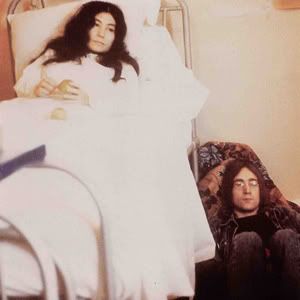
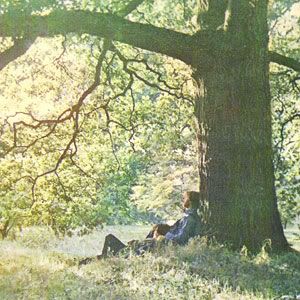
Yoko Ono, UNFINISHED MUSIC NO. 2: LIFE WITH THE LIONS and PLASTIC ONO BAND


Zapple, 1969; reissued by Ryko with bonus tracks; available

Ryko: 7 tracks, 61:32


Apple, 1970; reissued by Ryko with bonus tracks; available

Ryko: 9 tracks, 65:36

I'm pretty sure you know who Yoko Ono is if you're here, so let's go straight to the reviews!

First up is the second of her three experimental albums with John Lennon. Coming at a time when Ono was a pariah, LIFE WITH THE LIONS didn't help her public image one bit. This album has the honor of being one of the most genuinely unlistenable albums I own, while also being one of the most conceptually interesting. "Cambridge 1969" is a bold opener: twenty-six and a half minutes of Ono freely vocalising over feedback, with slight sax and percussion by Johns Tchicai and Stevens towards the end. It also occupied all of side one. Side two is no more accessible. The sweet acoustic "No Bed For Beatle John" is up next to the self-explanatory "Baby's Heartbeat" and "Two Minutes Silence"; all were recorded in the hospital during Ono's troubled pregnancy. It's rather touching and sad to know that the baby didn't make it, which gives both the heartbeat and the silence that much more impact. The LP proper ends with "Radio Play", which is Lennon and Ono conversing while changing radio stations, even flipping around with "Ob-La-Di, Ob-La-Da" at one point. Bonus tracks "Song For John" and "Mulberry" are returns to the sweetness of "No Bed For Beatle John". It's not something you put on every day, but as a work of art, this album merits investigation.

PLASTIC ONO BAND (not to be confused with Lennon's identically named album) is much more enjoyable overall. Five of the tracks feature a lineup of Lennon, bassist Klaus Voormann, and Ringo Starr; the other, "AOS", is a rehearsal recording from '68 featuring Ornette Coleman's quartet. "AOS" is the most out-there track here, with Coleman's trumpet coaxing Ono into a frenzy. Bassists Charlie Haden and David Izenzon team up with drummer Eddie Blackwell to maintain the wild feeling. The rest of the tracks are very ahead of their time, predicting all manner of post-punk mutations down the line. Starr and Lennon sound like they're having the time of their lives NOT sounding a jot like the Beatles! Lennon skronks and skrees to his heart's content while still finding time for trancier modes of expression, while Starr surprises with consistently innovative drumming, be it fast-paced rock pounding or motorik-esque pulsing. "Greenfield Morning I Pushed An Empty Baby Carriage All Over The City" and "Paper Shoes" both feature Ono's use of processed vocals over nearly krautrock soundscapes, while "Touch Me" and "Why" rival ANY '90s noise rock act for ferocity. The long "Why Not" is about equally divided between these extremes. Ryko put three bonus tracks on here. "Open Your Box" is a funky little number, originally intended for a single. "Something More Abstract" is a short snippet, and "The South Wind" finds Lennon and Ono improvising with acoustic guitar and vocals. This is the truly essential Ono purchase.

Check back for a review of UNFINISHED MUSIC NO. 1: TWO VIRGINS soon. This little gem is a collage piece that, while savaged at the time, is the better of the two UNFINISHED MUSIC albums. There's also THE WEDDING ALBUM, which didn't impress me very much, and the wild live albums LIVE PEACE IN TORONTO 1969 and SOME TIME IN NEW YORK CITY*. Anything else credited to Ono and Lennon (though not necessarily to Ono solo) is FAR more mainstream. Ono's massive FLY deserves special attention as well.

*This double LP features a side of Lennon/Ono/Mothers of Invention jams!