Thursday, July 1, 2010

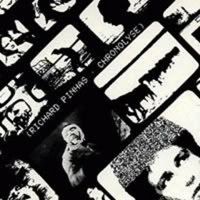
Richard Pinhas, CHRONOLYSE


Cobra, 1978; reissued by Spalax, Cuneiform, and Captain Trip; Cuneiform edition available

9 tracks, 52:56

First and foremost: Happy 100th entry to my humble lil' blog! Hooray and all that! Okay, on to the review.

Pinhas' group Heldon has already been reviewed here (and most of you probably knew about'em already!). This was Pinhas' second solo album to be released*. However, it was actually recorded in 1976 somewhere between Heldon's IV and V**; it just wasn't released until two years later. Truth be told, it's not really even a solo album per se. Side one had "Variations I-VII Sur Le Theme De Bene Gesserit" and "Duncan Idaho". These feature Pinhas and his Moog, truly solo. The "Variations" are exactly that, most being quite short (with the exception of "Variation VII") and all featuring the same basic set of sequences. Don't let that deter you, as they all form into a mesmerizing and literally trance-inducing mini-suite of minimalist analog bliss. "Duncan Idaho" is similar, but features its own unique set of sequenced eletronic sounds. It's also much longer than any of the individual "Variations" at just over six minutes. So far this sounds like a true solo effort, but then the massive side-long "Paul Atreides" comes along. This thirty-plus minute behemoth is essentially a Heldon track, with longtime Heldon drummer François Auger and sometime bassist Didier Batard joining Pinhas. Richard himself tackles guitar, Mellotron, and ARP synths. "Paul Atreides" opens with eerie drones and what could be classic sci-fi sound effects, slowly progressing for several minutes before Pinhas unleashes his soaring Frippian guitar and Auger starts to provide a suitably motorik-style beat, with Batard completing a solid rhythm section. After a stretch of true space rock, the song comes full circle back to the space drone of the beginning. It's a truly intimidating listen, and it just may be the single greatest track in Pinhas' entire catalog. The rest of the album is great, too, making this one of the most important and enjoyable Pinhas-related releases. Oh, and if the track names seem familiar, Pinhas got them all from Frank Herbert's DUNE; he also "dedicated (this album) to all S(ci).F(i). freaks", for what that's worth!

*His first, RHIZOSPHERE, has its moments but is mostly inferior to CHRONOLYSE in my opinion.

**Yes, the titles are much longer, but for the sake of space and time I'm referring to them by number only.

Tuesday, May 18, 2010

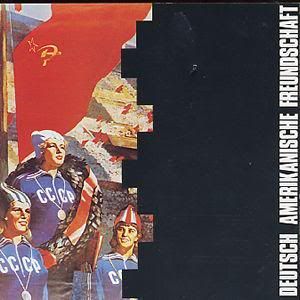
Deutsch Amerikanische Freundschaft, DIE KLEINEN UND DIE BÖSEN


Mute, 1980; available

19 tracks, 38:40

Wow, this certainly took me long enough! DAF's debut album, PRODUKT DER..., was the very first album to be reviewed here. Now, almost 100 entries (the next review gets THAT honor) and three years into it, I'm finally getting around to their sophomore release! Kurt Dahlke and bassist Michael Kemner had departed (Dahlke for Der Plan and the solo project Pyrolator), while singer Gabi Delgado-Lopez was back in. Along with drummer Robert Görl and guitarist Wolfgang Spelmanns, the lineup featured synth whiz Chrislo Haas, who was on Der Plan's debut single and later co-founded Liaisons Dangereuses. Legendary producer Conny Plank was behind the controls for this release, which is ironic since he produced many krautrock classics; the slight krautrock elements of PRODUKT had completely dissipated by this point. The seven songss on the A-side were produced in the studio, while the B-side featured a brief studio piece and eleven tracks from an absolutely unhinged live show. The latter was supposedly recorded by accident; the technician wanted to record Wire, who DAF was opening for. What a fortunate mistake! These chaotic bursts of noisy synthpunk are an absolute treat. Delgado-Lopez is at his most aggressive, very rarely singing in the deep voice he became known for. Most of the time he's screaming, howling, or blasting out the words at a rapid pace. The band is at the top of its game, with Görl providing furious punk drumming while Spelmanns and Haas create a frenzied mass of guitar noise and early synth squelching. For variety, the title track is a brief synth solo by Görl, while the closing "Y La Gracia" is performed by Haas and Delgado-Lopez alone. These two tracks, along with the brief and goofy "Volkstanz", provide some relief from the onslaught of the remaining live gems. A particular B-side standout is "Die Lustigen Stiefel", which has Delgado-Lopez singing about how "the funny little boots are marching over Poland" to the tune of "nanny-nanny-boo-boo" while the others provide a NY No Wave-style herky-jerky groove. The studio track, "Gewalt", is a nice bit of noise that's far too brief; a track of the same name appeared as the B-side to "Kebabträume", but they're different songs. The A-side of DIE KLEINEN is rather good as well; "Essen Denn Schlafen", "Co Co Pino", and "Nacht Arbeit" are early synthpunk bliss, and the lengthy atmospheric "Osten Währt Am Längsten" is both a great introduction and a nice bit of calm on what is otherwise one hell of a ride. After this, DAF would release two more punky singles (both with EXCELLENT B-sides as well!) before Spelmanns and Haas departed. Görl and Delgado-Lopez continued as a duo, releasing a couple albums of decent early EBM. They've reunited and had side projects and whatnot many times since, but PRODUKT and DIE KLEINEN are their most experimental and daring works. As a nifty bonus, the lyrics are provided in German, Spanish, and English!

Friday, May 14, 2010

Tod Dockstader, 8 ELECTRONIC PIECES


Folkways, 1961; reissued by Locust; available

8 untitled tracks (of course!), 36:45

With this album, Tod Dockstader's unique brand of electronics was introduced to the world. Using both purely electronic and concrete sources, Dockstader brought his expertise at editing (picked up while working for cartoon companies!) to his music. It's impossible to tell what sounds are what. Different elements weave in and out, always giving way to fresh noises. It's not as random as this sounds; these are definitely electronic PIECES with a set structure and detectable progression. "Organized Sound" (the title of a later Dockstader LP) sums it up nicely. The lengthy seventh and eighth pieces are definite highlights, but there's not a single wasted moment on this whole collection. Even the monophonic recording doesn't blunt the impact of this disc! Folkways sure was bold to release this, but kudos to them. Dockstader would make more records, retiring for a long time after the stressful sessions for OMNIPHONY 1 (a story to be told in later reviews*). He's recently been active again and creative as ever. This is a pretty brief review, but know this: If you like early electronic music and you're unfamiliar with Dockstader, GET THIS NOW! For that matter, anything by Dockstader is guaranteed to please, so pick it up on sight.

*I have yet to acquire OMNIPHONY 1 or the compilations QUATERMASS and APOCALYPSE, but once I do they'll receive reviews as well.

Thursday, May 13, 2010

White Noise, AN ELECTRIC STORM


Island, 1969; available

7 tracks, 36:22

What do you get when you combine an expat American double bassist (with an interest in electronics) and two audio wizards from the BBC? Answer: This gem of an album! While future White Noise albums were mostly David Vorhaus (the expat) alone, this album also featured the legendary Delia Derbyshire and Brian Hodgson. Derbyshire is most famous for her electronic DOCTOR WHO theme, while Hodgson created the enduring sound effects associated with the Daleks and the TARDIS. Those sci-fi credentials give you a hint of what this album is about, but nothing more. Painstakingly assembled the old-fashioned way from tape snippets, this is a masterpiece of pop concrete. For the first five tracks (the A-side, or "Phase-In" as they put it), the group delivers grade-A psychedelic pop. Maybe "pop" isn't quite right; there's no way they could have expected the cheeky "My Game Of Loving" to get any airplay with its combination of densely arranged blips and bleeps, Beach Boy-esque vocals, and apparently authentic orgy sounds! That lapse of taste aside*, the other tracks are just catchy enough to be better known while being just too bizarre for the mainstream. The vocals (courtesy John Whitman, Annie Bird, and Val Shaw) aren't always great, but they serve their purpose well enough. "Love Without Sound" predicts future trends like illbient and trip-hop with its slow smoky atmosphere and rolling drum track, while "Here Come The Fleas" is a short novelty track that thankfully stops just before it gets irritating (even if it does have a nifty distorted guitar in the mix). Side two ("Phase-Out"), on the other hand, is another story! The obvious highlight is the eleven-plus minute "The Visitation", a goofy-but-eerie epic with plenty of creepy whirring noises and a gloomy plot involving a deceased biker trying to talk to his grieving girlfriend.... and failing. It's somewhat like listening to an EC comic story as performed by Kraftwerk! It just so happened that this track took a while to make, and Island started to get impatient. After a year, the label demanded the finished album; under threat of a lawsuit, the band produced the final track in one night, with assistance from jazz drummer Paul Lytton (you might remember that name from my review of Area's EVENT '76). The resulting jam was called "Black Mass: An Electric Storm In Hell", a fitting title if there ever was one! It begins with ominous (though hokey) group chanting, leading right into Lytton's furious and free drumming. Lytton is accompanied by a droning tape loop, punctuated with random screams and bursts of noise. "Black Mass" is VERY out of place, but surprisingly it's one of the highlights and a worthy conclusion. The whole collection is an early electronic masterpiece that still sounds remarkably fresh. Derbyshire and Hodgson left White Noise after AN ELECTRIC STORM, while Vorhaus sporadically revives the name. Subeqent White Noise albums have their moments, but AN ELECTRIC STORM will always be the crowning achievement under that name. All other works by Derbyshire** and Hodgson are absolutely recommended, but unfortunately their works aren't easy to find outside of DOCTOR WHO-related compilations.

*While I'm not a prude by any stretch, this is one of THE goofiest attempts at sexiness I have ever heard. No kidding!

**The extremely rare ELECTRO-SONIC is one of Derbyshire's best works; if you can find it, it makes a great companion to AN ELECTRIC STORM.

Tuesday, May 4, 2010

SPK, LEICHENSCHREI


Thermidor, 1982; reissued by Mute; available

14 tracks, 43:18

While I'm not the first to review it (see http://thetintinnabularium.blogspot.com/2009/02/spk-leichenschrei-1984.html , for example), I feel the need to assure everyone that this is indeed one of the finest early industrial releases.

Australia's SPK* were one of the first industrial bands. For this nightmare of an LP, SPK were Oblivion (a.k.a. main instigator Graeme Revell; various instruments), NE/H/IL (Neil Hill; electronics), and (James) Pinker (percussion). LEICHENSCHREI was their second LP, following some intense singles** and the primitive INFORMATION OVERLOAD UNIT album. Members allegedly worked in the mental health field, a theme that carries over to the music. A heavily percussive mass of sound is the result, with disturbing soundbites and samples weaving in and out of the mix. It's all very structured and rhythmic compared to most contemporaries, but that's the ONLY concession to accessibility. This is every bit as disturbing and grotesque as Throbbing Gristle, with the prominent rhythms doing little to blunt the impact of the other sounds and noises. Well, pehaps it's not COMPLETELY devastating; things calm down slghtly towards the end of the album. Highlights are hard to pick out, and the initial LP release was divided into two sides with no distinct tracks (one side ended in a lock groove). With that in mind, while it's harrowing, this is best experienced from start to finish. Be warned it's still every bit as paranoia-inducing as it ever was, and definitely be sure you're in the right frame of mind before playing this. I'd hate to see what could happen otherwise.

It's worth mentioning SPK's DESPAIR video here. This is essentially concert footage mixed with some truly nightmarish imagery. The parts with Revell tearing chunks off a skinned horse's head and chewing them onstage is one of the less disturbing images on DESPAIR, and while it's not grosser than many FACES OF DEATH-type collections, the atmosphere is absolutely nerve wracking and I've never been able to stomach the whole thing. If you think you can handle it, watch it, but be absolutely sure you know what you're getting into.

Revell would continue SPK with a revolving cast (plus his wife Sinan), eventually lapsing into fairly unexciting synthpop*** before disbanding. He currently does soundtrack works for major motion pictures, which isn't as surprising as it might seem. Hill took his own life two years later. Pinker appeared with a few other bands (most notably Dead Can Dance) and is apparently still active in music.

*For what it's worth, SPK stood for Sozialistisches Patienten Kollektiv for this album; the "Socialistiches" on the reissue is a misspelling. On other releases it's spelled out as Surgical Penis Klinik, SoliPsiK, SePpuKu, and System Planning Korporation.

**The compilation AUTO DA FE collects most of these tracks (including the particularly vicious "Slogun") along with some of the better synthpop-era tunes.

***With the exception of the excellent ZAMIA LEHMANNI: SONGS OF BYZANTINE FLOWERS, which shows Revell and company succeeding at ambient music.

Monday, May 3, 2010

Faust, FAUST IV


Virgin, 1973; available, and the 2007 remaster comes with a bonus disc (see review)

Disc 1 (or the album itself): 7 tracks, 44:19. Disc 2: 9 tracks, 57:04.

Faust surely need no introduction here, so let's get to the facts! For this reissue, Virgin have put FAUST IV proper on the first disc while loading the second with outtakes, alternate versions, and a Peel session. FAUST IV never really got the same degree of admiration that FAUST, SO FAR, and THE FAUST TAPES received; hopefully this set will change that! Containing such grade-A pieces as the noisy epic "Krautrock" and the moody VU-esque "Jennifer", this isn't Faust selling out or going for mainstream acceptance, no matter what reviews at the time claimed. Certainly "It's A Bit Of Pain" (which is a perfectly sweet folky tune interrupted by loud atonal synth buzzing), the folky "Läuft... Heisst Das Es Läuft Oder Es Kommt Bald... Läuft", and the bizarre proto-new wave/ska hybrid "The Sad Skinhead" are more listenable than anything off the first album or THE FAUST TAPES, but that's overlooking the fairly accessible SO FAR. In fact, not a single one of these seven tracks is unremarkable, and any of them COULD have been on an earlier album. That alone makes FAUST IV worth revisting, but the bonus disc REALLY seals the deal. The first three tracks are a Peel session from 1973, featuring a version of "Krautrock" along with the jazzy "The Lurcher" and a delightful piece of avant-pop called "Do So". While this IS available elsewhere, it's nice to have it with other period rarities. Those rarities include a previously unreleased "Piano Piece" which by itself would have made a truly lovely bonus with its swirling percussions and abstract vocal touches (plus the gorgeous piano, of course!). The rest of the disc consists of alternate versions, some of which are radically different from the released versions. For example, the extended version of "Just A Second (Starts Like That!)" stretches the two-minute original to ten and a half minutes of burning psychedelia. The other really notable alternate is "Jennifer:, with emphasis on the guitar instead of the bass and the ending trimmed. It's arguably better than the version that ended up on FAUST IV. If you already have the first three and weren't sure about this one, trust me, it's every bit as essential. If you're new to Faust, this might even be a good place to start. Oh, and once again: DEFINITELY go for the double-disc edition and not the single-disc!

Saturday, April 24, 2010

Heldon, INTERFACE


Cobra, 1978; reissued by Spalax and Cuneiform; available

CD: 8 tracks, 51:28

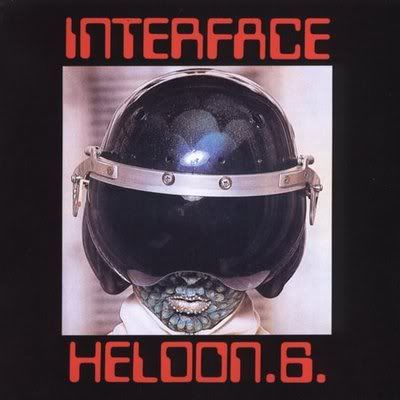
It was only a matter of time before Heldon got reviewed here. Essentially the brainchild of guitar/synth wizard Richard Pinhas, Heldon was one of many French acts that were oddly similar to krautrock. Named after a town in Paul Spinrad's THE IRON DREAM, the project is definitely Fripp worship of the highest quality; in other words, the influence is there, but Pinhas remains VERY distinctive in his approach. INTERFACE is Heldon's sixth album (in three years of existence!), and it was recorded with a core trio of Pinhas, long-term drummer/multi-instrumentalist François Auger, and keyboardist Patrick Gauthier. This is usually considered Heldon's strongest configuration, and with good reason. Long-term bassist Didier Batard shows up on a track as well. Song-wise, this finds Heldon at the peak of their creativity. The three short, almost disco-esque "Soucoupes Volantes" tracks on the original A-side are still astonishing electronic pieces that haven't aged one jot. The two longer A-side pieces, "Jet Girl" and "Bal-A-Fou", are equally impressive. The two-part "Jet Girl" sounds particularly grand, slowing down and changing slightly about halfway through while maintaining an evil pulse midway between motorik and space rock. The original B-side was occupied by the nineteen-minute title track, and what a track! Starting with minimal drum and synth atmospheres, Pinhas' piercing guitar eventually swoops in for the kill. Not a minute is wasted, even if the final bluesy notes are a little out of place. For the Cuneiform CD, two extracts of a live performance of "Interface" are sandwiched between the original sides. These snippets isolate particularly ferocious live takes on the piece, and they don't disrupt the flow whatsoever. While most Pinhas and Heldon releases are worthwhile, INTERFACE is a personal favorite and an excellent entry point.

Sunday, April 18, 2010

Destroy All Monsters, 74 76


Father Yod/Ecstatic Peace!, 1994; reissued by Compound Annex; available but limited

Three discs, each with its own title. Disc 1 ("Gospel Crusade"): 25 tracks, 71:19; disc 2 ("Crying In Bed"): 27 tracks, 69:11; disc 3 ("To The Throne Of Chaos Where The Thin Flutes Pipe Mindlessly"): 24 tracks, 66:54

When mentioned at all, Destroy All Monsters are generally considered a post-Stooges Ron Asheton project. With all respect due to the late Mr. Asheton, DAM were actually past their innovative prime by the time he joined! The original quartet of Mike Kelley, Cary Loren, Niagara, and Jim Shaw assembled in winter of '74 with the intent of deconstructing rock music. Inspired in equal parts by European experimentation, proto-punk a la Stooges and MC5, and the outer realms of jazz, they created a truly unique sound that can't readily be assigned to a specific era. That being said, ths box does indeed cover the years 1974 to 1976; there's no indication as to whether the material is presented chronologically, but that's okay. Sure, there's a few fairly straightforward proto-punkers featuring Niagara's sultry vocals like "Vampire", "T.H. Queen" and "You Can't Kill Kill"; also, the apparently live version of "Shakin' All Over" is surprisingly faithful to the original. Don't be fooled, though; these concessions to accessibility are few and far between. The majority of these tracks are pure experiments in sound, whether it's the nightmarish tape manipulations of "Mom's and Dad's Pussy" or the self-explanatory "Drone" and "Crunch Drone". There's also room for dubby sound explorations and primitive drum machine exercises, along with nearly every other experimental style you can think of. It's almost impossible to pick standouts, since there is a LOT of material to pick through and even the lesser tracks are impressive with enough repeat listens. Keeping in mind that this predated punk and industrial as genres (to say nothing of later developments such as no wave), this is incredibly ahead of its time, and it's even more amazing to think none of this got released until 1994! About the only comparable contemporaries were Cabaret Voltaire and Throbbing Gristle; there are definite similarities, but honestly all three were highly original outfits that started around the same time and were unaware of the others until later. In DAM's case, hardly anyone outside of the group itself was aware of their innovations until years later. Needless to say this comes highly recommended. While the reissue isn't as fancy as the original box, the music is all intact and it IS available again, and shouldn't that matter the most? Around '76 most of the members left except for Niagara, who continued Destroy All Monsters with new members (most notably Asheton and ex-MC5 bassist Michael Davis). This period of DAM is enjoyable, but don't expect it to sound a jot like the box. The original lineup has basically reformed and tours/records semi-regularly in their original proto-noise style.

Read the liner notes for this set (written by Mike Kelley himself) here: http://www.mikekelley.com/DAMthrone.html . http://www.mikekelley.com/compound.html has 74 76 for sale along with other DAM/Kelley-related products.

Sunday, April 11, 2010

John Fahey, REQUIA


Vanguard, 1967; available

8 track, 44:46

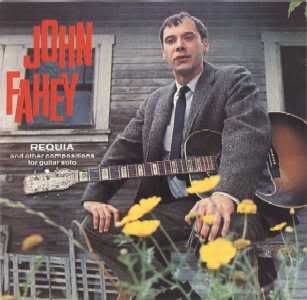
The late John Fahey has always been one of my favorite musical enigmas. Mostly kown for redefining folk (and hating hippies and New Age!), he had a surprisingly adventurous side. REQUIA (subtitled AND OTHER COMPOSITIONS FOR GUITAR SOLO, which isn't entirely accurate) is one of his best early forays into experimental turf. The A-side is typical Fahey: raga/blues/folk fusion guitar excursions played with flair and that distinct Fahey touch. The long "Requiem For Rusell Blaine Cooper" and "When The Catfish Is In Bloom" are particularly delightful, and "Requiem For John Hurt" is pretty good too! The B-side is where it gets weird. The four-part "Requiem For Molly" dominates this side, and it calls Fahey's distaste for psychedelia into question. This epic finds Fahey accompanied by "special effects", IE, musique concrete! Bits and pieces of old blues records, lions roaring, seals barking, public speeches, and other found sounds float under Fahey's irresistible guitar. Oddly enough, the melody for "Part Three" is actually "California Dreaming"! The Mamas and the Papas aren't credited, but there's no mistaking it; in the end that's okay since it actually adds to the collage effect. The effects never really match up with the playing, and Fahey would complain later that he was drunk at the session and the tapes weren't properly cued. However, Fahey was also his own harshest critic, and the piece still sounds remarkable today despite its flaws. The album closes with the brief yet delightful "Fight On Christians, Fight On", leaving the listener wanting more. Luckily, there is a lot more! GUITAR VOL. 4, THE YELLOW PRINCESS, and THE LEGEND OF BLIND JOE DEATH are especially good early works that mix brave experimentation and gorgeous acoustic playing, while the late-period CITY OF REFUGE, THE MILL-POND, and WOMBLIFE would appeal to far more adventurous listeners with their severely dark and abstract nature (the former has particularly aggressive notes by Fahey; I repeat, he REALLY didn't like hippies!). The one-off collaboration with Cul De Sac, THE EPIPHAY OF GLENN JONES, is also quite listenable and interesting. There really isn't a bad Fahey album, but REQUIA is definitely a nice cross section of the man's many sides and is probably the best introduction to his marvelous catalog.

Monday, March 1, 2010

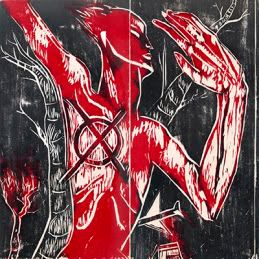
Circle X, CIRCLE X and PREHISTORY


Originally self-released with no label name, 1979; reissued by Dexter's Cigar; available but act quick

4 tracks, 11:35


Index, 1983; reissued by Blue Chopsticks; available

6 tracks, 35:57

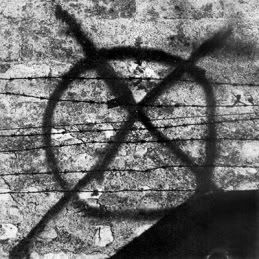
These two releases were recorded within two years of each other by the exact same lineup; both were also reissued on sublabels of Drag City owned by David Grubbs. That's where the similarities end. Circle X (originally, the symbol on the EP WAS their name) have a fairly complicated history. They originated in Louisville, moved to New York, moved again to Dijon, and then relocated back to New York! Loosely associated with no wave, they really were always in a universe of their own. For these two early releases, Circle X was David Letendre, Rik Letendre, Tony Pinotti, and Bruce Witsiepe.

The debut EP originally was completely unnamed except for the cover symbol. It was recorded in Dijon while the band members were living there. The Letendre brothers are credited with guitar and "drum", while Pinotti does vocals and Witsiepe plays guitar. You hardly notice the lack of bass at first; the guitars are gnarled and nasty, and one guitarist tends to play twisted noise rock riffs while the other provides either storms of distortion or feedback drones. The drumming is fairly varied, with each song having a different style. Pinotti brings a different vocal idea to each song as well. The original A-side consisted of the almost-straightforward "Tender" and the hardcore-with-an-arty-twist "Albeit Living". The former sounds uncannily like the FAR later Laughing Hyenas with its sludgy groove and hoarse screaming/shouting, while the latter begins with multiple voices speaking the lyrics before launching into a ferocious little rocker. The other side was even further out there: "Onward, Christian Soldiers" predicts the kind of slow and heavy noise rock that Swans et al would soon explore, and "Underworld" features a bagpipe-esque drone, Pinotti's alternately spoken and shouted vocals, and a wonderfully processed guitar that sounds like a malfunctioning amplifier playing itself. It's all at least a few years ahead of its time, and it's also the most no wave thing they ever did. An auspicious debut, to be sure, and very much worthwhile.

Two years later, the band was back in New York. The lineup was intact, but the sound sure wasn't! The newly rechristened Circle X Internationale had gone from noise rock to industrial. They expanded to using tapes, further percussion, and even a bass on the opening "Current". The sound is much spacier and loop-based than aggressive; the guitars weave in and out of the mix, with atmospheric percussion providing most of what little structure there is. Actually, the production is very close to the spectral qualities of dub, with heavy usage of reverb and delay. Pinotti has also changed his vocal style, mostly going for a much more pained and haunting tone midway between a sigh and a moan. With these musical surroundings, his voice is a perfect fit. While all six songs are amazing, the definite standout is a remake of "Underworld". Retaining the basic structure of the original while more than doubling its length, this version features Pinotti's vocals getting basically the same treatment as the guitar on the original to great effect, and guest Jason Huang's eerie organ helps to make it much more atmospheric and incredible than the already impressive first version. The spooky bass-driven "Current" and oddly catchy "Prehistory Part II" are particularly great as well, but this is definitely a completely solid album. Curiously, this wasn't released until '83, two years after it was recorded; maybe no label was ready for it yet. If you can only get one Circle X release, this should be it.

Both of these are available at Drag City's webstore, http://www.dragcity.com/store . Please be advised that most Dexter's Cigar titles are long out of print, and the Circle X EP may follow suit soon. PREHISTORY should be easily acquired. Either way, these are ten EXCELLENT songs without a drop of filler, so maybe just grab both and sleep easier!

Circle X took an extended hiatus until the early '90s, when they reformed minus David Letendre. They proceeded to make music with a revolving cast of drummers until 1995, when Bruce Witsiepe passed away. The out-of-print CELESTIAL from '94 is pretty interesting. Even better are the 10" on Fractal and the "33/Puerto Rican Ghost" single. The former features a live show from '79, a previously unreleased outtake from the same year, and two unreleased '94 tunes, while the latter single has them tackling a Mars medley.