Saturday, August 9, 2008

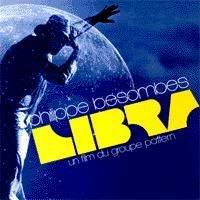
Philippe Besombes, LIBRA and CESI EST CELA


Pôle, 1974; reissued by MIO with bonus material; out of print, but the CD is fairly easy to find

MIO version: 21 tracks, 75:44
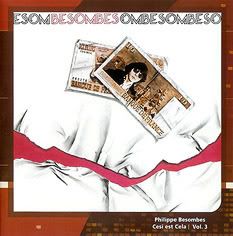


Divox, 1979; reissued by MIO with bonus material; out of print, but the CD is fairly easy to find

MIO version: 10 tracks (11 technically; see review), 79:09 (with hidden track)

Ahhhh, more Pôle-related goodies! As reviewed in a previous post, Philippe Besombes was featured on the astonishing PÔLE album by Besombes-Rizet. LIBRA was another Besombes release on Pôle Records, and while it too is electronic-rock oriented, it's quite a different beast! Originally a soundtrack for a highly experimental film without any other sound (!), LIBRA originally consisted of seventeen tracks, ranging from just under two minutes to barely over six in length. Four of the tracks were written by Besombes' other musicians, and these all stick out. As part of the whole, they're not bad, but the slightly goofy "Tis A Song" and "Boogimmick" really don't add much; "Hache 06" and "Ballade en Velo" are much better additions. Oh, but the Besombes material proper! Everything from primitive synths and organs to sitar and electric guitar shows up in these miniature masterpieces. "La Plage" opens the album and introduces a recurring synth theme (this IS a soundtrackk, remember), surrounded by odd female vocals. "Raggacountry" is a startling synth-and-sitar duet, while "Ceremonie" relies on heavy organ for an unearthly atmosphere. The album alone is a true work of art, but the bonus tracks are very tasty indeed. "Chocolate Cream" and "Tamota Pie Pie" would fit in perfectly with LIBRA proper, "Orgue Hache 06" is seventeen seconds of a single organ chord, and "Piano Prepare" is an absolutely stunning twenty-three minute piece (performed on, you guessed it, a prepared piano!). If Besombes had only recorded this, his legacy would be assured; this is even better than PÔLE!

After recording the Besombes-Rizet album, Besombes got involved with writing pieces for ballet companies (an album of library music was recorded in there as well). In 1979, he released a couple of these as CECI EST CELA ("this is that" in English) on the Divox label. Originally intended to be self-titled (the album art backs this up, and MIO previously advertised this reissue as ESOMBESOMBES!), four of its five tracks are VERY experimental pieces that foreshadow the early industrial scene while simultaneously updating and refining classic electronic techniques. Synths drone and squeal and provide all manner of sounds, accompanied by musique concrete and distorted conversations and monologues. None are as whimsical as LIBRA or PÔLE, but they do show Besombes' by-now signature sound at its peak. Track one, however, is a strange (and rather out of place) comedic disco tune entitled "Princesse Lolita", which was included at Divox's unrealistic request for a hit single. A dialogue between a helium-voiced princess and a distorted dragon, it's a fun song, but it's also very conspicuous in its dissimilarity from the surrounding material. No wonder Besombes allowed MIO to place this track in the negative space before track one! This means you have to search backwards from track one to find it; most listeners will probably never listen to it again after one go (I've only listened to it twice). The bonus material on CESI EST CELA (yes, the reissue is deliberately misspelled; why is beyond me) is divided by year. There are two tracks each from 1972, 1975, and 1976. The '72 material was recorded as a duo with Jean-Francois Dessoliers (the duo was appropriately called PJF), while the latter bonus material shows the evolution from LIBRA to PÔLE to CECI EST CELA. This is definitely Besombes at his most serious and academic, but it's still eons ahead of most contemporaries and a fascinating collection from start to finish.

Anything Besombes-oriented is a must-buy, but the recent closing of MIO can potentially hinder that. As of this writing, Wayside Music (see link on this page) is offerring all three MIO Besombes releases for six dollars each (update: CESI EST CELA is now $16, which probably means the stock is running low, so you should still get it while you can). The mastering is perfect, and the bonus material is worth the purchase alone! Get them now so you don't regret it later!

P.S. While much harder to find, his library music LP LA GUERRE DES ANIMAUX is equally amazing, as are his contributions to the CITY AND INDUSTRY LP.

Saturday, August 2, 2008

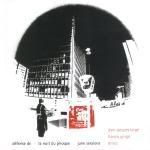
Birgé-Gorgé-Shiroc, DÉFENSE DE/LA NUIT DU PHOQUE/JUNE SESSIONS


Grrr, 1975; reissued by MIO; out of print, but fairly easy to find

MIO edition: CD has 8 tracks, 73:54; DVD has 11 additional audio tracks plus a 42 minute movie, totalling roughly 6 hours (!)

This is the most formidable recording I have yet to review, but here goes anyway. Contained herein is every recording by Jean-Jacques Birgé, Francis Gorgé, and Shiroc. The former two went on to form the equally incredible Un Drame Musical Instantané with Bernard Vitet*, whereas Shiroc never recorded again after this. The first four tracks were the original LP, and when combined with the title they form a political message (I'll let you translate it yourself; wouldn't want to spoil it!). The music is..... well, it's unique, for one. Imagine a cross between the most out-there Sun Ra material, early AMM, a dash of Faust, and some of that French experimental flair. Then imagine a combination of those elements completely devoid of influences. That's fairly close to what you'll find on here! Shiroc's drumming varies from motorik pulses to free-jazz bashing, but is always tasteful and properly mixed with the other instruments. Birgé and Gorgé play an insanely wide variety of instruments; it's so varied, in fact, that a song-by-song instrument list is included! Electric guitar, synths, electric pianos, electric organs, tapes, alto and tenor sax (provided by Antoine Duvernet on two tracks), pipe organ, castanets, stylophones.... get the picture? That's also maybe a quarter of the entire list! Oddly enough, you can usually tell exactly what instrument is providing what sound, and the formlessness of the tracks works to their constantly evolving advantage. The bonus tracks are all leftovers from the album proper. Two of them were replaced with tracks featuring Shiroc, and the other two are alternate takes of "Pourrait Etre Brutal". Unlike most outtakes, these tracks are every bit as great as the album proper. The CD alone is an absolutely unique milestone of the avant-garde. The accompanying DVD, however, is the icing on the cake. Musically it features eleven more tracks, ranging from a fairly short ten minutes to a nearly forty-eight minute live track (also featuring second percussionist Gilles Rollet)! Shiroc, who was on half of the eight CD tracks, is present on every song on the DVD. Some of these "June Sessions" are even better than the album proper, and all of them would have made fine releases on their own. The experimental film "La Nuit Du Phoque" ("Night Of The Seal"), created in 1974 by Birgé and the late Bernard Mollerat, is also a very welcome addition. It's a comedic and surreal piece of art, featuring everything from a clown (I think) singing about "The Militant's Ballet" with a choreographed group of revolutionaries to Sir Isaac Newton scaring children in the park (and ending up stabbed for his troubles) all the way to a very bizarre cabaret performance with odd free jazz backing. It's a true period piece, and the fact that it exists and has been preserved is cause for celebration. Unfortunately, as stated in other reviews, MIO has ceased to exist. That makes this difficult to find, but if you search hard enough you will locate it (hint: Wayside has it for twenty dollars at the time this was written, and Birgé himself has copies for sale alongside classic UDMI material at http://www.drame.org/3GRRR/zDisco.html). An absolute must for all avant-garde fans!
*Vitet's LA GUÊPE is very much worth a listen as well!

Sunday, June 22, 2008

Caspar Brötzmann Massaker, HOME


Thirsty Ear, 1995; available

5 tracks, 53:48

Being the son of a free jazz legend, Caspar Brötzmann has skronk in his blood. While he isn't quite as unhinged as his father (and Peter Brötzmann tends to border on the lunatic side), he certainly has a charm all his own. Caspar growls and snarls and moans, but rarely ever sings per se. His guitar/amp skills (he does tend to play both) range from crushing heaviness through shrill piercing tones, and everything in between. Bassist Eduardo Delgado Lopez (who also does the occasional vocals) and drummer Danny Arnold Lommen somehow manage to provide a solid backbone to the guitar histrionics. HOME is notable for two reasons. First, it is made up of re-recordings of older tracks (all from the first two Massaker albums BLACK AXIS and THE TRIBE). The second point of interest is that these versions are vast improvements on the somewhat formless originals, with the band performing as a much tighter and unified whole. The remake of "Massaker" in particular quite frankly destroys the original, with some of the most unhinged vocals and the best breakdown on the album (oddly enough, this occurs while Brötzmann is bellowing "BREAK.... BREAK.... DOWN!"). Functioning somewhere between krautrock, doom metal and free jazz, HOME is highly recommended to more adventurous listeners. Also recommended is KOKSOFEN, which offers a looser but somehow more disturbing program.

Einstürzende Neubauten, KOLLAPS


Zick-Zack, 1981; reissued by several companies over the years; available, but may be a different version than the one detailed here

13 tracks, 34:44; version with bonus track and STAHLDUBVERSIONS: 23 tracks, 56:01

Einstürzende Neubauten are pretty much a legend at this point. Taking "industrial music" to its most logical extreme, Neubauten (on here the trio of Blixa Bargeld, F.M. Einheit, and N.U. Unruh) used junk percussion, power tools, and extremely distorted guitars and bass to create a divine cacophony. KOLLAPS is widely acknowledged as their purest effort, and I agree. Very few tracks have a typical structure, or a melody for that matter. Instead you get mostly short (four minutes or less) tracks, combining the tools (no pun intended) of Neubauten's trade in bizarre and unusual forms. The main exception to length is the title track, which is over eight minutes in length and mostly revolves around a repetitive guitar mantra, punctuated by feedback and either a bass or a bass drum (it's never easy to tell what instrument is making what sound in Neubauten's music). "Tanz Debil" opens with Bargeld's impassioned yelping over some particularly nasty feedback, which then turns into a rhythmic storm of banged metal springs and whirring machine sounds. "Negativ Nein" features just the sound of water (rhythmically played water; you have to hear it to understand) and Bargeld's demented shrieks, repeating "negativ nein" in every conceivable variation. The shorter tracks like "Hirnsage" (all distorted guitar and Bargeld), "Vorm Krieg", and "Draußen ist Feindlich" are even LESS traditional in structure. This entire album STILL sounds as strange as it must have been when first released; if anything, the developments in noise and industrial since have shown just how right Neubauten got it the first time around. The version I have includes a nice bonus track called "Schieß Euch Ins Blut" that would have fit in nicely on KOLLAPS. The main bonus is the STAHLDUBVERSIONS tacked on at the end. Originally released on cassette (which curiously had the same program on both sides), these are nine instrumental dub versions of tracks from KOLLAPS. While some don't really add much ("Sado-Masodub" is basically the isolated rhythm track from "Tanz Debil"), others are truly interesting and bold experiments in combining Neubauten's approach with dub sound effects. It's a delightful addition. If you dig this, the compilation KALTE STERNE comes highly recommended; it's a collection of Neubauten's earliest recordings, and it's very much like KOLLAPS in sound and style.

Sunday, June 8, 2008

NEW SOUNDS IN ELECTRONIC MUSIC


Odyssey, 1967; out of print

3 tracks, 42:27

This early electronic compilation is mostly famous due to the presence of Steve Reich's "Come Out". That track was reviewed elsewhere on this blog, so I will attempt to describe the other two tracks. Richard Maxfield (1927-1969) was a visionary composer and artist who made the best out of pre-synthesizer electronics. His "Night Music" is only featured here (for now, anyway), and is a classic little piece of primitive squeals, bleeps, and whirs. The sounds gradually take on new and strange shapes, maintaining interest throughout. Pauline Oliveros' "I Of IV" sounds considerably less primitive, and stands as an early bit of ambient minimalism. Rising and falling tones make up the bulk of this twenty-plus minute monster, accompanied by cavernous throbs and ringing high pitched whines. It definitely points towards Oliveros' later experiments in "deep listening", and still holds up incredibly well. Reich's track is available on his EARLY WORKS collection, and Oliveros' track can be found in an extended version on her ELECTRONIC WORKS compilation. That being said, only six Maxfield recordings have ever been released, and every serious electronic and/or modern composition fan owes it to themselves to hear all six. Four other Maxfield tracks are available on THE OAK OF THE GOLDEN DREAMS, which also features two extended Buchla pieces by Harold Budd. These four tracks were previously issued in 1969 by Vanguard as ELECTRONIC MUSIC.

Horrific Child, L'ETRANGE MONSIEUR WHINSTER


Eurodisc, 1976; out of print

3 tracks, 33:28

Look at that cover. Just look at it. Doesn't it just scream "incredible"? A brainchild of Jean-Pierre Massiera (also behind the equally amazing Les Maledictus Sound), Horrific Child was a complete anomaly. The "music" contained herein is three tracks of pure aural innovation. Massiera mostly assembled WHINSTER from previously recorded bits of tape, but it's all done very seamlessly. "H.I.A.", which occupied the entire B-side, has a bombastic orchestral introduction with heartbeat sound effects. It then goes into Goblin turf: all atmospheric wind sounds, footsteps, and echoing voices. After a while, some psychedelic drumming comes in, which leads right to operatic voices. This is followed by more drumming, more atmosphere, and eventually strange croaking male vocals. They're definitely cheesy, but like a good old horror film. This track features many more twists and turns during its seventeen minutes, ending on a rather sedate note. The A-side is no less impressive! "Frayeur" still features the "creepy" vocals, but this time they're accompanied by African-style drumming and chanting! Finally, "Angoisse." is all eerie synth, random percussion, and those campy-but-creepy male vocals. Apparently the lyrics are taken from Baudelaire and Lautréamont, but I don't speak good enough French to confirm this. The whole album stands up surprisingly well.; it also gains points for being incredibly unique. On the reissue of Les Maledictus Sound's sole album, there is a nine-minute excerpt from WHINSTER. Hopefully someone will have the good sense to give this a proper reissue.

UPDATE 2011: Finders Keepers had the good sense to reissue this with two bonus tracks! GET IT!

Friday, June 6, 2008

The Sperm, SHH!


O Records, 1970; reissued on CD-R by Pekka Airaksinen; availability uncertain

LP: 4 tracks, 50:52; CD-R: 8 tracks, 69:33

What exactly WAS going on in Europe in the 70s?!?! Finland had its own psychedelic and cosmic scene during this time, as well documented on the ARCTIC HYSTERIA and PSYCHEDELIC PHINLAND compilations. Perhaps the most infamous product of said scene was the Sperm. A loose collective, the Sperm left precious little music behind, but what they DID record is amazing. Like some unholy cross between Fripp & Eno and Kluster, SHH! features four long tracks of tape-and-guitar processing. The guitar hardly ever sounds remotely like it's supposed to, instead creating avant soundscapes. "Heinäsirkat I" is a great example of this. A strange pinging/echoing sound begins the track, which over its sixteen-plus minutes manages to cover both extreme guitar sludge and buzzing insectoid sounds (appropriate, since the track's name translates to "Locusts"). Interestingly enough, a lot of the guitar sounds were made by Pekka Airaksinen (using multiple tape decks and effects) in a converted sauna! "Korvapoliklinikka Hesperia" ("The Ear Clinic Hesperia") features even more extreme treatments, and strange female vocals (probably from a tape). The true oddity is "Jazz Jazz", which indeed seems to mainly feature a saxophone on top of some feedback ambiance. "Dodekafoninen Talvisota" ends the album proper with a lengthy piece of audio art. Clangs, hums, rattles, percussion.... all add up to a twenty-minute masterpiece of avant-garde music. It may be a stretch, but some of these tracks could be considered early examples of drone doom. Sperm member Pekka Airaksinen reissued SHH! as a CD-R a while back; the CD-R has all four tracks from SHH! plus a suite of four tracks recorded in '71. The bonus tracks aren't as jarring as the SHH! material, but they make a nice addition. To the best of my knowledge, the Sperm's output consisted solely of SHH! and the follow-up EP 3RD ERECTION. All of their material is recommended, especially to fans of Fripp & Eno, Kluster, Caspar Brötzmann, and Nurse With Wound. Airaksinen also had a noteworthy solo career; his extremely rare ONE POINT MUSIC is especially worth tracking down.

*UPDATE! There is a very limited vinyl-only reissue of this available from De Stijl. Grab it while you can!

Saturday, May 31, 2008

Intersystems, FREE PSYCHEDELIC POSTER INSIDE


private label, 1968; reissued by Streamline; out of print

9 tracks, 50:35

Industrial music existed long before it acquired that name. This album (and many others on this blog) is proof of that. I know extremely little about this group; different sources say they were centered in France, the US, or Canada (EDIT: thanks to the comment on this entry and fact-checking, I now have pegged them as being from Ontario. Thanks, freqazoidiac!). All I know is that the members were Blake Parker , Dik Zander , John Mills-Cockell , and Michael Hayden.In a way, this is good, because the music stands just fine on its own. This is Intersystems' third album, being preceded by NUMBER ONE and PEACHY. Performed on any manner of pre-synthesizer electronics, the main elements are buzzing oscillators and strange spoken vocals. The narration falls somewhere in the vicinity of Robert Ashley's work, and concerns two lovers named Gordy and Renee. The vocals get processed at odd times, fading in and out of the mix or going from channel to channel. They also are extremely abstract, and while there is a definite concept, its exact nature is quite vague. The backing music is mostly clicks, whirs, hums, swoops, and all other sorts of primitive electronic sounds. It makes for a very interesting album, and I for one am amazed Intersystems were not included in the infamous Nurse With Wound list. Certain NWW pieces like "A New Dress" and "A Missing Sense" owe as much to Intersystems as they do Ashley. The CD reissue is hard to find but very much worth the search. Check back for reviews of the other two Intersystems albums soon!

Friday, May 30, 2008

Nihilist Spasm Band, NO RECORD


Allied Record Corporation, 1968; reissued by Cortical Foundation; availability uncertain

6 tracks, 49:58

Don't let the cheery cover fool you. Improv with attitude is what this group is all about. Formed in 1965, the Nihilist Spasm Band was an early example of noise music, as well as a fierce free improv troupe. Armed with an arsenal of mostly homemade instruments, they created some extremely aggressive music. Titles like "Destroy The Nations" give you an idea (there's also "Destroy The Nations Again"!). On these tracks, improvised raspy vocals add to the atmosphere, calling for the destruction of all nations. Whether it's serious or not is up to the listener. The other tracks are mostly instrumental, and compare favorably to the likes of AMM and Musica Elettronica Viva. However, NSB has far more energy than those groups, and creates a frantic atmosphere. The six tracks are quite lengthy and never stay in one place for long. This is a true classic from an original ensemble. Highly recommended!

Wednesday, May 28, 2008

Red Noise, SARCELLES-LOCHERES


Futura, 1970; out of print*

12 tracks, 38:32

As the cover makes clear, these French eccentrics were HEAVILY influenced by Zappa. The core members on this sole Red Noise LP are Patrick Vian (who later released an excellent solo LP), Phillip Barry, Jean-Claude Cenci, and Daniel Geoffroy, plus two listed guests on percussion and organ. The music contained within is somewhat in the Zappa/Beefheart vein, but with an even MORE bizarre sense of humor, with major free jazz/improv/dada elements that put this in a class by itself. For example, the first track is "Cosmic Toilet Ditty", which is forty seconds of a guy taking a leak, followed by the toilet flushing and a voice saying "Don't forget to wash your hands, listener!" This goes right into "Caka Slow-Vertebrate Twist", which would be a pretty straightforward jazz-rock tune if not for the multiple goofy voices singing in French. Halfway through, the vocals turn into normal English singing (though the lyrics are still VERY bizarre), and the music changes to almost psychedelic folk. This is typical of the album; tracks can be all over the place musically. There are the short "Obsession Sexuelle" pieces, which are mostly screaming echoing horn sounds. The most infamous track is "Galactic Sewer Song", which has gross lyrics ("Smelling dustbins/And poo-poo compost heaps/Your puke-ridden garbage/Is excrement knee-deep") which Nurse With Wound later lifted for "The Poo-Poo Song". The music begins as a gentle strum, but rapidly becomes a jazzy freakout of gragantuan proportions, ending on a truly strange phone call. "Sarcelles C'Est L'Avenir" is also noteworthy; it sounds quite improvised, and ranges over its nineteen minutes from frantic drumming accompanied by gentle flute and guitar feedback, to an organ-led middle stretch, all the way to a weird, almost ambient dub finale, before it finally and abruptly cuts off. None of the tracks seems superfluous, and the album holds together remarkably well for all its dadaist excess. Red Noise would appeal most to fans of Zappa, and probably fans of RIO and avant-prog as well. The heavy use of skronking sax and unorthodox structures may even appeal to the post-punk/No Wave crowd (keep in mind this predated those terms). Needless to say, fellow NWW list junkies absolutely need this; it's easily one of the essentials on that list. It was reissued on CD by Futura, but is now out of print and quite difficult to find*. The effort is ABSOLUTELY worth it.

*Update! Apparently you can still order the CD direct from Futura! Check out http://futuramarge.free.fr/ and see the other (apparently available) Futura reissues as well!