Sunday, August 23, 2009

Ilitch, PERIODIKMINDTROUBLE


Oxygene, 1978; reissued and expanded to two discs by Fractal; available

Fractal edition: 2 discs. Disc 1: 7 tracks, 71:06. Disc 2: 12 tracks, 75:38

More French insanity! Ilitch was essentially multi-instrumentalist Thierry Müller. On their next album, 10 SUICIDES, there was a full band, but for the majority of PERIODIKMINDTROUBLE it's just Thierry and his arsenal of instruments. On two tracks he's assisted by his brother Patrick, and there is a rerecorded track with Laurent Saïet on guitar, but those are the only exceptions. The material was recorded between 1974 and 1978. The original LP consisted of a few of the "Innerfilmsequences" on side A, while the B-side was entirely occupied by "Periodikmindtrouble". For the reissue, "Periodikmindtrouble" itself is track 1 of disc 1, with tracks 2 to 4 being "Ballades Urbaines", followed by the two-part "A.B.ss" and the short "Micik Für Brokenpedalboard". Disc 2 is the entirety of the "Innerfilmsequences", including the five released on the original LP and two which were released on the severely rare P.T.M. WORKS cassette. As for the music itself, Ilitch comes across as the evil offspring of Terry Riley, NO PUSSYFOOTING and early industrial. At times this veers close to Heldon, particularly on "Periodikmindtrouble" itself, which is performed on organ and "destructed" guitar. That being said, Ilitch is still a uniquely creative entity. Disembodied voices are scatterred throughout "Ballades Urbaines", which is equally covered in distortion and effects, making for a truly unsettling mix. This was originally intended to be the B-side of the LP, and it would have been a fine release on its own. The remaining compositions on disc 1 are early recordings, both from 1974, and these are every bit as interesting as the rest of the material. Disc 2 goes into progressively more abstract territory. Harmonium, guitar, organ, synths..... all find their way into Müller's hands. It's interesting to note that Müller used a Revox A77 recorder, the same model Eno used for NO PUSSYFOOTING. Ilitch's material is similarly displaced in time, being shrouded in echo, reverb, delay, and all manner of modifications that combine to form an entirely mesmerizing and disorienting collection. It comes across in the end as a truly amazing cross between cosmic music, early industrial, musique concrete, and proto-dark ambient. Needless to say, this is highly recommended. Ilitch continues to release albums; the latest offerrings are more synth-pop, but still very worth a listen. Also worth hearing is their second album, 1980's 10 SUICIDES, which is like a demented outsider take on synth-pop.

Friday, August 14, 2009

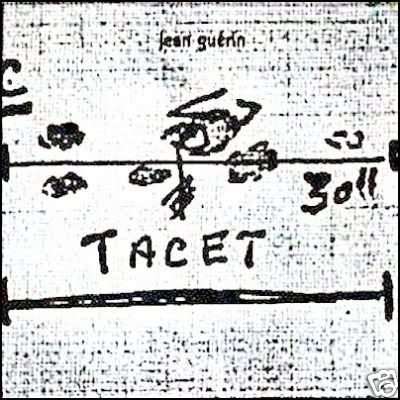
Jean Guérin, TACET


Futura, 1971; reissued by Elica; availability uncertain

8 tracks, 39:11

The French never cease to amaze and confound! Jean Guérin was mostly known as a drummer, appearing on quite a few free jazz sessions. For this, his only solo outing, he set out to make a soundtrack to a film called BOF. Having never seen the film, I'm not certain how much of the album was actually used. The soundtrack was released as TACET on the legendary Futura label (also known for putting out records by Jacques Thollot, Red Noise, and Mahogany Brain). His choice of musicians is absolutely impeccable; notable figures of the French scene like Bernard Vitet and Philippe Maté contribute their talents. Vitet even plays "underwater trumpet"! Guérin himself takes up a lot of instruments, from electric bass to darbouka to VCS3 and sound generators. Overall, TACET is full of strange sounds and even stranger arrangements. Françoise Achard contributes wordless vocals to several tracks, and most of the time her voice sounds like another instrument rather than a human being. The use of both contrabass and electric bass on some tracks provides an interesting sound, considering the electric bass is treated to sound nothing like it should (this isn't a bad thing!). It's hard to pick out standout tracks, since this all flows together perfectly and is best experienced all the way through. The first and last tracks, "Triptik 2" and "Gaub 71" respectively, both feature the same fast rhythm (which sounds like a mix of darbouka and primitive drum machine), but otherwise are different entities. "Gaub 71" is the more experimental of the two, with a constantly evolving structure over its eight minutes. "Triptik 2" is punctuated with the trumpets of Jean Paul Rondepierre and Vitet, and Maté contrubutes his saxophone. This is the closest that TACET comes to jazz, as the remaining tracks are pure explorations of sound, somewhere between free jazz and the cosmic explorations of Kluster et al. Truly an obscure masterpiece, TACET deserves a much bigger audience; other reviewers have pointed out that this points forward to Herbie Hancock's space classics MWANDISHI and CROSSINGS, which isn't very far off. It definitely points forward to post-rock as well, with its use of studio effects and loose structures. HIGHLY recommended!

Sunday, August 2, 2009

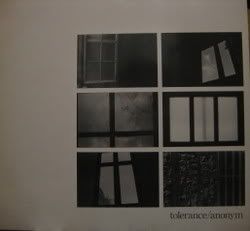
Tolerance, ANONYM


Vanity, 1980; out of print

9 tracks, 40:08

Tolerance were a mysterious Japanese duo consisting of Junko Tange on voice, synth, and piano and Masami Yoshikawa on guitar. There's a good chance both performed on other electronics too. For this, their first LP, Tolerance created an absolute masterpiece of minimal electronic atmospherics. The guitars alone cover a large variety of styles, ranging from gentle sliding to folky noodling to full-on skronk. The accompanying sounds also manage to cover quite a range, while all being decidedly experimental. Spoken female vocals (which seem to be in French!) mix in effortlessly with strange electronic rhythms and gentle Satie-esque piano, creating a unique sound. The electronics used truly aren't easy to identify, and may even be homemade. Each track is excellent, and they have some truly odd and interesting names. "I Wanna Be A Homicide", "Laughin In The Shadows", "Tecno-Room"..... really, the song titles alone should tell you this is great! This could even be considered Japan's krautrock album! Loose comparisons to such other visionaries as the Sperm and Moolah can be made, and this definitely holds a place as one of those truly unusual albums that every serious avant-gardist should hear. They went on to record another album, DIVIN, which is almost as good. Sadly, neither is available currently (there was a grey-area vinyl of DIVIN a few years back), and both are in sore need of a reissue.

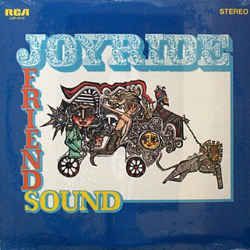
Friendsound, JOYRIDE


RCA Victor, 1969; reissued on grey-area vinyl a few times; availability uncertain

6 tracks, 34:43

It's hard to believe this was a Paul Revere & the Raiders side project. There's no real credits on the album, but yes indeed, this is Raiders members using the studio as an instrument. It sounds about as far removed from their main project as possible. What more can you expect, when "Brotherhood" is listed as producer?!?!?!? What few liner notes describe the recording of this album as "a musical free-for-all", which is as good a description as any! Beginning with the slow and druggy rock jam "Joyride", Friendsound soon leave any semblance of pop or rock behind. "Childhood's End" combines a mechanical rhythm (as in actual industrial machinery, not drum machine) and the chant "send me a dream" in a way that sounds a lot like what Cromagnon was doing; in fact, JOYRIDE as a whole has a lot of similarities to Cromagnon's only album (pop stars freaking out, chants and other non-traditional vocals, use of primitive sampling in doses). "Love Sketch" is an almost new agey instrumental, not too remarkable but not truly bad, and it goes right into "Childsong". This is a bizarre track made up of the sounds of a playground, chimes, flute or mellotron (it's hard to tell), and a LOT of tape manipulation. The kids' voices are subtly twisted, and the music grows louder while still exuding a calm beauty. This is a highlight of the album, and it ends side one on a great note. Side two consists of two tracks, and boy, are these weird! Both are about nine and a half minutes, and they're two different sides of the coin. "Lost Angel Proper St." has a bluesy organ, spoken effected vocals that get frequently eaten by the music, crazy electric guitar freakouts, and long stretches where the music changes completely, while still coming back to the original theme in a way. Last and definitely not least is "The Empire Of Light", which ends the album on its highest note; given the quality of the other tracks, this is saying a lot! Piano is the main instrument here, surrounded by all manner of sound effects. Everything from spooky organ to weird synthy squelches to unidentifiable tape manipulations comes into play, all with the meandering yet quite beautiful piano underneath. It's a truly amazing track, sounding remarkably like Moolah or Kluster. Far overdue for a reissue, JOYRIDE was a bold album that still sounds remarkably innovative. It's a shame they never recorded another album as Friendsound; they sure did continue on as the Raiders, but that's a little outside the scope of this blog. Perhaps that is for the best; this sort of thing is hard to capture twice. Consider this album a part of the 60s freakout holy trinity along with Cromagnon's CAVE ROCK/ORGASM and the Red Krayola's PARABLE OF ARABLE LAND, and until there's a proper CD reissue, try to hear it any way you can.

Monday, May 18, 2009

Negativland, NEGATIVLAND

Each cover is handmade and unique, so a picture would be useless*

Seeland, 1980; out of print**, but a mass-produced version is supposedly on the way

20 untitled tracks, 36:47

Nowadays known for their masterful satire of mass media and pop culture, Negativland began as a much different prospect. For their debut album, Negativland was Mark Hosler, Richard Lyons (both of whom were 17 when this was recorded!), and David Wills; the liners inform you that "occasionally you will hear the talents of" Peter Dayton, W. Kennedy M., and Joan. The instruments range from synths, organs, viola, guitars, tape loops, and the mysterious "Booper". While definitely primitive compared to their later work, the debut album is quite incredible on its own merits. A majority of the tracks are bizarre sound collages, featuring everything from household appliances and electronic birdcalls to the ambient sounds of televisions and radios. A few tracks do break from the "norm": a mournful acoustic guitar ditty here, a relatively traditional new wave tune there, and then there's one track with jittery rhythms and blips accompanying such random observations as "Play.... Black Sabbath....at seventy.... eight!". The sound collages, however, are the main draw, sounding like the bastard offspring of LUMPY GRAVY, THE FAUST TAPES, and early industrial a la Cabaret Voltaire or Nurse With Wound. It's not really musical by any stretch, but then does it need to be? Most fans tend to sell this album short; admittedly, it's an acquired taste, but give it a chance and it should grow on you. Their next two albums, POINTS and A BIG 10-8 PLACE, follow along a similar path, with fourth album ESCAPE FROM NOISE being considered the beginning of the satirical sound that Negativland is known for. I personally prefer the early work, since it's much less preachy and more about the genuine joy of having a twisted musical vision and the equipment to express said vision (but you should still hear their other albums if you haven't already; they truly are impressive). Negativland themselves are promising a reissue of the debut; while it won't have the unique covers, the "music" within still justifies the purchase.

*The packaging for this is truly great. The box itself is a thick cardboard box, like old reel-to-reel tapes came in. My copy's cover is a black and white photo of a guy brushing his teeth, pasted over a square of black construction paper. On the back is a piece of wallpaper, under which is a red sticker with the band's name, the catalog number,copyright information, and a hand-written "serial number" identifying which copy is yours (mine happens to be #1622). Inside, along with the CD, there are four inserts and a pin. One is simply a recipe for a coffee torte, another is a transcription of a bizarre food-oriented dialogue. The others have the credits for the album and a modified picture of a guy in pajamas whose arms reach nearly to the ground. Much like the album itself, the package is random but intriguing.

**Apparently limited to 9500 LPs and 4500 CDs

Monday, May 11, 2009

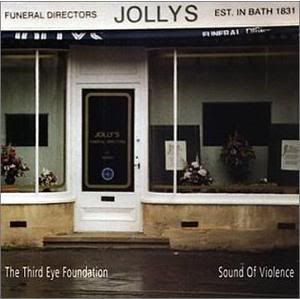
Third Eye Foundation, SOUND OF VIOLENCE


Domino/Merge, 1997; out of print, but two tracks are available on COLLECTED WORKS

4 tracks, 23:52

Following the extremely disturbing GHOST (reviewed previously here), Matt Elliott went further into the recesses of twisted electronics. SOUND OF VIOLENCE is perhaps the best non-LP 3EF release. Three of the tracks are over seven minutes long; the under-three-minute "Pain (Violence Version)" is the only track that feels like filler, but it's interesting filler nonetheless. The first two tracks, "Sound Of Violence" and "A Name For My Pain", are excellent progressions from GHOST. Frantic drum'n'bass beats are cloaked in whirlwinds of noise, from what sounds like the shrieks of the damned to jazzy bass and guitar accents. The sound is much cleaner than on GHOST; however, it takes a few listens to notice, so dense are the compositions. Little of Matt's SEMTEX-era sound remains (save for the amazing beats), and at times this sounds like what Stockhausen or Xenakis may have come up wuth had they dabbled in drum'n'bass. The final track is "Corpses (Version)". This is a skeletal remix of "Corpses As Bedmates", retaining the original's structure while massively reducing the noise and shaving off two minutes. It's much more effective than it should be, and its inclusion alone justifies this EP. Luckily, "Sound Of Violence" and "A Name For My Pain" are both well worth the price as well. This is an excellent transitional release, bidding farewell to 3EF's horrific and noisy early years while pointing forward to the less-frantic-but-still-jarring atmosphere of YOU GUYS KILL ME and LITTLE LOST SOUL. Unfortunately, this has gone out of print. "Sound Of Violence" and "A Name For My Pain" are included on disc one of COLLECTED WORKS along with GHOST and two tracks off the "Semtex" single, but you really should find the standalone release so you can hear "Corpses (Version)". A good used copy should be fairly inexpensive and easy to find.

Saturday, May 2, 2009

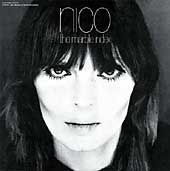
Nico, THE MARBLE INDEX


Elektra, 1968; reissued with two bonus tracks on CD, and with more bonus tracks as disc 1 of THE FROZEN BORDERLINE; available

Original LP: 8 tracks, 30:48; standalone CD reissue: 10 tracks, 37:48

Let me say it right now: I'm well aware I'm not the first person to review this album. Chances are if you're here, you've heard this and know whether you like it or not. If you have yet to hear this, be prepared. It's one of the most gorgeously depressing things I've ever heard. Most of the tracks are based on a minimalist framework of Nico's powerful vocals and spare harmonium arrangements, with ex-Velvet Undergound bandmate John Cale providing instrumentation as he sees fit. It's truly not related to rock of any sort; "No One Is There" is just Nico and Cale's viol work (not certain what sort of viol it is here), while "Lawns Of Dawns" finds her and the harmonium accompanied by distant crystalline sounds and atmospheric guitar noise. "Facing The Wind" has Nico's vocals electronically processed for a particularly disorienting effect. The last two tracks are the highlights for me. "Frozen Warnings" is an excellent piece of soothing drone-rock, Cale's multiple layers of viols building up to an excellent climax; "Evening Of Light", on the other hand, finds Nico's increasingly insistent vocals surrounded by a nightmarish mass of echoing strings and atonal guitar skronk, rumbling to a distinctly ominous end. Excellent, of course! The album was reissued on CD with two bonus tracks, neither of which is particularly essential; "Nibelungen", though, is an interesting example of how Nico sounded a capella. A much better way to hear this is THE FROZEN BORDERLINE; disc one is the remastered LP, plus alternate versions of several tracks (including "Nibelungen" with musical accompaniment, but excluding the a capella version) and some interesting outtakes. Disc two is Nico's DESERTSHORE remastered, plus demo versions of those songs. DESERTSHORE is almost as good as THE MARBLE INDEX, and the bonus material is mostly worthwhile, making THE FROZEN BORDERLINE the essential purchase.

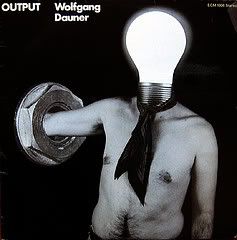
Wolfgang Dauner, OUTPUT


ECM, 1970; out of print

6 tracks, 37:35

Ahhh, Wolfgang Dauner! From his early free jazz albums (FREE ACTION being the best) to his insane combo Et Cetera (and of course the psych-jazz classic THE OIMELS), the man never fails to amaze and confound. On this album, he is joined by his usual (and EXTREMELY talented) drummer Fred Braceful and frequent cohort Eberhard Weber on various string instruments. Braceful was also a member of the insanely creative Exmagma. Both would later be part of Et Cetera as well. Dauner himself handles piano, Clavinet, and ring modulator. The results are absolutely incredible. Braceful's drumming can go from steady to insanely free-form at the drop of a hat. Weber is no slocuh on his instruments either, capable of both tasteful cello atmospheres and near-Sharrock freakouts; Dauner uses the ring modulator to occasionally turn his guitar sounds into something else entirely. Dauner himself is fine playing the piano in a relatively straightforward fashion, or using the modulator to heavily process its notes for an unearthly effect. He treats the Clavinet pretty much the same way, and its distinct tones are made even more alien in the process. Reviewing individual tracks is pointless, as everything from the murky "Mudations" to the closing "Brazing The High Sky Full" (co-written by Braceful and featuring his eccentric vocals) needs to be heard in one go for the full effect. Every track holds its surprises; one particular highlight is "Nothing To Declare", which manages to come closest to jazz. It's also the longest track at ten and a half minutes, not a second of which is wasted. It's somewhat surprising this came out on ECM, as the wild experimentation present here is far removed from the usual ECM sound. Fans of electronic jazz should find plenty to love here, as will adventurous post-rock fans; rock fans may be slightly put off, as this is by no means a rock record, but give it a chance anyway. Somebody really needs to reissue this pronto!

Patrick Vian, BRUITS ET TEMPS ANALOGUES


Egg, 1976; out of print

9 tracks, 39:49

Six years after Red Noise's lone LP (reviewed previously on this very blog!), main weirdo Patrick Vian unleashed this electronic rock masterpiece. The son of musician/author/playwright/etc. Boris Vian*, Patrick decided to experiment heavily with Moogs and Arps, aided by a sequencer and some very talented sidemen. Georges Granier provides marimbas, scissors(!), "occult noises"(!!), and Fender Rhodes, while Bernard Lavialle contributes guitar and Mino Cinelu provides percussion. None of the other players shows up very often, with Cinelu contributing to a mere two tracks and Lavialle being easily discernible on just as many. While opening track "Sphère" implies this will be straightforward rock, with its introduction of a powerful riff and some frantic tinkling percussives, Vian soon enters on his synths to add some interesting coloration. This comes very close to sounding like a less Fripp-enthralled Heldon. "Grosse Nacht Musik", on the other hand, is all synth textures, comparing favorably to other electronic music of the time while remaining distinct. No two tracks really sound alike, going from the electro-exotica of "Oreknock" to the sleazy and bluesy "R&B Degenerit!" (this one REALLY sounds like its name!) and ending with the musique concrete of "Tricentennial Drag". Curiously, one of the all-synth numbers (and one of the highlights) is called "Tunnel 4 Red Noise"; it certainly doesn't sound like his former band, but the same sense of whimsy and wonder is present throughout. Every last note has aged gracefully, and there are some bands even now who would give anything to sound this amazing. It almost seems incredible that nobody has seen the need to reissue this; it certainly would give Stereolab, Pram, et al serious competition if it was a new release! This is truly unique electronic music from the period that defined the genre. For the record, the album's title means "similar places and times" in English.

*Do yourself a favor and listen to some Boris Vian. Tracks like the EXTREMELY dirty "Fais Moi Mal Johnny" certainly provide some insight to Patrick's bizarre sense of humor. They're also just plain fun, and catchy as hell!

Sunday, April 12, 2009

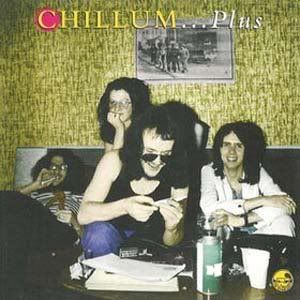
Chillum, CHILLUM... PLUS


Mushroom, 1971; reissued with bonus tracks as CHILLUM...PLUS by See For Miles; availability uncertain

CHILLUM...PLUS: 11 tracks, 66:27

This band has a slightly convoluted history. Keyboardist and vocalist Ken Elliott and drummer Kieran O'Connor were originally in the insanely creative Second Hand, a group that definitely remained psychedelic while also predicting prog rock. After two superb albums (REALITY and DEATH MAY BE YOUR SANTA CLAUS), Second Hand had lost their guitarist. Bassist George Hart, who joined on DEATH MAY BE YOUR SANTA CLAUS, still was in the group, so they auditioned new guitarists. Tony McGill clicked perfectly with the band, so perfectly that his audition evolved into an incredible twenty-plus minute piece of improvised rock, and apparently forced a renaming from Second Hand to Chillum. Coming close to some of the most out-there krautrock jams (Guru Guru and Amon Duul II come to mind), Elliott's pummelling organ and Hart's fluid bass combine with O'COnnor's fierce percussives and McGill's incredibly detailed improvisations. Given the name "Brain Strain" this originally occupied side one of the original CHILLUM LP; on CHILLUM PLUS, which contains the entire sessions, it is in an extended form. The first track on ...PLUS is a miniature bit of laughing contributed by two doctors who frequented the pub next door to the studio; only those present know if the laughter was their genuine response or a skit. Chillum continue on their weird path, at times using O'Connor's snoring as a percussion line (on "Land Of A Thousand Dreams") or giving him four minutes to show off his drumming chops ("Too Many Bananas"). "Yes! We Have No Pajamas" is another extended improv, firing off with no mercy until its ten and a half minutes have come to a stop. Suddenly, "Promenade Des Anglais" pops up, and you wonder if someone's recorded the wrong track. This little number sounds disturbingly somehwere between smooth jazz and muzak, but it is followed by a goofy voice saying "'ere, I thought that was RATHER GOOD! Oh super! What's next?". This nicely gives away the joke, and makes for an impressive end to the original album. The bonus tracks on ...PLUS are fairly good. "Fairy Tale' has interesting music, but is hampered by out-of-place vocals. "Celebration" sounds the most like the album proper, being a fiery improv, while "This Is Not Romance" consists solely of piano and wounded vocals, making for a nice contrast. "Incubator", two takes of which are included, was actually created by the engineer using an oscillator and a rotating speaker; they're interesting little tracks, but nothing more. Chillum essentially imploded during these sessions; O'Connor and Elliott continued on for two albums as the less interesting Seventh Wave and then disappeared. CHILLUM...PLUS, as well as all related projects, would mostly appeal to adventurous progheads and krautrock fans, and it comes highly recommended to them. Adventurous rock fans will probably find a lot to like here as well, but be aware this IS every bit as druggy and spaced out as the band's name implies (a chillum being a device for smoking hashish).

UPDATE: As of 2010, this has been reissued by Sunbeam. This edition restores the original cover and has four bonus tracks: "Celebration" and "This Is Not Romance" reappear, as do the previously unissued "Three Blind Mice" and "The Lone Commuter". I haven't heard them, but hooray to Sunbeam for making this more readily available!