Monday, August 30, 2010

Rune Lindblad, DEATH OF THE MOON: ELECTRONIC & CONCRETE MUSIC 1953-1960


Pogus, 1997; available

8 tracks, 73:54

The late Rune Lindblad (1923-1991) was a true pioneer, yet he's all but unknown to the majority of music fans and scholars. Actually, none of the pieces collected here were released in any form until 1988! This is a true shame, for this disc contains some incredible examples of mixed electronic music. By "mixed" I mean Lindblad used both pure electronic and concrete sources. True, contemporaries like Dockstader and (earlier) Stockhausen did the same thing; however, at the time most composers favored one technique or the other, and they tended to be outspoken against the other. Audiences and critics hated his music at the time, but now it stands as a truly astounding body of work. As the title makes clear, DEATH OF THE MOON covers 1953 to 1960. The sound quality can be murky at times, but better than expected given the age of the source material. The pieces are presented in chronological order, and they definitely do plot a progression in technique and resources. My absolute favorite of the bunch is the incredible "Evening (Op. 7)"* from 1956. It's truly difficult to describe, but suffice to say it has some startling no wave-esque guitar alongside Lindblad's unidentifiable concrete sounds. The lengthy "Optica 1 (Op. 16)", composed from 1959 to 1960, also deserves mention. Apparently using actual video tape (as sound source or recording medium, I'm not sure), this squelchy sequence of bursts and blips sounds oddly like much-later glitch! From a technical standpoint, "Party (Op. 1)" from 1953 is the most primitive track, sounding like little more than bits of conversation fading in and out of a bed of feedback; rest assured, it's still a great listen! Early industrial music is the best possible comparison, and considering the age and obscurity of these pieces, it's sadly not shocking that Lindblad wasn't hailed as a VERY early pioneer of that genre. Now that his catalog is more available, everyone with even a passing interest in early electronic music can experience true masterpieces of the genre. Pogus' companion volume OBJEKT 2 covers 1962 to 1988, while the Swedish lable Elektron put out a two-disc eponymous compilation collecting unreleased pieces from 1960 to 1980. Both of these are as highly recommended as DEATH OF THE MOON. While harder to find, the 1975 LP PREDESTINATION is also worth hearing, but be aware it favors electronics over concrete sounds.

*With rare exceptions, most Lindblad compositions end in "(Op. #)".

Saturday, August 28, 2010

Leo Coomans, BASEMENT RECORDINGS 1978-1982


Ultra Eczema, 2009; possibly available still, but this was limited edition vinyl, so expect to search

5 tracks, 35:59

Alright, folks, we're into strange territory here. Coomans is a long-time player in the Antwerp jazz scene. Not much had been released up until this compilation, but what was available showed Coomans as an adventurous sax player. This comp, however, shows that he had a secret career, making music that bears extremely little relation to jazz in his own basement. Take "Aerosol", for instance. You see that thing on the cover? That's an aerosol machine which Leo used to treat his asthma. It's also what he sings into on "Aerosol", and it's STUNNING. It starts off with the ambient buzzing of the machine, but as the track progresses, Coomans' mouth movements and singing alter the sound. Voice and buzz combine into what sounds for all the world like a biomechanical Tuvan singer. "Watermuziek" is the other A-side track, and this one is fairly out there too! For this extended piece, Coomans plays "tubes", saxophones (baritone and soprano), and his own voice..... into a bathtub full of water!!!! What's shocking about this track is how much it sounds like musique concrete or even glitch at times; actually, parts of it even sound like a muffled version of Jac Berrocal's "Bric-A-Brac". The B-side starts off with "Het Geraas En Het Gebral", another extended piece. This one really must be heard to be believed, but if you can imagine Riley's "Poppy Nogood" in lo-fi devolving into a free jazz maelstrom with vacuum cleaner accompaniment, you're close to the mark (and yes, there literally IS a vacuum cleaner in there). "Zonder Titel" is a brief harmonica-and-overtone piece, strangely pretty in its own way while completely covered in fuzz and distortion. Finally, Coomans treats us to his cover of "Louie Louie", which is perfomed on vacuum cleaner, alto sax, "tubes" again, and a "tape recorder with accessories" (and of course Coomans' voice as well). You've never heard a version of "Louie Louie" like THIS before, especially since it doesn't even vaguely resemble that standard until the track's almost over! Full of outsider creativity and jarring sounds, this compilation really should be more widely available, and hopefully it will be. Good luck finding this one, kids, but if you love avant-garde music as much as I do, you NEED it.

Wednesday, August 18, 2010

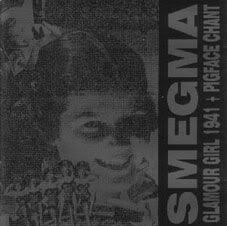
Smegma, GLAMOUR GIRL 1941 + PIGFACE CHANT


Japan Overseas, 1997 (see review for original release details); available

14 tracks, 70:06

Well, it's about time I got around to reviewing Smegma! This handy CD compiles their first two releases, GLAMOUR GIRL 1941 (1979, LAFMS) and PIGFACE CHANT (also 1979 but recorded in '74, Pigface Records) plus four bonus tracks. I'm not gong to type out everyone involved on these releases, but suffice to say Smegma has always had a fairly large and constantly fluctuating lineup and this is no different. PIGFACE CHANT takes up the last four tracks*. These are group vocal improvisations with very little (if any) musical accompaniment. Somewhat along the lines of certain tracks by Cromagnon, they're entertaining but VERY much an acquired taste. The lengthy "The End" (the bonus track) features improvised music along with the chanting, making it probably the most accessible PIGFACE track. The GLAMOUR GIRL material is mostly instrumental and covers a wide musical canvas. The opening "Difference" is fairly straight jazz improv, while lengthy closer "Half A Billion" is a fascinating organ-drenched song(!) that wouldn't sound out of place on a Can album. The brief "Die Wo-Wo" predicts Ju Suk Reet Meate's solo album (reviewed here previously), with its tape manipulations and surreal atmosphere, while "I Am Not Artist" has deranged vocals driving the title home to the accompaniment of another superb krauty jam. The other three tracks are no less intriguing, and they add up to a much more diverse experience than one would expect from a group like this. GLAMOUR GIRL's bonus tracks** are two pieces of plunderphonic/improv fusion (which, not surprisingly, use many of the same samples that Meate's solo album employed) and the epic live blurt "Flashback 79". Smegma are still making music and inspiring countless improvisational and noise bands***, but these two releases show that they were great from the start. Not just a tuneless noisefest, but nowhere near mainstream accessibility, this is the perfect introduction to one of the American avant-garde's true stalwarts. Even though this is a Japanese import, you can find it fairly easily and inexpensively. I heartily recommend that you do (even if most people won't be able to read the thick booklet, since it's entirely in Japanese).

*Well, technically, three tracks off the original single and a bonus track end the CD, but honestly, if Smegma felt the other two tracks were superfluous, I'm not going to argue.

**For the reocrd, tracks 1 through 7 are GLAMOUR GIRL 1941, and tracks 11 to 13 are PIGFACE CHANT. I'm sure you can figure out which ones are the bonus tracks! ;)

***Wolf Eyes in particular have both collaborated with Smegma members and named an album after one (BURNED MIND).

Wednesday, July 21, 2010

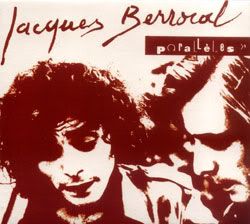
Jacques Berrocal, PARALLÈLES


d'Avantage, 1977; reissued by Alga Marghen; available

Alga Marghen edition: 10 tracks, 61:14

Jacques (he wasn't Jac just yet!) Berrocal has been reviewed here before. This, his second album, is probably the single best-known thing he ever did. The reason for that is the avant classic "Rock'n'Roll Station", which Nurse With Wound later covered*. Here, it is scored for the powerful voice of Vince Taylor, Roger Ferlet's repetitive double bass, and Berrocal's bicycle improvisation(!). It's admittedly a great track, but it almost pales in comparison to the others. "Parallèles" itself is an improvisation by Berrocal and Ferlet, who trade off runs on valve trombone and regular trombone respectively for eight and a half minutes. Similarly, "Galimatias" is three minutes of Berrocal on solo cornet. It says a lot about Berrocal that these two tracks are endlessly fascinating despite their limited instrumentation. By contrast, "Post-card" has trombonist Berrocal and pocket trumpeter Ferlet accompanied by Michel Potage on guitar and voice. What's unusual is that this was recorded in a pigsty (yes, you can hear the pigs), and Potage recites the back of a random postcard. These four tracks made up the original A-side. "Bric-à-Brac" takes the honors of occupying the B-side, and it's a doozy for sure! In addition to Berrocal, Ferlet, and Potage (who play about fourteen instruments between the three of them), five other players are involved: cellist Philippe Pochan, double bassist Pierre Bastien, pianist Richard Marachin, and multi-instrumentalists Claude Bernard and Bernard Vitet**. True to its name, "Bric-à-Brac" is an epic noisy improvisation, never sitting in one place yet never really overdoing it either. It's subtitled "To Russolo", and that should tell you everything you need to know about how it sounds. Towards the end of the track, a version of "Rock'n'Roll Station" shows up. The album proper finishes on this delightfully unexpected note, but Alga Marghen has generously added five bonus tracks spanning '72 to '79. These range from the sound collage of "Villa Povera Naturale" to the electronic experimentations of "Cryptea IV" and "Lisylis Pavillion". The best, however, is "Occupé", a six minute gem from an unreleased Michel Potage LP featuring most of the players from "Bric-à-Brac". While this is a varied and unusual album, it's definitely a great representation of several sides of Berrocal. It's also my absolute favorite Berrocal album.

*Berrocal and Stapleton have worked together many times, going back to the second NWW album.

**Vitet, you may recall, was in the excellent Un Drame Musical Instantané.

***You may recall her from Jean Guérin's TACET; she also appears on Vitet's LA GUÊPE.

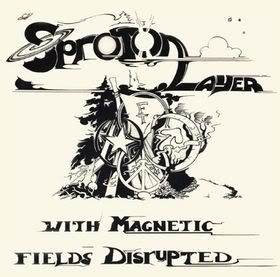
Sproton Layer, WITH MAGNETIC FIELDS DISRUPTED


New Alliance, 1991; out of print

12 tracks, 40:14

This is one of those gems I find that wasn't truly released until years after it was recorded. Sproton Layer was a group of Ann Arbor teens (all between 15 and 17 when the project started in '68) deeply under the influence of Barrett-era Pink Floyd, free jazz, Beefheart, the Stooges, etc. Why should you care? Well, it just so happens that the brothers Miller comprised 3/4 of this group. Bassist/lead vocalist Roger went on to Mission Of Burma et al eight years later (after relocating to Boston), while drummer Larry and guitarist/vocalist Ben joined Destroy All Monsters for the seminal "Bored" single. The brothers had previously performed together as Freak Trio, which was apparently a mostly improvisational project. The remaining Sproton member was trumpeter Harold Kirchen, who brought an unusual yet completely wonderful touch to the band. As for the music itself, these guys put some "professional" groups to shame! Having performed live several times in the previous two years, Sproton Layer recorded this album in 1970. Simultaneously ahead of their time yet perfectly suited to it, Sproton Layer created songs that can be noisy and heavy or pretty and dreamy, often within the same short composition. Larry's unusual jazz-influenced drumming combines perfectly with Roger's chugging bass, while Ben has absolutely no problem either following along or going off on noisy tangents; he even delves into proto-noise rock and surf modes at times. Secret weapon Harold punctuates all the right moments with expert trumpeting, and while his presence is a little startling at first, after a few listens you notice just how much that damn trumpet adds. To their credit, there's also not a drop of filler on this album*. The lyrics can be pretty goofy in a psychedelic way (sample: "I know where there's a bush!/O-VER THERRRRRRRE!"), but given the heavy Barrett influence that's perfectly understandable. A Barrett-influenced Mission Of Burma is probably the best description I can give this, but it really should be judged on its own merits as a remarkable recording by a young band who never got their due. While this IS out of print, you should be able to get a good used copy for less than $5 (I did!). This was the last thing Sproton Layer ever did; New Alliance released a three-song single at the same time that shows off their improvisational side on a track or two, and this is also worth hearing. Once you hear Sproton Layer, you'll be glad ANYTHING by them survived to be issued at all! Music this good shouldn't go unheard; why is it out of print now?!?!?!?!?! It's probably worth noting that the Miller boys get together periodically as M3, so if you like this that should be your next stop.

*Sadly, though, none of the songs on WITH MAGNETIC FIELDS DISRUPTED shows off their improvisational side all that much, but oh well, that's what the single's for.

Thursday, July 1, 2010

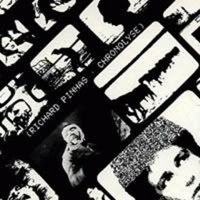
Richard Pinhas, CHRONOLYSE


Cobra, 1978; reissued by Spalax, Cuneiform, and Captain Trip; Cuneiform edition available

9 tracks, 52:56

First and foremost: Happy 100th entry to my humble lil' blog! Hooray and all that! Okay, on to the review.

Pinhas' group Heldon has already been reviewed here (and most of you probably knew about'em already!). This was Pinhas' second solo album to be released*. However, it was actually recorded in 1976 somewhere between Heldon's IV and V**; it just wasn't released until two years later. Truth be told, it's not really even a solo album per se. Side one had "Variations I-VII Sur Le Theme De Bene Gesserit" and "Duncan Idaho". These feature Pinhas and his Moog, truly solo. The "Variations" are exactly that, most being quite short (with the exception of "Variation VII") and all featuring the same basic set of sequences. Don't let that deter you, as they all form into a mesmerizing and literally trance-inducing mini-suite of minimalist analog bliss. "Duncan Idaho" is similar, but features its own unique set of sequenced eletronic sounds. It's also much longer than any of the individual "Variations" at just over six minutes. So far this sounds like a true solo effort, but then the massive side-long "Paul Atreides" comes along. This thirty-plus minute behemoth is essentially a Heldon track, with longtime Heldon drummer François Auger and sometime bassist Didier Batard joining Pinhas. Richard himself tackles guitar, Mellotron, and ARP synths. "Paul Atreides" opens with eerie drones and what could be classic sci-fi sound effects, slowly progressing for several minutes before Pinhas unleashes his soaring Frippian guitar and Auger starts to provide a suitably motorik-style beat, with Batard completing a solid rhythm section. After a stretch of true space rock, the song comes full circle back to the space drone of the beginning. It's a truly intimidating listen, and it just may be the single greatest track in Pinhas' entire catalog. The rest of the album is great, too, making this one of the most important and enjoyable Pinhas-related releases. Oh, and if the track names seem familiar, Pinhas got them all from Frank Herbert's DUNE; he also "dedicated (this album) to all S(ci).F(i). freaks", for what that's worth!

*His first, RHIZOSPHERE, has its moments but is mostly inferior to CHRONOLYSE in my opinion.

**Yes, the titles are much longer, but for the sake of space and time I'm referring to them by number only.

Tuesday, May 18, 2010

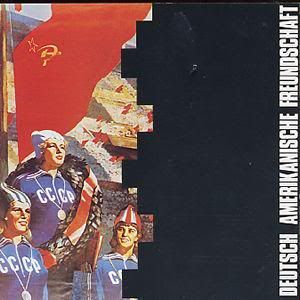
Deutsch Amerikanische Freundschaft, DIE KLEINEN UND DIE BÖSEN


Mute, 1980; available

19 tracks, 38:40

Wow, this certainly took me long enough! DAF's debut album, PRODUKT DER..., was the very first album to be reviewed here. Now, almost 100 entries (the next review gets THAT honor) and three years into it, I'm finally getting around to their sophomore release! Kurt Dahlke and bassist Michael Kemner had departed (Dahlke for Der Plan and the solo project Pyrolator), while singer Gabi Delgado-Lopez was back in. Along with drummer Robert Görl and guitarist Wolfgang Spelmanns, the lineup featured synth whiz Chrislo Haas, who was on Der Plan's debut single and later co-founded Liaisons Dangereuses. Legendary producer Conny Plank was behind the controls for this release, which is ironic since he produced many krautrock classics; the slight krautrock elements of PRODUKT had completely dissipated by this point. The seven songss on the A-side were produced in the studio, while the B-side featured a brief studio piece and eleven tracks from an absolutely unhinged live show. The latter was supposedly recorded by accident; the technician wanted to record Wire, who DAF was opening for. What a fortunate mistake! These chaotic bursts of noisy synthpunk are an absolute treat. Delgado-Lopez is at his most aggressive, very rarely singing in the deep voice he became known for. Most of the time he's screaming, howling, or blasting out the words at a rapid pace. The band is at the top of its game, with Görl providing furious punk drumming while Spelmanns and Haas create a frenzied mass of guitar noise and early synth squelching. For variety, the title track is a brief synth solo by Görl, while the closing "Y La Gracia" is performed by Haas and Delgado-Lopez alone. These two tracks, along with the brief and goofy "Volkstanz", provide some relief from the onslaught of the remaining live gems. A particular B-side standout is "Die Lustigen Stiefel", which has Delgado-Lopez singing about how "the funny little boots are marching over Poland" to the tune of "nanny-nanny-boo-boo" while the others provide a NY No Wave-style herky-jerky groove. The studio track, "Gewalt", is a nice bit of noise that's far too brief; a track of the same name appeared as the B-side to "Kebabträume", but they're different songs. The A-side of DIE KLEINEN is rather good as well; "Essen Denn Schlafen", "Co Co Pino", and "Nacht Arbeit" are early synthpunk bliss, and the lengthy atmospheric "Osten Währt Am Längsten" is both a great introduction and a nice bit of calm on what is otherwise one hell of a ride. After this, DAF would release two more punky singles (both with EXCELLENT B-sides as well!) before Spelmanns and Haas departed. Görl and Delgado-Lopez continued as a duo, releasing a couple albums of decent early EBM. They've reunited and had side projects and whatnot many times since, but PRODUKT and DIE KLEINEN are their most experimental and daring works. As a nifty bonus, the lyrics are provided in German, Spanish, and English!

Friday, May 14, 2010

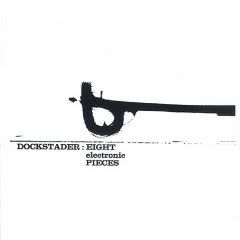
Tod Dockstader, 8 ELECTRONIC PIECES


Folkways, 1961; reissued by Locust; available

8 untitled tracks (of course!), 36:45

With this album, Tod Dockstader's unique brand of electronics was introduced to the world. Using both purely electronic and concrete sources, Dockstader brought his expertise at editing (picked up while working for cartoon companies!) to his music. It's impossible to tell what sounds are what. Different elements weave in and out, always giving way to fresh noises. It's not as random as this sounds; these are definitely electronic PIECES with a set structure and detectable progression. "Organized Sound" (the title of a later Dockstader LP) sums it up nicely. The lengthy seventh and eighth pieces are definite highlights, but there's not a single wasted moment on this whole collection. Even the monophonic recording doesn't blunt the impact of this disc! Folkways sure was bold to release this, but kudos to them. Dockstader would make more records, retiring for a long time after the stressful sessions for OMNIPHONY 1 (a story to be told in later reviews*). He's recently been active again and creative as ever. This is a pretty brief review, but know this: If you like early electronic music and you're unfamiliar with Dockstader, GET THIS NOW! For that matter, anything by Dockstader is guaranteed to please, so pick it up on sight.

*I have yet to acquire OMNIPHONY 1 or the compilations QUATERMASS and APOCALYPSE, but once I do they'll receive reviews as well.

Thursday, May 13, 2010

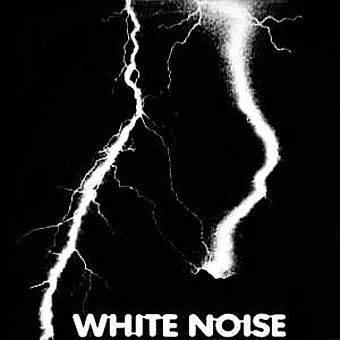
White Noise, AN ELECTRIC STORM


Island, 1969; available

7 tracks, 36:22

What do you get when you combine an expat American double bassist (with an interest in electronics) and two audio wizards from the BBC? Answer: This gem of an album! While future White Noise albums were mostly David Vorhaus (the expat) alone, this album also featured the legendary Delia Derbyshire and Brian Hodgson. Derbyshire is most famous for her electronic DOCTOR WHO theme, while Hodgson created the enduring sound effects associated with the Daleks and the TARDIS. Those sci-fi credentials give you a hint of what this album is about, but nothing more. Painstakingly assembled the old-fashioned way from tape snippets, this is a masterpiece of pop concrete. For the first five tracks (the A-side, or "Phase-In" as they put it), the group delivers grade-A psychedelic pop. Maybe "pop" isn't quite right; there's no way they could have expected the cheeky "My Game Of Loving" to get any airplay with its combination of densely arranged blips and bleeps, Beach Boy-esque vocals, and apparently authentic orgy sounds! That lapse of taste aside*, the other tracks are just catchy enough to be better known while being just too bizarre for the mainstream. The vocals (courtesy John Whitman, Annie Bird, and Val Shaw) aren't always great, but they serve their purpose well enough. "Love Without Sound" predicts future trends like illbient and trip-hop with its slow smoky atmosphere and rolling drum track, while "Here Come The Fleas" is a short novelty track that thankfully stops just before it gets irritating (even if it does have a nifty distorted guitar in the mix). Side two ("Phase-Out"), on the other hand, is another story! The obvious highlight is the eleven-plus minute "The Visitation", a goofy-but-eerie epic with plenty of creepy whirring noises and a gloomy plot involving a deceased biker trying to talk to his grieving girlfriend.... and failing. It's somewhat like listening to an EC comic story as performed by Kraftwerk! It just so happened that this track took a while to make, and Island started to get impatient. After a year, the label demanded the finished album; under threat of a lawsuit, the band produced the final track in one night, with assistance from jazz drummer Paul Lytton (you might remember that name from my review of Area's EVENT '76). The resulting jam was called "Black Mass: An Electric Storm In Hell", a fitting title if there ever was one! It begins with ominous (though hokey) group chanting, leading right into Lytton's furious and free drumming. Lytton is accompanied by a droning tape loop, punctuated with random screams and bursts of noise. "Black Mass" is VERY out of place, but surprisingly it's one of the highlights and a worthy conclusion. The whole collection is an early electronic masterpiece that still sounds remarkably fresh. Derbyshire and Hodgson left White Noise after AN ELECTRIC STORM, while Vorhaus sporadically revives the name. Subeqent White Noise albums have their moments, but AN ELECTRIC STORM will always be the crowning achievement under that name. All other works by Derbyshire** and Hodgson are absolutely recommended, but unfortunately their works aren't easy to find outside of DOCTOR WHO-related compilations.

*While I'm not a prude by any stretch, this is one of THE goofiest attempts at sexiness I have ever heard. No kidding!

**The extremely rare ELECTRO-SONIC is one of Derbyshire's best works; if you can find it, it makes a great companion to AN ELECTRIC STORM.

Tuesday, May 4, 2010

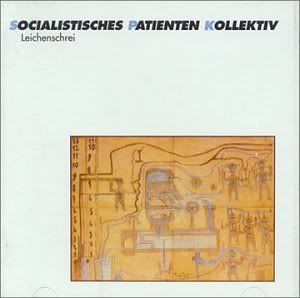
SPK, LEICHENSCHREI


Thermidor, 1982; reissued by Mute; available

14 tracks, 43:18

While I'm not the first to review it (see http://thetintinnabularium.blogspot.com/2009/02/spk-leichenschrei-1984.html , for example), I feel the need to assure everyone that this is indeed one of the finest early industrial releases.

Australia's SPK* were one of the first industrial bands. For this nightmare of an LP, SPK were Oblivion (a.k.a. main instigator Graeme Revell; various instruments), NE/H/IL (Neil Hill; electronics), and (James) Pinker (percussion). LEICHENSCHREI was their second LP, following some intense singles** and the primitive INFORMATION OVERLOAD UNIT album. Members allegedly worked in the mental health field, a theme that carries over to the music. A heavily percussive mass of sound is the result, with disturbing soundbites and samples weaving in and out of the mix. It's all very structured and rhythmic compared to most contemporaries, but that's the ONLY concession to accessibility. This is every bit as disturbing and grotesque as Throbbing Gristle, with the prominent rhythms doing little to blunt the impact of the other sounds and noises. Well, pehaps it's not COMPLETELY devastating; things calm down slghtly towards the end of the album. Highlights are hard to pick out, and the initial LP release was divided into two sides with no distinct tracks (one side ended in a lock groove). With that in mind, while it's harrowing, this is best experienced from start to finish. Be warned it's still every bit as paranoia-inducing as it ever was, and definitely be sure you're in the right frame of mind before playing this. I'd hate to see what could happen otherwise.

It's worth mentioning SPK's DESPAIR video here. This is essentially concert footage mixed with some truly nightmarish imagery. The parts with Revell tearing chunks off a skinned horse's head and chewing them onstage is one of the less disturbing images on DESPAIR, and while it's not grosser than many FACES OF DEATH-type collections, the atmosphere is absolutely nerve wracking and I've never been able to stomach the whole thing. If you think you can handle it, watch it, but be absolutely sure you know what you're getting into.

Revell would continue SPK with a revolving cast (plus his wife Sinan), eventually lapsing into fairly unexciting synthpop*** before disbanding. He currently does soundtrack works for major motion pictures, which isn't as surprising as it might seem. Hill took his own life two years later. Pinker appeared with a few other bands (most notably Dead Can Dance) and is apparently still active in music.

*For what it's worth, SPK stood for Sozialistisches Patienten Kollektiv for this album; the "Socialistiches" on the reissue is a misspelling. On other releases it's spelled out as Surgical Penis Klinik, SoliPsiK, SePpuKu, and System Planning Korporation.

**The compilation AUTO DA FE collects most of these tracks (including the particularly vicious "Slogun") along with some of the better synthpop-era tunes.

***With the exception of the excellent ZAMIA LEHMANNI: SONGS OF BYZANTINE FLOWERS, which shows Revell and company succeeding at ambient music.