Saturday, May 2, 2009

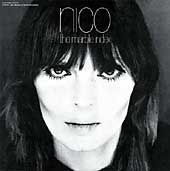
Nico, THE MARBLE INDEX


Elektra, 1968; reissued with two bonus tracks on CD, and with more bonus tracks as disc 1 of THE FROZEN BORDERLINE; available

Original LP: 8 tracks, 30:48; standalone CD reissue: 10 tracks, 37:48

Let me say it right now: I'm well aware I'm not the first person to review this album. Chances are if you're here, you've heard this and know whether you like it or not. If you have yet to hear this, be prepared. It's one of the most gorgeously depressing things I've ever heard. Most of the tracks are based on a minimalist framework of Nico's powerful vocals and spare harmonium arrangements, with ex-Velvet Undergound bandmate John Cale providing instrumentation as he sees fit. It's truly not related to rock of any sort; "No One Is There" is just Nico and Cale's viol work (not certain what sort of viol it is here), while "Lawns Of Dawns" finds her and the harmonium accompanied by distant crystalline sounds and atmospheric guitar noise. "Facing The Wind" has Nico's vocals electronically processed for a particularly disorienting effect. The last two tracks are the highlights for me. "Frozen Warnings" is an excellent piece of soothing drone-rock, Cale's multiple layers of viols building up to an excellent climax; "Evening Of Light", on the other hand, finds Nico's increasingly insistent vocals surrounded by a nightmarish mass of echoing strings and atonal guitar skronk, rumbling to a distinctly ominous end. Excellent, of course! The album was reissued on CD with two bonus tracks, neither of which is particularly essential; "Nibelungen", though, is an interesting example of how Nico sounded a capella. A much better way to hear this is THE FROZEN BORDERLINE; disc one is the remastered LP, plus alternate versions of several tracks (including "Nibelungen" with musical accompaniment, but excluding the a capella version) and some interesting outtakes. Disc two is Nico's DESERTSHORE remastered, plus demo versions of those songs. DESERTSHORE is almost as good as THE MARBLE INDEX, and the bonus material is mostly worthwhile, making THE FROZEN BORDERLINE the essential purchase.

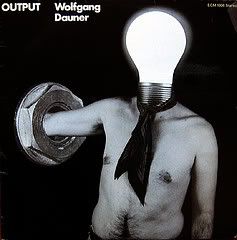
Wolfgang Dauner, OUTPUT


ECM, 1970; out of print

6 tracks, 37:35

Ahhh, Wolfgang Dauner! From his early free jazz albums (FREE ACTION being the best) to his insane combo Et Cetera (and of course the psych-jazz classic THE OIMELS), the man never fails to amaze and confound. On this album, he is joined by his usual (and EXTREMELY talented) drummer Fred Braceful and frequent cohort Eberhard Weber on various string instruments. Braceful was also a member of the insanely creative Exmagma. Both would later be part of Et Cetera as well. Dauner himself handles piano, Clavinet, and ring modulator. The results are absolutely incredible. Braceful's drumming can go from steady to insanely free-form at the drop of a hat. Weber is no slocuh on his instruments either, capable of both tasteful cello atmospheres and near-Sharrock freakouts; Dauner uses the ring modulator to occasionally turn his guitar sounds into something else entirely. Dauner himself is fine playing the piano in a relatively straightforward fashion, or using the modulator to heavily process its notes for an unearthly effect. He treats the Clavinet pretty much the same way, and its distinct tones are made even more alien in the process. Reviewing individual tracks is pointless, as everything from the murky "Mudations" to the closing "Brazing The High Sky Full" (co-written by Braceful and featuring his eccentric vocals) needs to be heard in one go for the full effect. Every track holds its surprises; one particular highlight is "Nothing To Declare", which manages to come closest to jazz. It's also the longest track at ten and a half minutes, not a second of which is wasted. It's somewhat surprising this came out on ECM, as the wild experimentation present here is far removed from the usual ECM sound. Fans of electronic jazz should find plenty to love here, as will adventurous post-rock fans; rock fans may be slightly put off, as this is by no means a rock record, but give it a chance anyway. Somebody really needs to reissue this pronto!

Patrick Vian, BRUITS ET TEMPS ANALOGUES


Egg, 1976; out of print

9 tracks, 39:49

Six years after Red Noise's lone LP (reviewed previously on this very blog!), main weirdo Patrick Vian unleashed this electronic rock masterpiece. The son of musician/author/playwright/etc. Boris Vian*, Patrick decided to experiment heavily with Moogs and Arps, aided by a sequencer and some very talented sidemen. Georges Granier provides marimbas, scissors(!), "occult noises"(!!), and Fender Rhodes, while Bernard Lavialle contributes guitar and Mino Cinelu provides percussion. None of the other players shows up very often, with Cinelu contributing to a mere two tracks and Lavialle being easily discernible on just as many. While opening track "Sphère" implies this will be straightforward rock, with its introduction of a powerful riff and some frantic tinkling percussives, Vian soon enters on his synths to add some interesting coloration. This comes very close to sounding like a less Fripp-enthralled Heldon. "Grosse Nacht Musik", on the other hand, is all synth textures, comparing favorably to other electronic music of the time while remaining distinct. No two tracks really sound alike, going from the electro-exotica of "Oreknock" to the sleazy and bluesy "R&B Degenerit!" (this one REALLY sounds like its name!) and ending with the musique concrete of "Tricentennial Drag". Curiously, one of the all-synth numbers (and one of the highlights) is called "Tunnel 4 Red Noise"; it certainly doesn't sound like his former band, but the same sense of whimsy and wonder is present throughout. Every last note has aged gracefully, and there are some bands even now who would give anything to sound this amazing. It almost seems incredible that nobody has seen the need to reissue this; it certainly would give Stereolab, Pram, et al serious competition if it was a new release! This is truly unique electronic music from the period that defined the genre. For the record, the album's title means "similar places and times" in English.

*Do yourself a favor and listen to some Boris Vian. Tracks like the EXTREMELY dirty "Fais Moi Mal Johnny" certainly provide some insight to Patrick's bizarre sense of humor. They're also just plain fun, and catchy as hell!

Sunday, April 12, 2009

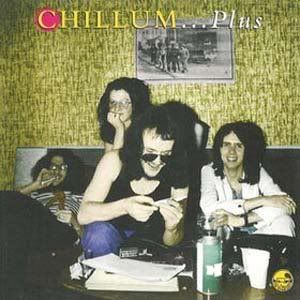
Chillum, CHILLUM... PLUS


Mushroom, 1971; reissued with bonus tracks as CHILLUM...PLUS by See For Miles; availability uncertain

CHILLUM...PLUS: 11 tracks, 66:27

This band has a slightly convoluted history. Keyboardist and vocalist Ken Elliott and drummer Kieran O'Connor were originally in the insanely creative Second Hand, a group that definitely remained psychedelic while also predicting prog rock. After two superb albums (REALITY and DEATH MAY BE YOUR SANTA CLAUS), Second Hand had lost their guitarist. Bassist George Hart, who joined on DEATH MAY BE YOUR SANTA CLAUS, still was in the group, so they auditioned new guitarists. Tony McGill clicked perfectly with the band, so perfectly that his audition evolved into an incredible twenty-plus minute piece of improvised rock, and apparently forced a renaming from Second Hand to Chillum. Coming close to some of the most out-there krautrock jams (Guru Guru and Amon Duul II come to mind), Elliott's pummelling organ and Hart's fluid bass combine with O'COnnor's fierce percussives and McGill's incredibly detailed improvisations. Given the name "Brain Strain" this originally occupied side one of the original CHILLUM LP; on CHILLUM PLUS, which contains the entire sessions, it is in an extended form. The first track on ...PLUS is a miniature bit of laughing contributed by two doctors who frequented the pub next door to the studio; only those present know if the laughter was their genuine response or a skit. Chillum continue on their weird path, at times using O'Connor's snoring as a percussion line (on "Land Of A Thousand Dreams") or giving him four minutes to show off his drumming chops ("Too Many Bananas"). "Yes! We Have No Pajamas" is another extended improv, firing off with no mercy until its ten and a half minutes have come to a stop. Suddenly, "Promenade Des Anglais" pops up, and you wonder if someone's recorded the wrong track. This little number sounds disturbingly somehwere between smooth jazz and muzak, but it is followed by a goofy voice saying "'ere, I thought that was RATHER GOOD! Oh super! What's next?". This nicely gives away the joke, and makes for an impressive end to the original album. The bonus tracks on ...PLUS are fairly good. "Fairy Tale' has interesting music, but is hampered by out-of-place vocals. "Celebration" sounds the most like the album proper, being a fiery improv, while "This Is Not Romance" consists solely of piano and wounded vocals, making for a nice contrast. "Incubator", two takes of which are included, was actually created by the engineer using an oscillator and a rotating speaker; they're interesting little tracks, but nothing more. Chillum essentially imploded during these sessions; O'Connor and Elliott continued on for two albums as the less interesting Seventh Wave and then disappeared. CHILLUM...PLUS, as well as all related projects, would mostly appeal to adventurous progheads and krautrock fans, and it comes highly recommended to them. Adventurous rock fans will probably find a lot to like here as well, but be aware this IS every bit as druggy and spaced out as the band's name implies (a chillum being a device for smoking hashish).

UPDATE: As of 2010, this has been reissued by Sunbeam. This edition restores the original cover and has four bonus tracks: "Celebration" and "This Is Not Romance" reappear, as do the previously unissued "Three Blind Mice" and "The Lone Commuter". I haven't heard them, but hooray to Sunbeam for making this more readily available!

Thursday, March 19, 2009

Henri Roger, IMAGES...


Pôle, 1975; reissued by Tapioca; out of print

4 tracks, 47:53

Ah, Pôle Records! I can never get enough of them! This stunner by Henri Roger (his only album for the label) continues in the grand Pôle tradition; hell, the word "Pôle" is rght there on the cover, larger than artist or album title! IMAGES... has a very unique setup. Roger fills side one with the twenty-two minute title track. This is a piece for electric organ, and Roger manages to get some truly impressive sounds and patterns out of his Yamaha. Never staying in one pattern for too long, and never overstaying its welcome, this track alone qualifies this as a masterpiece. Side two opens with "Au Dela Du Langage", for Mini Korg and Elka Rhapsody synthesizers. This nifty composition has a much funkier sound, until it becomes a strange ambient piece midway. Up next is "Ataraxie" for acoustic guitar (there's also either a tambourine or maracas in there). Standing out from the surrounding electronic experimentation, this is a nice little folky piece, constantly developing and providing a nice calm mood. Finally, IMAGES... ends with "Asyle Cosmique", the other obvious highlight. Over ten minutes, Roger layers synths, organ, and guitar to provide a track that effortlessly goes from classic Pôle-style cosmic synthscapes to neo-classical moods to a driving rock finale. At several points, this predicts and betters many later bands and movements; you could say this was a bootleg Tortoise recording and nobody would question you, except Tortoise NEVER sounded this good. IMAGES... is yet another high point in the Pôle catalog, and a must for fans of early electronic music. Unfortunately, as with most Pôle releases, this has been long out of print and is in dire need of a reissue. Henri Roger went on to make more music, all of which is well worth investigating, but IMAGES... remains his masterpiece.

Wednesday, March 4, 2009

Franco Battiato, FETUS and POLLUTION


Bla Bla, 1972; reissued several times; available

8 tracks, 30:43


Bla Bla, 1972; reissued several times; available

7 tracks, 33:09

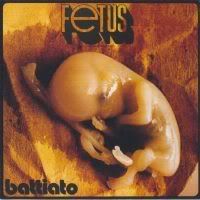
I always found the term "krautrock" to be severely limiting. Given all the weirdness going on in Europe during the '60s and '70s, you'd think a term like "Eurorock" or "continent rock" would have been more accurate (think about how often France and Finland turn up on this blog). Italy's Franco Battiato probably had some idea of what was going on elsewhere. However, he brought a distinct bit of pop to his cosmic sound experimentation. After a short career as a traditional pop singer, Battiato went off into far stranger territory in 1972. FETUS, with its slightly controversial artwork, finds Battiato achieving a blissful middle ground between the accessible and the avant-garde. "Fetus" itself begins with minimal synth and a heartbeat, soon accompanied briefly by Battiato's vocals. He sings entirely in Italian; though an English version exists, this isn't recommeneded, as the lyrics becomes less mysterious and more goofy when translated. Soon, the song becomes a synth workout worthy of prime ELP or Yes, but somehow both more minimal and more effective than either. After this, it only gets better! Given its short length, most of the songs are in and out with absolutely no wasted notes. Examples include the synth-led "Una Cellula" and the delightful piano-rhythm machine-and-violin romp "Cariocinesi". The one exception is the six-minute "Meccanica", which is essentially a mini-suite; it begins with a manic piano-led rush, goes right into a pretty acoustic guitar run, has a moment of piano-and-guitar interplay, and then suddenly slows down. A violin accompanies Battiato's account of having mechanical parts, punctuated with bursts of electric guitar. This gives way to a direct sample of Neil Armstrong and Buzz Aldrin talking to Houston and President Nixon. The whole track is one of the hidden treasures of prog, and it alone justifies the purchase; luckily, the other tracks are every bit as good.

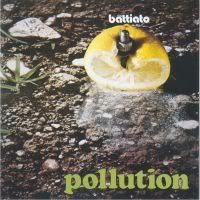
Following FETUS, Battiato had intended to release the English version (which was delayed until fairly recently) and tour England with John Cage (!). Unfortunately, a car crash in England put a halt to these plans, leaving one of avant-garde's classic "what if"'s. Going back to Italy, Franco spent his time apparently pondering man's place in the cosmos, which was admittedly a big theme back then. However, his next album, POLLUTION, was far removed from the usual cosmic noodlings of the time. This time around, the pop touches are mostly absent. Instead, the sound is close to Faust-style krautrock, but with a distinct character all its own. The first four tracks (side one on the original LP) are essentially a suite, going from the musique concrete of "Il Silenzio Del Rumore" and "21 Dicembre 1999 - Ore 9" (which is just the sound of two explosions, and is about 20 seconds!) directly into the synth-and-backwards-pronounciations of "Areknames". This in turn leads directly into "Beta", which is the best early Pink Floyd song that they never wrote. The last three tracks are equally as good, despite lacking the unity of the first four; "Plancton" is a delightful cosmic ditty, the title track is an eight-minute epic/mini-suite, and it all ends on another musique concrete note. The same lack of traditional song structure is in full effect throughout. Both albums are recommended, and the Water reissues have amazing sound and great liner notes befitting such classic works.

Battiato would go on to release some more experimental works; SULLE CORDE DI ARIES and CLIC are also worthwhile, but the overly experimental albums that followed would find Battiato playing single piano notes for an entire side at a time. After this, he somehow went right back to pop music, to the point that the majority of his catalog would not interest fans of his early work.

Tuesday, February 24, 2009

Pekka Airaksinen, ONE POINT MUSIC


1972, O Records; out of print

6 tracks, 39:25

Pekka Airaksinen's work with The Sperm has been previously documented here. Released two years after SHH!, ONE POINT MUSIC finds Airaksinen (assisted by A. Deblus and Antero Helander) still very much in experimental mode. Actually, this material was all recorded from 1968 to 1970, during Airaksinen's tenure with the Sperm. It also was primarily created in his converted sauna studio. Mostly featuring electric organ, guitar, and bass (though the source of most of the sounds is pretty hard to determine), these six tracks are mostly lighter in tone than SHH!, but they still feature plenty of unexpected and even jarring moments. The opening track (bearing the ponderous title "Pieni Sienikonsertto - A Little Soup for Piano and Orchestra op. 46.8"!) does indeed feature a piano off in the distance; however, it is obscured by some odd metal clangs and random bursts of strange noises (including some backwards guitar). "Somerain-Sedata" and "Skata" bear the closest comparison to Airaksinen's former group, consisting mostly of heavily effected and echoed guitar sounds. The remaining three tracks sound even more like industrial music that The Sperm ever did (and again, before the term was even coined), while also veering close to the likes of Smegma and Birgé-Gorgé-Shiroc in the '70s strangeness department. Sadly only ever pressed in a run of 120 copies(?!?!), this is nearly impossible to find and sorely in need of a reissue. Until then, this will continue to be a mostly unheard masterpiece.

Sunday, February 1, 2009

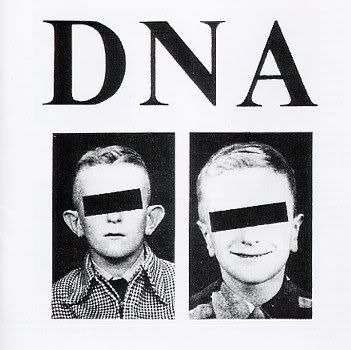
No Wave Retrospectives: DNA, DNA ON DNA and Mars, MARS LP


2004, No More Records; available

32 tracks, 63:04


2004, G3G/Spooky Sound; reissued by No More Records; available

11 tracks, 32:04

No wave was one of those fringe things that nobody expected to be remembered. Centered around downtown New York, no wave was a reaction to the staleness of punk (which had only existed officially for a little over a year!) and music in general. Several bands were completely self-taught; some were professionally trained, but they ignored this in a search for pure release through sound. Bands denied the name anyway, but history (and rock journalism) has made it stick. The scene was officially dead by 1982, and that's being generous. Some figures, like Lydia Lunch and Arto Lindsay, went on to other projects and relatively greater fame. Others faded into obscurity, making a few select appearances and nothing more. Strangely, around the time it died, no wave's impact began to be felt. The whole nihilism and deconstructionist attitude of the "movement" had been absorbed into many strains of experimental and extreme music, both in and outside of New York (see the late 80's downtown scene, the whole slew of noise rock bands, Silver Abuse, Blurt, Crawling Chaos, Fire Engines, Der Plan, D.A.F., Sonic Youth, Live Skull, Cop Shoot Cop, Swans, etc.). Even the more traditional industrial bands had started to show a distinct no wave influence. Fast forward to the early-to-mid-90's. A no wave revival has started in Chicago (see the excellent Lake Of Dracula and Quintron's truly bizarre debut LP I.F. 001-011). Japanese bands like Melt-Banana and Space Streakings are producing their own bizarre takes on no wave. Sonic Youth, admittedly the most successful no wave-inspired band, are considered godfathers of indie. Now look at the past nine years. Liars, Sightings, and other bands proudly declare no wave as an influence. Right when everyone was beginning to accept no wave as a minor but influential blip on the experimental radar, No More Records issued (well, reissued in the case of MARS LP) two retrospectives of the originals. The question is: How do they sound now, with the passage of time?

Surprisingly, DNA and Mars both still have the ability to enthrall, annoy, and disturb, usually all at once. Both compilations are arranged chronologically, and each contains the complete studio output of the band represented, along with very informative booklets. DNA is bolstered with an unreleased studio track and several live tracks. Only two of the tracks are over three minutes in length: the previously unreleased "Grapefruit" at nearly five minutes, and the live "Surrender" at just under four. Every other track is between fifty seconds and just under three minutes. However, not a single second is wasted: DNA knew how to get maximum impact out of every song, and even the rare moments of silence are important to the compositions. The progression is striking over the span of the disc. Beginning as a trio with guitarist/vocalist Arto Lindsay, drummer Ikue Mori, and keyboardist/vocalist Robin Crutchfield, DNA were comparable to hardly anything else. The debut single ("You & You"/"Little Ants") is perhaps the most extreme output; Crutchfield's bouncy electronics and Mori's tribal-esque drumming anchor the songs, allowing Lindsay to go wild on both guitar and vocals. The man can sound like a poet speaking abstract verse or a possessed preacher declaring fire and brimstone upon his pagan cult. Sometimes he does this in the same song, making for a delightfully odd contrast. The band's next recordings were four tracks for the infamous Brian Eno-produced NO NEW YORK compilation. This finds a more subdued DNA producing the garagey "Egomaniac's Kiss" and the punky "Size". However, "Lionel" and "Not Moving" (featuring a rare vocal turn from Crutchfield) are still fairly unhinged exercises in noise. Soon after this recording, Crutchfield left to form the excellent Dark Day (a synth-oriented no wave treasure best experienced on the unfortunately rare COLLECTED (1979-1982)); Tim Wright, formerly of Pere Ubu, was his replacement, and he was definitely a smart choice! Wright's bass playing was somehow rhythmic, melodic, and completely abstract. This is most evident on A TASTE OF DNA. This six-song EP contains under ten minutes of the most radical rock deconstruction ever committed to tape. Several songs feature Lindsay spouting Portuguese in addition to English, and Wright produces the kind of basslines many lesser bands would kill for. "Blonde Redhead" (yes, the band got their name from the song) and ""New Fast" particularly stand out, but the whole EP is a joyous burst of true creativity. Next up is the unreleased studio track "Grapefruit", which isn't a lost classic track by any means. Still, it does feature Lindsay's wordless chanting over a fairly minimalist instrumental track, and its length qualifies it as DNA's sole "epic", so it's a worthy inclusion. The following six tracks are instrumentals recorded for "the Squat Theatre's Obie winning MR. DEAD & MS. FREE", whatever that is; they also surfaced on the FRUIT OF THE ORIGINAL SIN compilation. They have an almost dubby production, most apparent on the pseudo-gothic "Delivering The Good". All six of them are well worth hearing as examples of DNA's restrained side. The remaining fourteen tracks are all live, featuring both incarnations of the band. Sadly, the legendary last encore cover of Led Zeppelin's "Whole Lotta Love" didn't make it (damn it!)*, but what did is truly fascinating despite a bit of questionable sound. Considering the source is original tapes, though, this is hardly worth complaining about. Only "5:30" from A TASTE OF DNA is reprised in the live tracks, and in a VERY different early version. The rest are unique to DNA's live sets, with the only other duplication being two versions of "Detached", one from each lineup. It's hard to pick standouts since all are great performances, but I particularly dig "Brand New" and "Calling To Phone". Given that it's basically DNA's complete discography, this is an absolutely essential CD.

MARS LP is barely half the length of DNA ON DNA, and it also contains no live recordings. However, the studio output of Mars was so awe-inspiring, it is perfectly suitable that it stands on its own. Originally formed as a nameless Velvet Underground cover band in 1975, and briefly performing as China, Mars can lay claim to being the first true no wave band. The band was formed by the late Sumner Crane (guitar and vocals), the late Nancy Arlen (drums), China Burg (a.k.a. Don Burg, Connie Burg, and Lucy Hamilton; guitar, vocals), and Mark Cunningham (bass, voice). Mars didn't get around to recording until 1977. That year saw the recording of their debut single. A-side "3E" was surprisingly normal, definitely betraying the Velvet Underground influence and giving little clue as to what lie on the flipside. That piece of music was "11,000 Volts", a shambling, discordant, shrieking mess of a song detailing a sadistic inventor and his robot slave. It is every bit as great as that sounds. Sadly, the release of this got delayed until 1978, during which time they got a slot on NO NEW YORK as well. Their four tracks showed a regression in sound, becoming denser and noisier while still maintaining an aura of professionalism. "Helen Forsdale" has guitars imitating the sounds of insects and "Hairwaves" simulates radio waves via feedback. Standout (and shortest of the four) "Puerto Rican Ghost" sounds like a coed Can during a drunken rampage, guitars violently see-sawing back and forth to angular drums and a throbbing bassline, with hallucinatory vocals not so much sung as shrieked in the voice of the damned. Finally in December of 1978, Mars was invited by Lust/Unlust Records owner Charles Ball to record an EP. Arto Lindsay was invited as producer, but since recording was accomplished via two binaural microphones set up in the center of an abandoned theater's stage, there wasn't much producing to be done. This odd recording betrays the sheer freedom that goes into these five tracks. Veering close to free improv and noise, tracks like "N.N. End" and "The Immediate Stages Of The Erotic" feature completely improvised vocal sounds (not lyrics, though) and the most abstract music on the disc. "Scorn" is based around the transcripted ramblings of a homeless friend of the band's and a horn played without its mouthpiece. Live recordings have revealed that there was a structure behind the madness, but it's not very apparent upon listening. This EP was delayed until 1980; in that time, the master became damaged in a flood, resulting in several lost frequencies. For MARS LP, a freshly discovered cassette master was used, allowing these recordings to be heard properly for the first time. Mars' studio output was previously reissued by Lydia Lunch's Widowpseak as 78, and then by Atavistic as 78+, but these releases were "reprocessed" by J.G. Thirlwell, which added heavier bass and more guitar noise; this was supposed to aid the lost frequencies of the EP, but the results are mixed. It also substituted live versions of "N.N. End" and "Scorn". It did have a few other live tracks that MARS LP is missing, but the MARS LP set makes it obsolete. This is also essential.

Mars did team up with Lindsay and Mori to record JOHN GAVANTI, a strange no wave opera which was heavy on wind instruments. It still has moments of guitar noise and lots of dissonant drumming, and it's also the closest no wave ever got to free jazz. Several Mars and DNA members ended up in post-no wave outfit Don King, producing a slightly more restrained version of what they had done previously. Crane and Arlen passed away, Crane in 2003 and Arlen three years later. Crutchfield continued to record as Dark Day and has released music under his own name. Arto Lindsay and Ikue Mori both became darlings of downtown NYC, racking up impressive discographies (especially Lindsay, contributing impressively to recordings by the Lounge Lizards and the Golden Palominos, as well as his duo Ambitious Lovers). Cunningham and Wright have had sporadic recording careers. Burg makes a few guest appearances now and then on other former no waver's albums. DNA called it quits in 1982, essentially ending no wave proper. Mars had thrown in the towel after recording MARS EP back in 1978. Still, the music continues to provide insight into a period where everyone involved was absolutely free and interested in truly pushing music to its absolute limits.

Dedicated to the memory of Nancy Arlen and Sumner Crane.

*UPDATE: The double LP release of DNA ON DNA does include "Whole Lotta Love", along with three newly discovered tracks and the encore version of "A New Low" from the last show.

Friday, November 14, 2008

In Memorium

As the year draws to a close, I would like to take the time to remember the following artists who passed away during 2008. There are MANY MORE I would have loved to add, but these few stay mostly within the confines of this blog (with a few exceptions).

IN MEMORIUM
Hector Zazou (ZNR et al)
Yma Sumac (queen of exotica)
Henri Chopin (master of audiopoems)
Jimmy Carl Black (formerly with the Mothers Of Invention)
Isaac Hayes (king of soul)
Michel Waisvisz (creator of the Crackle Box, Crackle Synth, Hands, etc.)
Mort Garson (Moog wizard)
Rick Wright (Pink Floyd's keyboard genius)
Rudy Ray Moore (the one and only Dolemite and a hell of a singer)
....and all other musicians, writers, and artists who passed away in '08. Thank you for your contributions to art, and though I hate to say goodbye, you deserve the rest.

Thursday, November 13, 2008

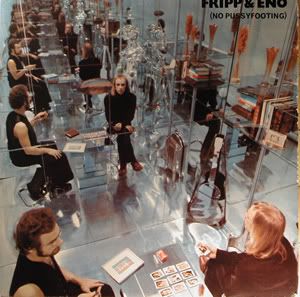
Fripp & Eno, NO PUSSYFOOTING


1973, Island; reissued by Discipline as a double disc; available

Original LP: 2 tracks, 39:38; double-disc Discipline reissue: 5 tracks indexed into different parts (see review), total of both discs 120:50

It's charming when you first hear something that still sounds as fresh as the day it was released. NO PUSSYFOOTING (fine, it's technically (NO PUSSYFOOTING), but the reissue varies on the spelling as well) is definitely one of those albums. When this came out, Eno was nearing the end of his time with Roxy Music and Fripp had gone on hiatus, temporarily disbanding King Crimson. Apparently Eno introduced Fripp to a unique dual Revox tape recorder setup. Similar in function to Terry Riley's time-lag accumulator, this setup allowed for layering of a bed of ever-evolving tape loops. These loops could have elements added or subtracted during the course of the composition. On top of this, Fripp solos to his heart's content, never veering into outright guitar god turf, but instead offering an emotional and very uniquely improvised tone. Hints of his Crimson work remain, but the result is distinct from that band's general sound. "The Heavenly Music Corporation", which occupied all of side one of the LP, is made up solely of this general setup. "Swastika Girls", spreading over side two and being named after a pornographic photo shoot (allegedly left behind in a studio and found by Eno!), also uses these elements. However, it adds a shrieking VCS3 synthesizer with a primitive digital sequencer as additional sound sources. The result is two wonderful extremes; "The Heavenly Music Corporation" is all soothing textures, while "Swastika Girls" has several abrasive (and almost proto-noise-rock, if there were such a thing) textures with hints of beauty. For the 2008 reissue (allegedly limited edition), Discipline has outdone themselves. Considering Fripp runs Discipline, this should be no surprise, but the deluxe reissue is amazing! NO PUSSYFOOTING has never sounded clearer, and the album will sound new even to old fans of it. However, this time, the bonus tracks are more than worth the fair price! Disc one contains the original album plus "The Heavenly Music Corporation"..... RECORDED BACKWARDS. The effect is truly otherworldly, and oddly enough it flows perfectly with the album proper. Disc two has another version of "The Heavenly...", but played at half the speed. This turns what was a beautifully soothing song into a deep droning mass of throbbing basslines and mysterious echoes. Oddly enough, it could pass for SunnO))) or Earth at this speed. This disc concludes with "Swastika Girls" given the reverse treatment. In this case, it's interesting to note how similar it sounds forward and backward, but a couple of listens will bring out the differences. As a strange bonus, all tracks are newly indexed so that you can skip ahead to your favorite segment. Thus, on disc one, tracks one through five are "The Heavenly Music Corporation", six through seven are "Swastika Girls", and eight through twelve are the reversed "Heavenly"; disc two has the slowed-down "Heavenly" occupying tracks one to five, and the reversed "Swastika Girls" on tracks six and seven. For those familiar with NO PUSSYFOOTING, the reissue is still highly recommended, as the alternate versions truly do make an interesting and vital addition. If you haven't heard it before, be ready; you'll never forget the first time you heard it, and even with the advancement of technology and Fripp and Eno's further collaborations, you'll never hear anything QUITE like it again. Needless to say, essential.