Friday, January 29, 2010

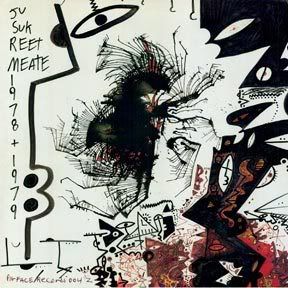
Ju Suk Reet Meate, SOLO 78/79


(Also referred to as SOLO 1978/79 and SOLO 1978-1979, but it says SOLO 78/79 on the digipak so I'm going with that. The liner notes provide "aka do unseen hands make you dumb?", which may very well be a real alternate title.)

Pigface, 1980; reissued with bonus tracks by De Stijl; available

CD: 4 tracks, 44:57

Most readers of this blog are probably familiar with Smegma (and if you're not, fix that quick!). For his solo outing, long-time member Ju Suk Reet Meate (pronounced "you secrete meat" just for the record) filled two vinyl sides with an intriguing mix of spare noise rock and Reichian tape manipulation. The sides each have a bunch of tracks, but they ebb and flow into each other and are mastered by side on the CD. Side one, subtitled "1978", features a nice contrabass solo and some nifty looped guitars in addition to the rather restrained (and thus highly listenable) sound collages. "1979" seems to be all collages, and it's by far the more experimental and twisted side. That being said, other reviews have pointed out how refreshing it is that Meate doesn't feel the need to go in the red with his noise, and that really is a nice change. Surprisingly enough it all sounds a lot like contemporary turntablist efforts! The De Stijl reissue comes with great liner notes (or "NOISE CLIFFSNOTES" as he calls them) by Wolf Eyes' John Olson, along with two bonus tracks. Both of these date from '79, and both have very descriptive titles, namely "Guitar & Loops" and "Short Wave". They're fairly good but not especially enlightening, considering both are under five minutes. That being said, this is a solid listen and definitely worth acquiring.

Saturday, January 23, 2010

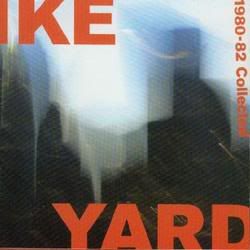
Ike Yard, 1980-1982 COLLECTED


Compilation released by Acute(see review for individual dates), 2006; available

18 tracks, 78:50

Being the first band to be signed to Factory Records' American division, you'd have to be fairly special. Ike Yard doesn't fail in that department one bit! Ike Yard* was a quartet of Stuart Argabright (ex-Futants), Kenneth Compton (who was Madonna's boyfriend for a bit and appears in her "Burnin' Up" video!), Michael Diekmann, and Fred Szymanski. Their arsenal of instruments included the standard guitar, bass, and drum kit, but those are the ONLY traditional instruments used. Each member is credited with synthesizers (Compton specifically with bass synth), and other instruments include drum machines, found percussion, syndrum, and who knows what else. Both Argabright and Compton handled vocal duties, with Argabright getting the lion's share. Sometimes considered a no wave group, and having some common ground with that scene, Ike Yard was really in a category of their own. The first six tracks here are from the NIGHT AFTER NIGHT EP, released in 1981 on Les Disques Du Crépuscule; the exception is "The Whistler", which is a session outtake. These tracks find Ike Yard in full-on post-punk mode. The bass and percussion lock into powerful grooves, aided by synth pulses and colored by swooping guitar accents. It actually comes across as an American PiL or a punkier This Heat. "Night After Night" and "Cherish" would be dark club classics in a just world, and the whole EP is impressive. Fast-forward to 1982: Ike Yard have caught Factory's attention and have the honor of becoming Factory America's first signing. Tracks 7 through 12 made up the self-titled LP (often erroneously referred to as A FACT A SECOND, which is actually the catalog number). While still a decidedly American take on post-punk, these six tracks are far more influenced by classic dub and krautrock than by any contemporary groups (except maybe the early industrial and EBM scenes). The synths have a much more pronounced role; I was fairly certain there's no guitar or bass guitar on these tracks until Stuart Argabright assured me there is. "Loss", with its insistent bass pulses and steady electronic drones, is a standout; as the track progresses, random short-wave transmissions and Argabright's monotone vocals combine for a simultaneously disturbing and catchy tune. The remaining five tracks follow a similar path, with little quirks and kinks along the way to give each tune its own identity. As a bonus, this compilation features six previously unreleased outtakes from 1980 to 1982. None of these tracks would have been out of place on the proper releases; in fact, the eerie instrumental "Wolfen" is one of their best songs! I can't recommend this enough to fans of krautrock, post-punk, no wave, etc. You shouldn't have too hard a time finding it. Argabright would go on to Black Rain, Dominatrix, and Death Comet Crew (all worth investigating), and Szymanski made some recordings as Laminar. Diekmann also ended up in Death Comet Crew. Ike Yard made a recent comeback, and now consists of Argabright, Compton, and Diekmann. To hear some of the new tracks, please visit http://www.myspace.com/ikeyard. Their MySpace also has "Loss" and "Cherish", a demo called "Sweep" and an untitled live track from '81. The latter two are not on this compilation (possibly due to time limitations?), but both are very worthwhile. The Argabright-curated NEW YORK NOISE 3 features the otherwise unreleased "A Dull Life", as well as a Dominatrix track, alongside other no wave/industrial/art funk bands from '80s New York.

*The name comes from A CLOCKWORK ORANGE, in case you didn't know.

UPDATE: Check the comments for Ike Yard news and links straight from Stuart Argabright!

Thursday, January 7, 2010

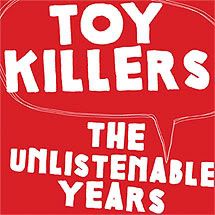
Toy Killers, THE UNLISTENABLE YEARS


ugEXPLODE, 2008; available

25 tracks, 67:36

Toy Killers was the percussionist duo of Mark E. Miller and Charles K. Noyes. When not providing dual percussion for artists such as John Zorn (on POOL) and Elliott Sharp (on ISM and CARBON), they created some of the most intense and deranged music from the no wave era. This CD compiles the only properly released Toy Killers track ("Victimless Crime", which appeared in '83 on the SPEED TRIALS compilation) alongside more than an hour of rare and unreleased studio and live tracks. Six of these WERE released as a cassette called HUMDRUM, but even Noyes and Miller are unsure when, and it's rare enough that ugEXPLODE's Weasel Walter has never seen a physical copy of it! The first eighteen tracks are a mix of short-to-average-length studio and live works, while the last seven are crazed improvisations. Everything was recorded between 1980 and 1983 (interestingly, some of the tracks aren't dated, but it's a good thing they were saved at all). Naturally, being limited to percussion would get stale after a while; luckily, Noyes and Miller had some great connections! Zorn, Sharp, Arto Lindsay, Nicky Skopelitis, Bill Laswell, and Wayne Horvitz are just some of the names that pop up on these tracks, each adding their identifiable mark while never overshadowing the core duo. One of the improvisations supposedly features Derek Bailey playing a bit and then walking off in disgust, but I can't tell which one. The liner notes by Weasel Walter and Anton Fier provide some great insight, Fier's being about a particularly spectacular glass-smashing incident. It's probably important to note here that "incendiaries", cocktail shakers, and saw are three of the instruments credited, and it's also worth noting that they occasionally set their drums on fire. The music is every bit as potent as that sounds, ranging from short bursts of DNA-esque skronk (Lindsay's vocals especially make the comparison apt) and rhythmic noise rock to such surprises as the sound collage of "24 Handkerchiefs For Roger Trilling" and a short but delightful collaboration between Miller and the Pe de Boi Samba Group (from HUMDRUM). Then there's the improvisations. At times they sound like early AMM jamming with the Blue Humans, and then some are even looser than that. Some reviews have expressed disappointment with the improvs; I think they're actually quite stunning for the most part. The sound quality is superb, and even the live tracks sound remarkably good. This disc would be a great addition to any no wave/Downtown scene fan's collection, and fans of the likes of Captain Beefheart might just like this as well. Look for new Toy Killers recordings soon, featuring Weasel Walter and Henry Kaiser amongst others!

Please visit http://www.myspace.com/toykillers; there are three tracks from this release up to preview alongside newer works, as well as a five-part commentary by Weasel Walter on this compilation's genesis. To purchase this for $10 (postage included!), go to http://nowave.pair.com/ugexplode/

Tuesday, January 5, 2010

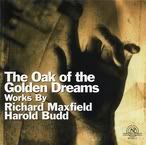
Richard Maxfield and Harold Budd, THE OAK OF THE GOLDEN DREAMS


Two albums on one disc (see review for individual release dates); this compilation issued by New World Records in 1999; available

6 tracks, 66:48

It's an odd pairing, but this compilation works! Consisting of the late Richard Maxfield's ELECTRONIC MUSIC (issued by Advance in 1967 or '69; sources differ) and Harold Budd's THE OAK OF THE GOLDEN DREAMS (also issued by Advance, but in 1972), this is an hour plus of important and little-known music. Maxfield has been previously discussed on this blog (see the review for NEW SOUNDS IN ELECTRONIC MUSIC). ELECTRONIC MUSIC compiled four of his pieces for a short but delightful trip through pre-synthesizer machine music. "Bacchanale" (created in 1963)is essentially musique concrete, with Edward Fields reading a poem over a strange tape collage. Meanwhile, fellow artists Nicholas Roussakis, Terry Jennings, Fahrad Machkat, and Robert Block provide instrumentation (respectively: underwater clarinet, saxophone, violin, and prepared violin). The liner notes claim no sounds are of electronic origin, but there definitely is some sort of mucking done to the tapes. It's a fascinating piece, but the material surrounding it is even better! "Piano Concert for David Tudor" dates from 1961 and finds Mr. Tudor playing a prepared (I think) piano to the accompaniment of tapes featuring Maxfield manipulating the strings of said piano. "Amazing Grace" and "Pastoral Symphony" (both from 1960) are full-on electronic explorations, sounding light years ahead of their time. "Amazing Grace" even uses a tape of a preacher before Steve Reich's "It's Gonna Rain"; the results are at least Reich's equal! Maxfield's works occupy just under half an hour of this disc, while Budd's massive "The Oak Of The Golden Dreams" and "Couer D'Orr" (from 1969 and 1970, respectively) fill up the rest of the space. These are much more drone-based than the work Budd is best known for, and that actually works in their favor. Budd appears to be heavily under the influence of Terry Riley on these pieces while still managing to establish a distinct identity of his own. "Oak" is performed solely on a Buchla synth played with both hands (one providing a rich drone, the other beautifully improvising), while "Couer" features two tape loops of different notes (D-flat major and B major) played endlessly while Charles Oreña provides a saxophone improvisation; towards the end, one of the loops stops to interesting effect. Both of these tracks are peaceful yet never boring, and they provide a welcome counterpoint to Maxfield's considerably more abrasive pieces. The Budd pieces are also an excellent example of minimalism's influence on later developments such as ambient. Every serious fan of electronic music, ambient, minimalism, and related genres needs to find this disc; you won't be disappointed.

Monday, December 14, 2009

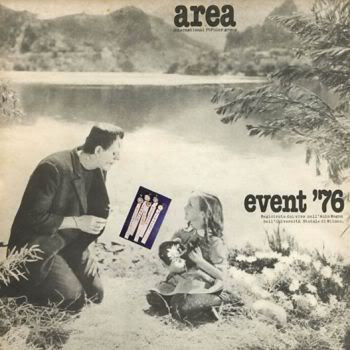
Area, EVENT '76


Cramps, 1979; reissued a few times on CD; availability uncertain

3 tracks, 39:39

Area was mostly known for creative prog rock. This release is certainly creative, but it sure isn't rock of any sort! Reduced to the impressive trio of Demetrio Stratos (vocals, though they're really used as an instrument here), Patrizio Fariselli (piano), and Paolo Tofani (guitar and synth), Area is joined by guests Steve Lacy (sax) and Paul Lytton (percussion)*. This is basically live versions of two pieces from the MALEDETTI album, "Caos Parte Seconda" and "SCUM" (here retitled "Event '76"). For "Caos", the band had pieces of paper with different "moods" to play in: silence, sex, irony, violence, and hypnosis. It's pure improvisation, with everything from crazy instrumental bursts to long stretches of restraint. Every player is in top form; extra consideration should be given to Stratos, who (as always) summons forth an incredible array of vocal effects and textures, not the least of which is some quacking early on. "Event '76" is no less free, but after the side-and-a-half of "Caos" it does drag somewhat. In all honesty this would be a bad introduction to Area's catalog for most since it's not representative of their work, but fans of free improv and the like can dive right in with no worries. For more traditional (but not less inspired!) prog, I'd start with CAUTION RADIATION AREA or MALEDETTI.

*Both Lacy and Lytton have several solo and group works worth investigating; actually, so do all three Area members present here!

Friday, December 4, 2009

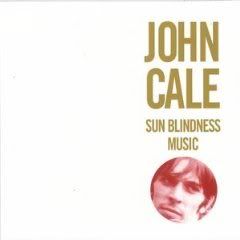
John Cale, SUN BLINDNESS MUSIC


Table Of The Elements, 2001; available

3 tracks, 64:31

Well, what a find this was! What we have here is a collection of John Cale's private recordings from around the time his tenure with La Monte Young and the Theatre Of Eternal Music was over; they are for the most part contemporary with his stint in the Velvet Underground. Naturally enough, influences of both his minimalist past and his avant-rock (then) present and future are detectable on this disc. Straight from Tony Conrad's tape archives, these three pieces are pristinely recorded (for the most part) despite dating from '65 to '68. They are also nothing short of incredible. The title track opens up the disc and occupies most of it, being a whopping forty-two minutes and forty-two seconds. It sounds like it could be awfully boring on paper: Cale experiments with his Vox Continental and a single chord. Don't let that scare you away; this is fascinating to listen to the whole way through. The chord has subtle variations added to it, whether it be another note or a slight decrease in pressure applied to the keys. What results is a constantly fluid improvisation that sounds remarkably like later developments in electronic music, all done with a cheesy organ and plenty of inspiration. It's a tough act to follow, but the other two tracks are up for the challenge. "Summer Heat" is a solo guitar performance, with plenty of hypnotic cyclic patterns and subtle tonal shifts. It's a little over eleven minutes and not a minute is wasted. In many ways this predates Dylan Carlson's stance of being an "amplifier player", and it also sounds (not surprisingly) very VU-ish. Even the rough cut-off at the end is charming. Finally, "The Second Fortress" brings us back to Cale and his Vox, possibly aided by a tape recorder set-up a la Fripp and Eno or Ilitch(though predating them by a good six years or so). This is an intensely abstract piece, recalling the primitive electronic wizardry of Richard Maxfield while sounding remarkably like the much later electro-abstractions of Aphex Twin, Boards Of Canada, et al. After ten and a half minutes, "The Second Fortress" is over, leaving you hungry for more Cale experimentation. Luckily, Table Of The Elements has released two more installments, STAINLESS GAMELAN and DREAM INTERPRETATION; also, the now-hard-to-find DAY OF NIAGARA features a rare (though poorly recorded) Theatre Of Eternal Music session. Other Cale recordings are interesting, especially the avant-skronk SABOTAGE-LIVE and the Terry Riley collaboration CHURCH OF ANTHRAX, but his experimental "New York In The 1960s" work on TOTE is the most daring and fascinating of his works, especially on SUN BLINDNESS MUSIC.

Saturday, November 14, 2009

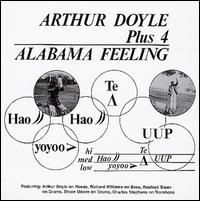
Arthur Doyle Plus 4, ALABAMA FEELING


AK-BA, 1978; reissued many times; out of print on CD, available on vinyl from Rank And File

6 tracks, 37:52

Oh MAN, is this some intense jazz! Let's cover the "Plus Four" first. Arthur Doyle's brave sidemen for this outing are drummer Bruce Moore, electric bassist Richard Williams, trombonist Charles Stephens, and drummer Rashied Sinan. All of these players truly shine on their instruments, with percussionists Sinan and Moore doing especially well supplying inventive fills and improvisations. Stephens and Williams also shine on their instruments, with interesting non-linear basslines and surprisingly interesting horn support. Doyle, however, is the true demonic genius of this quintet! Credited as playing "tenor voice-o-phone, bass voice-o-net", and flute, his playing is truly not quite like anything else. The "voice-o" terminology refers to his style of speak-playing, using the tenor sax and the bass clarinet in an almost hindewhu* way. Knowing this makes you wonder just what the hell he's saying, because his playing is always at full blast, with the skronk-o-meter (to coin a term myself; I think?) at eleven. This particular set was recorded in 1977 at the Brook in New York. Being the height of the no wave period, this had to go over well with that scene; in fact, Rudolph Grey of Red Transistor was at this show and was impressed enough to recruit Doyle for the Blue Humans**. While there are titles and rough cuts at the end of each track, this is really best experienced the way it was recorded: all in one go at maximum volume. "November 8th or 9th - I Can't Remember When" opens the set with a particularly scorching performance by Doyle, and the supporting quartet surprisingly manage to match his energy. Other highlights include the multi-part "Development", which almost approaches AMM territory with its flute run and raging percussion, as well as the mostly solo sax piece "Something For Caserlo, Larry & Irma". The latter piece isn't exactly restrained, but compared to the other tracks it comes across as a bizarre moment of tranqulity. The recording isn't as great as it could have been, but it could have been a LOT worse. Good luck finding this, but free jazz fans can't say they know the genre until they do. Fans of free improv and no wave will find some common ground here; others might want to approach this with caution, but as with most albums reviewed here, it'll be worth the effort. Other Doyle albums are out there; some find him experimenting with his "Electro-Acoustic Ensemble", and some are very raw home recordings that border on outsider music. All of it is worth investigating. Harder to find but easily ALABAMA FEELING's equals are Noah Howard's THE BLACK ARK and Milford Graves' BABI MUSIC, which find Doyle laying down incredible performances as a sideman himself.*** Check the comments for a great link to an interview with Doyle (thanks, Roy!).
*From Wikipedia (credit totally being given!): "Hindewhu is a style of singing/whistle-playing of the BaBenzélé pygmies of the Central African Republic. The word is an onomatopoeia for the sound of a performer alternately singing pitched syllables and blowing into a single-pitch papaya-stem whistle." Which is a better definition than I could ever give! http://en.wikipedia.org/wiki/Hindewhu

**The excellent (and unfortunately VERY rare) LIVE 1980 documents the trio of Doyle, Grey, and the incredible free jazz drummer Beaver Harris. Very much worth checking out, and good luck!

***ALSO worth investigating is Charles Tyler, founder of AK-BA. His albums for ESP-Disk' (CHARLES TYLER ENSEMBLE and EASTERN MAN ALONE) find him in ferocious and psychedelic modes, respectively.

Thursday, November 5, 2009

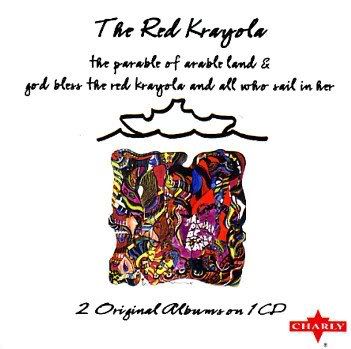
The Red Krayola, THE PARABLE OF ARABLE LAND, GOD BLESS THE RED KRAYOLA AND ALL WHO SAIL WITH IT, COCONUT HOTEL, and LIVE 1967


Originally released on International Artists in 1967 and 1968 respectively; PARABLE had 13 tracks, GOD BLESS had 20. My copy is a Charly reissue, which omits one of the "Free Form Freak-Out" tracks for a total of 32 tracks, 77:10


Drag City, 1995; available

44 tracks, 33:23
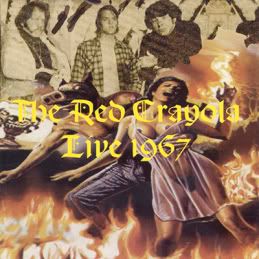


Drag City, 1998; available

2 discs. Disc 1: 3 tracks, 43:56. Disc 2: 3 tracks, 64:50.

Texas was quite a strange place back in the Sixties. No band proved this point more than Houston's infamous Red Krayola. At this point consisting of Mayo Thompson, Rick Barthelme, and Steve Cunningham, the Red Krayola (Crayola on the first album before being changed for legal reasons) concocted a strange mix of current psychedelia and ahead-of-its-time experimentation. This mix is most rooted in psychedelia on THE PARABLE OF ARABLE LAND. Tracks like "Hurricane Fighter Plane", "Pink Stainless Tail", and "Former Reflections Enduring Doubt" could get radio play then and now, even if the musicianship is sometimes a little clumsy and Thompson's words are abstract at best. However, the "Free Form Freak-Out" tracks between the songs push this into stranger territory. These are full-on slabs of cacophony featuring the "Familiar Ugly", an assortment of friends of the band including Roky Erickson from 13th Floor Elevators* on organ. Featuring everything from feedback to blown bottles to matchsticks rubbed together, these tracks are actually fascinating experiments which creatively flow into the proper songs; they are also the only recorded appearance of the Familiar Ugly. There is also the instrumental title track, which is built around what appears to be a percussive loop and is completely devoid of structure otherwise; this track almost seems like a blueprint for COCONUT HOTEL. As a whole, THE PARABLE OF ARABLE LAND is still a solid listen; it's also part of my personal Holy Trinity of Sixties Freak-Out Albums, along with Friendsound's JOYRIDE and Cromagnon's ORGASM/CAVE ROCK. The compilation EPITAPH FOR A LEGEND has some far more restrained (and folky!) demo versions of tracks from this album along with several other treasures of Texas-style rock and psych.

THE PARABLE OF ARABLE LAND was the Red Krayola's true freak-out album, but it did have identifiable ties to rock. COCONUT HOTEL was a complete rejection of rock norms, venturing further into free improvisation. This gem of an album was recorded in 1967, but International Artists rejected it for being too strange. Nothing on here is nearly as noisy as the "Free Form Freak-Out" tracks , but they aren't very musical either! With simplistic titles such as "Organ Buildup", "Free Guitar", and "Piano", most tracks deliver improvisations performed on the track's title instrument, though "Vocal" features some interesting effects and ambiance alongside "headphone vocals" by Frank Davis. The more abstractly named "One-Minute Imposition", "Boards", and "Water Pour" have more varied instrumentation but are no less adventurous in their search for pure sound. Then there are the "One-Second Pieces". Yes, these are exactly what you'd expect them to be: one-second bursts of noise, mostly performed on some sort of horn, piano, and drums. Some of the tracks feature more than one of these pieces, while most are just the blast of sound and then a few seconds of silence. Believe it or not, these are pretty entertaining, and they almost form a micro-suite after a few listens. More adventurous listeners (and fans of free improv in general) should find plenty to like on this disc.

LIVE 1967 is more intimidating. At two discs, these noisefests can be difficult to take in one sitting; it's best to tackle it one disc at a time. Disc one features their performance at the Angry Arts Festival on June 29, as well as two acoustics-and-voice recordings made in the band's hotel room that evening. Disc two finds them performing (believe it or not) at the Berkeley Folk Music Festival, July 2 through July 4. The first disc has its moments, mostly during the live show. The hotel recordings can be a little annoying when the vocals get carried away; while interesting the first time around, these attempts at abstract chanting overstay their welcome quick. These minor flaws are completely made up for with the second disc. Not only are the three performances excellent, but one has a guest performance by John Fahey**! The July 4 concert is especially amusing since it was from a radio broadcast. The announcer talks for quite a bit over the band, assuming they're warming/tuning up! All of the performances (except the hotel recordings) feature heavy use of feedback, one-second pieces, drones, improvisation, and other avant-garde elements. It was a bold move to perform such avant-garde material for festival crowds. The audiences, however, seem to love it, and the applause at the end of each performance is surprisingly quite enthusiastic. The recording quality is amazingly good consdering the age and circumstances of the recordings. One or two tracks have bits of audience chatter during the performance, but it doesn't interfere too much with the music. This is definitely an acquired taste, but fans of this sort of thing will absolutely love it.

After the preceding albums, Rick Barthelme left the band. Tommy Smith replaced him for GOD BLESS THE RED KRAYOLA AND ALL WHO SAIL WITH IT. Thompson and company come across as much more restrained here, but it's still as quirky as ever. None of the tracks are over three minutes, and eleven of them are less than two minutes. Most of these tracks have strange structures and rhythms, sounding very much like a product of the post-punk years rather than the psychedelic years. Strangely enough, one of the tracks is even called "Coconut Hotel"! Echoes of that album show up on two tracks: the self-explanatory "Free Piece", and "Listen To This", which is a one-second piece with an introduction. Another intriguing oddity is the EXTREMELY lo-fi "The Shirt", which has Thompson's voice and guitar accompanied by a Ferrari-esque "slice of life" recording. It's a solid album and a great listen, but it's also the least adventurous effort from this period. Then again, the least adventurous Krayola outings still make most other bands look tame and reserved! Fans of Beefheart, Zappa, et al may want to begin investigating Thompson's world here.

Mayo Thompson has kept the Red Krayola going over the years, working with everyone from Pere Ubu, the Rough Trade Roster, and several members of Chicago's post-rock elite. All of his work is worth checking out, but these four albums represent the genesis (some would say the apex as well) of his twisted musical vision. Start with THE PARABLE... and GOD BLESS... and go from there.

*The 13th Floor Elevators were the Red Krayola's only real competition; truth be told, while they are a great band, they're not really as out there as reviews would make you think.

**There is a legendary lost studio album recorded around this time featuring Fahey and the Red Krayola. Lelan Rogers (head of International Artists and Kenny Rogers' brother) refused to hand over the tapes, and their location and state of preservation are unknown. If this ever gets located and issued, you'll certainly find a review of it here!
Friday, October 30, 2009

This Heat, THIS HEAT


Piano, 1979; reissued most recently by This Is; available

11 tracks, 48:30

This Heat are one of those groups who only got the recognition they deserved after they split up. Consisting of Gareth Williams, Charles Bullen, and Charles Heyward, This Heat were something of an enigma. Bullen and Heyward used to perform improvisations as Dolphin Logic, and that particular art form certainly carried over to This Heat. Their debut album is a mix of live and studio recordings; it's almost impossible to tell which are which (not a bad thing at all!). Bookended by the short droning "Testcard" pieces, the music covers a LOT of ground. Elements of dub, prog rock, krautrock, post-punk, and free improv all combine to form one of the more varied early industrial albums. Standout tracks like "Twilight Furniture", with its insistent drumming and minimal guitar coloration, and th brutal prog-punk stormer "Horizontal Hold" almost sound like different bands. Most tracks ebb and flow right into each other, providing a fascinating listen when played the whole way through. My personal favorites are the eerily atmospheric "The Fall Of Saigon" and the absolutely incredible "24 Track Loop", which takes a short drum loop and turns it into something that for all the world sounds like twisted IDM/drum'n'bass, YEARS before IDM or drum'n'bass even existed! The whole album is impressive, and it is the best This Heat album. This Heat would release one more album during their lifetime, the equally impressive DECEIT, which does lean more towards songs than atmospheres,as well as the more abstract HEALTH AND EFFICIENCY EP. The archival releases MADE AVILABLE (John Peel sessions, including alternate versions of tracks from THIS HEAT and DECEIT), REPEAT (basically an extended take on "24 Track Loop" and two more abstract pieces), and LIVE 80/81 are also worth checking out, as are the post-This Heat projects Camberwell Now (Heyward and later member Trefor Goronwy) and Flaming Tunes (Williams).

Sunday, October 18, 2009

Luc Ferrari, PRESQUE RIEN


INA-GRM, 1995; available

4 compositions spread over 10 tracks (see review), 77:13

The late Luc Ferrari had a gift for truly innovative recordings. While he definitely stuck to musique concrete, there's no mistaking a Ferrari piece for anyone else. This CD is a compilation drawn from four separate releases and covering three decades. "Music Promenade" and "Presque rien no. 1, le lever du jour au bord de la mar" date from the late '60s, "Presque Rien No. 2, ainsi continue la nuit dans ma tête multiple" is from '77, and "Presque rien avec filles" is the most recent, being completed in '89. Actually, the above dates for all pieces should say "completed in (year)"; each one apparently took quite a while to finish. However, the effort was worth it! "Music Promenade" is perhaps the most primitively conceived; essentially consisting of four tapes playing simultaneously, it is a densely loaded sonic collage of epic proportions. Prerecorded music, laughter, discussions, animal sounds.... yeah, everything shows up here, possibly even the kitchen sink! "Presque rien no. 1", by comparison, seems deceptively simple. It is, as the title makes clear, a recording of "dawn at the seaside" in a Yugoslavian village with VERY subtle manipulation. While basically a field recording, this is an intensely fascinating listen. Motorboats depart from the shore, the echoing of the motors creating electronic detritus in their wake (excuse the pun). People sing what seems to be a traditional song. Cicadas buzz and hum, providing their own form of music. At this point, the listener is probably wondering which sounds are left raw and which are processed and/or added to the mix. After twenty minutes, the tape abruptly cuts off, and the piece is over. But up to that point, you have been transported to the village, and the result of coming back is jarring. Incredible as "no. 1" is, it pales in comparison to "Presque rien no. 2". Subtitled "thus the night continues in my multiple head", Ferrari initially considered this too personal to release; thankfully he changed his mind! The recording itself is much more active on Ferrari's part. He actually carries the microphone and tape recorder, so his footsteps and softly spoken words are part of the natural soundscape. The sounds of birds, insects, and other animals dominate the piece, but these are often electronically manipulated and layered onto the initial recording. In addition, Ferrari seamlessly grafts such musical elements as organ drones and what could very well be electronic percussion onto the recording. For its entire 21:29 duration, "no. 2" is completely fascinating and not really like anything else being done at the time. "Presque rien avec filles" closes the disc, and it is a decent piece. However, the circa '89 production and electronic sounds haven't dated nearly as well as the preceding pieces. That minor quibble aside, "avec filles" is still a delightful listen, if far removed from the other two "Presque rien" pieces. The noisiest of the series, it begins with sheets of white noise and goes on to incorporate random electronic drums and other interesing touches, all surrounded by the sound of girls talking to each other. It's worth noting that the CD indexing divides all the compositions into multiple tracks. Thus, "Music Promenade" occupies tracks 1 and 2, "Presque rien no. 1" is on 3 through 5, "no. 2" is 6 to 8, and "avec filles" fills up 9 and 10. Any serious fan of electronic music, musique concrete, or modern composition needs these pieces, and this is the best place to get them all at once. Alternately, once you're hooked on Ferrari, you may want to purchase the 10-disc box set; it's reasonably priced (usually about $100, which is VERY low for a multi-disc set) and contains all the essential compositions. The compilation SON MEMORISE has "Presque rien no. 4", which is very much worth hearing as well; it also has a piece from the same period as "no. 2" and the incredible "Salicebury Cocktail", which was one of Ferrari's last works.