Monday, April 14, 2008

Third Eye Foundation, SEMTEX and GHOST


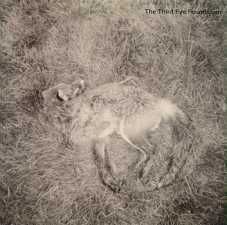
Linda's Strange Vacation, 1996; reissued by Domino; out of print

6 tracks, 48:26
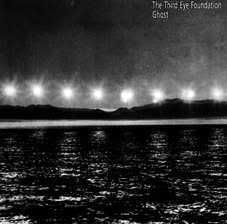


Domino/Merge, 1997; out of print, but included in its entirety on disc one of COLLECTED WORKS

7 tracks, 47:39

Bristol has produced a lot of intriguing music, from the Pop Group to trip-hop to the space rock of AMP and Flying Saucer Attack. But Matt Elliott, who collaborated with those last two, probably produced the most interesting and idiosyncratic of all Bristol music. These two early releases are performed by Elliott as Third Eye Foundation. He is assisted on both by his then-girlfriend, Debbie Parsons. She later went on to perform as Foehn; indeed, one track on GHOST is credited to Foehn, though Elliott probably participated in its creation. Now, on to the records!

SEMTEX accomplishes on opening track "Sleep" what Kevin Shields had been promising for a while: drum 'n'bass/shoegazer fusion. It's an odd mix, but it works, with the blistering beats cushioning the piercing feedback-drenched guitar. The really amazing thing is how full this sounds despite being recorded on a four-track! A guitar, a Roland Workstation, some effects, Parsons' vocals, and the four-track are the only things used on these tracks, yet it sounds rich and fully produced. "Still-Life" finds Parsons' beautifully ethereal vocals accompanying another blissfully distorted guitar. The beats are slowed here, and are a cross between tribal pounding and fractured breaks. "Dreams On His Fingers" is even more ethereal, with Parsons' lovely vocals buried under layers of fuzz and crackle and gentle cymbal-heavy percussion. "Next Of Kin" is back to harsher territory, with Parsons evoking the sirens of myth while Elliott creates waves of tension. The beats here come across as tribal-influenced drum 'n' bass. The surprising "Once When I Was An Indian" is unlike any other track on SEMTEX. It is a slowly evolving slice of dark ambience that features extremely spare percussion, ringing tones that could be synth or guitar based (it's VERY hard to tell), and Parsons chanting wordless vocals. Think the Cocteau Twins gone dub and you're somewhere close to the mark. It is one of the finest examples of dark ambient/isolationism ever recorded. "Rain" ends the album with gentle cascading sounds evoking its title, fading in a fog of shimmery electronic raindrops and distortion. While it is very rare, SEMTEX is an essential album, transcending post-rock's promise to a whole new level of studio-based perfection. It also hasn't dated one bit, remaining an oddly timeless album.

An equally rare album followed SEMTEX. Entitled IN VERSION, it consisted of Elliott's remixes of AMP, Flying Saucer Attack, Hood, and Crescent. This will be reviewed once I acquire it (which, since I have yet to find it for under $50, may be a while).
(UPDATE AUGUST 2010:I finally got a great copy of IN VERSION for under $15! Review coming soon!)

Following IN VERSION, Elliott plunged further into electronics with GHOST. The guitar noise remains, but it doesn't play as central a role as it did on SEMTEX. It shares equal time (and is indeed overshadowed at times) with a sampler, and Elliott has upgraded to an eight-track. Surprisingly, GHOST has a much dirtier sound than SEMTEX, but it works in its favor. Featuring songs with titles like "Corpses As Bedmates", "Ghosts...", and "Donald Crowhurst" (whose tragic story makes for interesting reading), you can tell you're in for a much more somber listen than SEMTEX. Foehn's track, "The Star's Gone Out", is the only diversion into pure noise assault, but it's a stunning and evocative piece. It is also one of only two beatless tracks, "Donald Crowhurst" being the second. Elsewhere, "Corpses As Bedmates" features shrieking noises which sound like some Lovecraftian horror stalking its prey; these are supported by beats that remain relatively slow, then break down into fast jungle mayhem. "The Out Sound From Way In" has fractured breakbeats and a strange whistling sound, while "I've Seen The Light And It Is Dark" is centered around some kind of ceremonial trumpet (I'm guessing). Sounds reminiscent of METAL MACHINE MUSIC*, Asian vocals singing in mournful despair (both in "What To Do But Cry?"**), sonar-esque keyboard ambience ("Donald Crowhurst"), distorted glass-breaking sounds mixed with mournful strings ("Ghosts..."); these and other unusual sounds find their way into Elliott's mix, and all combine to make another stunning Third Eye Foundation album. While this is out of print, it's included on COLLECTED WORKS. That set also contains several rare singles (unfortunately with edits) and 3EF's next two albums, YOU GUYS KILL ME and LITTLE LOST SOUL. While this latter pair does move closer to normal drum 'n' bass territory, the twisted experimental innovations are still in full force. There was also a second 3EF remix compilation, with the slightly ridiculous title I POO POO ON YOUR JUJU. That features Elliott's takes on everything from experimental composer Yann Tiersen to bizarro comedian Chris Morris. Elliott's solo work is also highly recommneded, but the most recent material is VERY far removed from his 3EF days.

*While many sources say it's a direct sample from MMM, Matt himself informed me it isn't.

**Interestingly, in an e-mail from ages ago Matt told me he had no idea what the vocalist was saying, and he used the sample based solely on its mournful tone. Later he found out one of the phrases she sings is "what to do but cry?"!

EDIT: For more Third Eye Foundation and Matt Elliott, please visit the following links:
http://www.myspace.com/mattelliotandthethirdeye
http://www.myspace.com/thethirdeyefoundation
http://www.thirdeyefoundation.com (the guestbook has an early fan post by yours truly!)

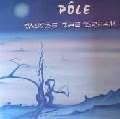
Pôle, KOTRILL and INSIDE THE DREAM


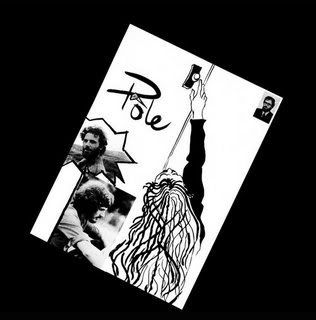
Pôle, 1975; out of print

3 tracks, 41:15


Pôle, 1975; out of print

3 tracks, 44:06

Out of the many obscurities to be found in the Nurse With Wound list, Pôle is one of the most obscure-yet-legendary. A label as well as a musical project, Pôle was established by Paul Putti in mid-70s France. The records were originally sold door to door, which is quite puzzling considering how experimental the sounds within typically were. Pôle's other signings included Mahogany Brain, Pataphonie, and other avant-garde and free improv acts. Howver, Pôle the group was perhaps the most bizarre of all the label's acts. "Group" isn't really the right word; Pôle was more of a loose collective than anything else. KOTRILL, for example, is credited to Pôle, yet Putti and Thierry Aubrun perform two tracks, while the remaining track is solely performed by Daniel Bodon! Bodon's "Osiris" is also very much the shortest track here, being a brief three and a half minutes. It's also the most accessible track, which is saying a lot, since it consists mostly of high-pitched rising-and-falling sine tones and deep bass gongs, with an occasional buzzing sound alternating between stereo channels. "Kotrill" itself is an incredible piece of avant-garde excess. Its seventeen minutes begins with the sound of tapes being wound backwards and eerie synths, evolving into a wondrous mess of musique concrete textures and backward vocals. It continues evolving and decomposing, ending on a highly percussive note surprisingly reminiscent of the end of Can's "Aumgn". This track alone explains what Nurse With Wound liked about Pôle; one could even say some of NWW's work sounds an awful lot like this piece. With "Kotrill" as the opening salvo and "Osiris" the transition, that leaves the twenty-plus minutes of "Villin-Gen" on side two. It's a very nice extended ambient piece that slowly mutates over its vast length from pure drone to more erratic expressions, while a vague rhythm is barely heard in the background. This makes for a completely engaging listen before the final beats of the rhythm fade out. This provides a nice French take on krautrock, and it even manages to blow quite a few contemporary experimentalists away!

Pôle's second album, INSIDE THE DREAM, finds Putti with a new group of collaborators and a slightly altered sound. Putti, guitarist Marc Azad, bassist Eric Dervieu, and vocalist Christian Rouch perform on the title track, which occupies all of side one. After the intensity of KOTRILL, "Inside The Dream" is surprisingly sedate. A gentle acoustic guitar is accompanied by a burbling synth-ish guitar (it really does sound more like an electronic instrument than an electric guitar) and subtle bass, with Rouch's gentle vocals evoking a pastoral image. As the song progresses, the acoustic strums remain, but more dissonant guitar starts to float above it. Towards the end, the acoustics disappear, and the freakish guitar soloing explodes, accompanied by simplistic but driving drumming. This track points forward at much later psych-folk, and even sounds a bit like Flying Saucer Attack. "Outside The Nightmare" opens side two, and is a complete departure from side one. Performed solely by Jean-Louis Rizet, "Outside The Nightmare" is fifteen minutes of analog synth space rock. The synths used are ARPs, renowned for their unique sounds, and it's anyone's guess as to how many are at work here. It sounds like stars slowly dying, which is not a bad thing at all. Also drawing comparisons to a darker take on Klaus Schulze, this track provides a nice counterpoint to "Inside The Dream"'s fairly organic sound. The album closes with "In The Maelstrom", performed by Putti, Rizet, and Pierre Chavigny. All three take up ARPs for this track, and its four and a half minutes provide a perfect end to the album. A bouncing bass pulse anchors the song, with classic retro synth stabs providing color. The whole album is another work of absolute genius.

Pôle only recorded these two albums, and the label was also sadly short-lived. All of the label's releases come highly recommended; a few have been reissued on CD, but sadly KOTRILL and INSIDE THE DREAM have yet to receive this treatment. Fans of Faust, Can, Rev. Dwight Frizzell, Nurse With Wound, et al should find these at all costs.

Wednesday, April 9, 2008

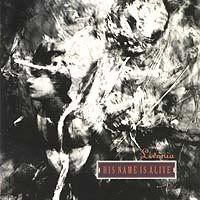
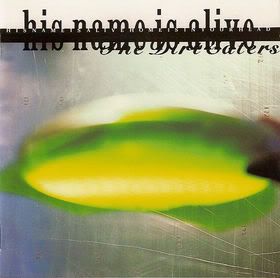
His Name Is Alive, LIVONIA and HOME IS IN YOUR HEAD


4AD, 1990; reissued by Rykodisc with bonus track "Livonia"; Rykodisc version out of print, 4AD version available as an import minus the bonus track "Livonia"

12 tracks, 35:28 (Rykodisc version 13 tracks, 39:59)


4AD, 1991; reissued by Rykodisc with additional tracks from THE DIRT EATERS EP; Rykodisc version out of print, 4AD version available as an import that includes the bonus tracks

23 tracks, 48:19 (Rykodisc and reissue versions 28 tracks, 66:28)

His Name Is Alive were always an odd prospect. Originally based in HNIA mainman (and sole constant) Warn Defever's parents' basement, the band created an incredibly atmospheric and dense sound using lo-fi methods. The music they produced has varied over the years, but on these two early releases they are in full experimental mode. LIVONIA mostly consists of demo recordings (similar to the Pixies' COME ON PILGRIM and Red House Painters' DOWN COLORFUL HILL, among other 4AD releases) remixed slightly by 4AD head Ivo Watts-Russell. The tracks veer from the chilling yet gorgeous "As We Could Ever" to the avant-rock of "Fossil" to "Reincarnation"'s bizarre sound collage and "Darkest Dreams"' dark yet comforting atmosphere. Vocalists Angie Carozzo and Karin Oliver never fail to impress, being sultry one minute, wispy the next. Defever provides appropriately varied instrumentation, mostly layering shimmering guitars and deep bass throbs. Damian Lang provides percussion on a scant three songs, Jymn Auge contributes guitar to "Fossil", and the enigmatic Tracy provides bassoon on one track. Otherwise, it's all Defever's show, which makes the results that much more impressive. Try to find the Rykodisc version; the gorgeous bonus track "Livonia" is essentially a sound collage, but it's the perfect coda to an amazing debut, and is worth the hunt.

HOME IS IN YOUR HEAD is a slightly different prospect. Carozzo is gone, but Karin Oliver remains (she also is credited with songs and guitar), along with guest vocalists Denise James and Karen Neal (on the EP tracks). The lineup is also more traditional, featuring Defever, Melissa Elliott, Damian Lang, and Jymn Auge. Oddly enough, despite the expanded lineup, the sound is starker, usually revolving around an ambient acoustic guitar. Several of the tracks are short, and a multitude are instrumental. The breathtaking "Sitting Still Moving Still Staring Outlooking" is probably the best known track, thanks to its use in JERRY MAGUIRE of all things. There is also the sing-songy "Are We Still Married?", the droning "Home Is In Your Head", short-but-sweet sound collage "Put Your Finger In Your Eye", and the eerie "Chances Are We Are Mad". All the songs run into each other, providing a seamless and fascinating listen. The overall mood is still strange, but this album definitely has a lighter tone than LIVONIA. The Rykodisc issue and the 4AD reissue both contain the excellent DIRT EATERS EP, named after Melissa Elliott's main band. The EP features five tracks: a strange but amazing cover of Rainbow's "Man On The Silver Mountain", Ivo Watts-Russell's stark and gothic remix of "Are We Still Married?" (the Brothers Quay made an amazing video for this), the distorted "Is This The Way The Tigers Do?", the folky "We Hold The Land In Great Esteem", and the gentle "The Dirt Eaters". This is the edition of HOME to get, as not a single one of these five tracks is filler.

As great as later HNIA recordings are (particularly the slightly more accessible MOUTH BY MOUTH and STARS ON ESP), LIVONIA and HOME IS IN YOUR HEAD are the essentials to understanding Defever's strange world. From there, you should progress through the catalog; there's not a bad album to be found, but the urban soul efforts SOMEDAY MY BLUES WILL COVER THE EARTH and LAST NIGHT do take some getting used to. Even the latest albums (DETROLA, XMMER, SWEET EARTH FLOWER, and FIREFLY DRAGONFLY) are worthwhile, showcasing the amazing and alluring vocals of new singer Andy FM.

Friday, April 4, 2008

R.I.P. Klaus Dinger

03/24/1946-03/20/2008

Everyone who has ever used the term "motorik" owes it to ya, buddy. Rest in peace. You won't be forgotten.

Thursday, March 6, 2008

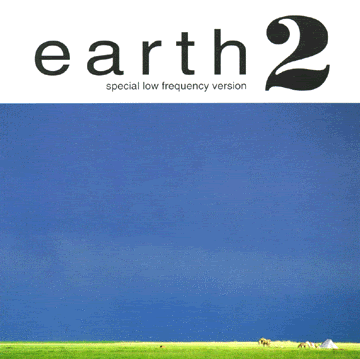
Earth, EARTH 2


Sub Pop, 1993; available

3 tracks, 73:03

Stranger things have happened, but the sudden popularity of drone doom is still pretty odd. Seeing such bands as SunnO))) and Om being revered is nothing short of amazing, especially since the once-cult level genre is now leaking over to the hipsters. With that in mind, the recent resurgence of Earth isn't much of a surprise. SunnO))) essentially took the Earth formula of heavy drone minimalism, made it heavier, and based a career around it (and more power to them, I'm a fan!). Now that the roster of SunnO)))-owned Southern Lord records includes the revered Earth, drone doom can only get bigger. This massive disc is pretty much where it started. Earth's debut EXTRA-CAPSULAR EXTRACTION hinted at the potential for heavy minimalism, but it sounded closer to heavy grunge/Sabbath worship than pure drone. On EARTH 2, main man Dylan Carlson applied the teachings of minimalists such as Terry Riley and La Monte Young to the electric guitar and bass, creating a new genre of ambient doom metal. EARTH 2 begins with "Seven Angels", the shortest track at a comparitively miniscule fifteen minutes. "Seven Angels" actually features a discernible riff, backed by amplifier feedback and extreme distortion. Dave Harwell's bass is essentially just there to provide as heavy a backing as possible, with Carlson evoking Iommi playing at a fifth of the speed. It makes for a ever-so-slightly accessible plunge into the album. This track segues into the crushing middle track, the twenty-seven minute "Teeth Of Lions Rule The Divine". Sounding like the apocalypse, but strangely relaxing at the same time, "Teeth..." is drone upon drone, approximating the sound of a black hole. While not as heavy as SunnO))) (who named a side project after this song), it clearly was the most extreme experimentation going on in early 90s America, and its pure power and dedication to the amp is still intoxicating. Last up is the thirty-minute dirge-fest of "Like Gold And Faceted". Carlson's love of the minimalists is in full force here, for upon first listen this sounds like the same note of feedback (layered feedback at that!) held for half an hour, with the occasional percussion added by Joe Burns. A closer listen reveals there ARE changes, on a microtonal level. The end result is an impeccable combination of minimalism's micro-changes and the sheer power of a Sunn amp and a guitar. Granted, compared to the subsonic terror of today's drone doom legion, EARTH 2 sounds quaint. As a bold experiment in sound, though, it has few peers. Earth's following album PHASE 3: THRONES AND DOMINIONS has a slightly treblier tone, and it's a nice companion piece. PENTASTAR: IN THE STYLE OF DEMONS is a bland attempt at fitting the grunge mold, but it still has several good moments. The other Earth albums veer from long live jams to country-influenced post-rock heavy minimalism; all of this is well worth investigating. However, should you choose to only own the essential Earth, this is it.

Monday, March 3, 2008

Various artists, HOLLERIN'


Rounder, 1983; available

24 tracks, 59:21

For years I've known of this album. I had MANY misconceptions about it. For one, I was under the impression it is just a live recording of the National Hollerin' Contest (it actually seems to be field recordings a la Alan Lomax). I also assumed it was going to be an awful recording only good for a laugh. In my defense, one of the tracks IS credited to "Dan McLamb & His Three-Legged Dog Percy". The truth is that this is an extraordinarily interesting and poignant document of an unknown American folk tradition. Hollerin' (that's the actual spelling) has its origins in the pre-mass communication days and was centered in Spivey's Corner, NC. Most people today feel they can't live without a cell phone; the farmers who created hollerin' didn't even have home phones or walkie-talkies. The style orginated as a way of communication and bonding, since hollerin' can be very loud and heard for miles. It can be divided into four basic subcategories: Distress hollers, used to announce death, accidents, emergencies, etc.; functional hollers, such as animal calls; communicative hollers, the hollerin' equivalent of "hiya, neighbor!"; and expressive hollers, which can be original or traditional songs in holler style and other purely fun hollers. Most of the tracks, especially those by Leonard Emanuel and O.B. and Dewey Jackson, share a lot in common with other unusual vocal styles such as throat singing and sacred harp. If you can picture throat singing done with high pitches rather than low pitches, you have a solid idea of what this is like. The functional hollers are as unique as each artist; no two truly sound alike. Along with animal calls, there is an example of a holler used to "mock a fox". The original expressive hollers obviously had care put into their creation, including Leonard Emanuel's touching-but-snarky "I Wish I Was Single Again". The traditional expressive hollers include "Shortnin' Bread", "What A Friend We Have In Jesus", and even versions of "Santa Claus Is Coming To Town" and "Happy Birthday To You"! Both Emanuel and H. H. Oliver present distress hollers; it's easy to see why these would draw attention. The communicative hollers have some of the most lilting passages, and the spirit of camaraderie literally pours out of the performers. For being recorded in 1975 and 1976, the sound quality is impeccable, lacking the defects which sometimes tarnish older field recordings. There are ten different performers, each with a hollerin' style all their own. Names like O.B. Jackson and Dewey Jackson (yes, they are related) are probably unknown even to serious folk scholars, but they shouldn't be. While many listeners seriously just won't be able to get into this, students of folk music and even outsider music fans need this album. It truly is one of the most amazing documents of American folk I have ever heard and it deserves to be more widely known.

Friday, February 22, 2008

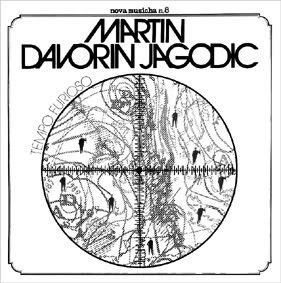
Martin Davorin Jagodic, TEMPO FURIOSO & Costin Miereanu, LUNA CINESE


Cramps, 1975; reissued by a Japanese label; available but pricey

2 tracks, 42:03


Cramps, 1975; reissued by a Japanese label; available but pricey

2 tracks, 41:11

The Italian Cramps label was known for producing excellent albums, usually in the prog or modern composition genres. This pair of records falls into the latter category. Both consist of two long tracks (one per side), and both must have required hours of construction, but that's where the similarities end. Jagodic's work is more harsh and noisy. The two sides are indeed furious, piling sound upon sound, only to have some of the sounds drop off and be replaced. Sine waves and drones make up the background, with multiple vocals overtop. It's infinitely more listenable than it sounds, and it's a truly amazing work. Some of the ideas on here wouldn't turn up again for more than a decade. Miereanu's pieces are different, but each has its merits. Side A sounds like a science fiction broadcast given the musique concrete treatment. Female vocals make announcements about moon bases and the like over an atmospheric background. Side B is closer to minimalism, with what sounds like organ or synth tones moving at a glacial pace. It's a nice comedown after the chaotic first side. Both of these LPs come highly recommended, but the Japanese reissues are VERY expensive.

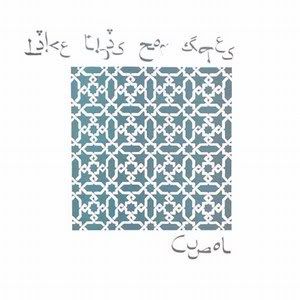
Cupol, LIKE THIS FOR AGES/KLUBA CUPOL


4AD, 1980; original single out of print, but both tracks are available on the Gilbert/Lewis compilation 8 TIME

2 tracks, 24:53

Cupol was a one-off side project by Wire's Bruce Gilbert and Graham Lewis. The two artists would later collaborate under the names B.Gilbert/G. Lewis (or Gilbert and Lewis, or any variation thereof) and Dome, but Cupol is possibly the finest example of their synth work. The A-side, "Like This For Ages", is a concise four and a half minutes of crunchy synth sounds, pained vocals, and eerie atmospheres. It sounds a lot like Throbbing Gristle attempting a dance hit minus the irony of "United", or Clock DVA combining the early and later stages of their career. I wonder if this was a club hit back in the day; it certainly could fit in well with other post-punk of the time. The B-side, "Kluba Cupol", is a completely different prospect. Beginning with sine tones, "Kluba Cupol" extends over a massive twenty and a half minutes. It's essentially an extended instrumental take on "Like This For Ages", but it's extremely different and more experimental. What sounded oddly danceable on the A-side becomes bleak and cold, putting this more in line with Current 93, Sleep Chamber, and other purveyors of ritual industrial and dark ambient. "Kluba Cupol" can even be considered the first example of isolationist music. It's odd to have one side of a record be five times as long as the other, but Cupol makes it work. As stated above, this EP is now out of print, but the Gilbert & Lewis compilation 8 TIME contains both tracks in their entirety, and is well recommended for that fact alone. The other material on 8 TIME is good, but it doesn't come close to the atmospheric dread of Cupol.

Sunday, February 17, 2008

AMM, AMMMUSIC 1966


Note: This album is variously listed as either AMMMUSIC 1966 or AMMUSIC 1966; even the liners vary in spelling!

1967, Elektra; reissued by ReR; available

8 tracks, 74:26

AMM doesn't need a lot of introduction. One of the longest lived free improvisation ensembles, they have been producing boundary-pushing music for over forty years. AMMMUSIC 1966 is the debut recording by the group, and the classic lineup is in place. That lineup would be Cornelius Cardew, Lou Gare, Eddie Prevost, Keith Rowe, and Lawrence Sheaff. Cardew was already an established modern composer, and Prevost has been the only constant through the years; Rowe was a constant for an extended period but has since parted ways with AMM. The instruments listed are varied, including everything from cello and accordion to transistor radios (Cardew, Rowe, and Sheaff are all credited with the latter). The CD is indexed somewhat confusingly; there are indeed eight tracks, but technically there are only five pieces of music. Tracks one and two are both part of "Later During A Flaming Riviera Sunset", and tracks five and six both comprise "After Rapidly Circling The Plaza", while track eight is ten seconds of silence. The indexing makes sense, though; the original LP featured edited versions of "Later" and "After", and the CD allows you to listen only to the original LP's material. "Later" begins the album with a bang. Twenty-eight minutes of hardcore improv are spread over the two tracks, never comfortably sounding like any one genre. "After" is slightly over twenty-four minutes in length and similarly presents a grand look at AMM's strengths in an extended format. The other three tracks are shorter but no less intense; the nearly six minute "Ailantius Glandulosa" actually contains some of the more jarring moments on the whole album. "In The Realm Of Nothing Whatever" is a mellower piece that's just under fourteen minutes, and "What Is There In Uselessness To Cause You Distress?" is a concise three minutes. Sheer explorations of sound on each track leave the origin of individual sounds to speculation. The violin, cello, and guitar are particularly warped, so that none are easily identified. The radios provide frequent mysterious soundbites, some in English and some not. Prevost's furious percussion is about the only element that leaves no speculation. Not really rock, and not truly jazz or classical either, AMMMUSIC 1966 is still a marvelous souvenir of free improv's early days. The thick booklet alone is nearly worth the purchase. It contains the original LP notes (more like mysterious questions and declarations) and a long essay by Prevost, who recounts how audiences back then didn't know what to make of the group. It's doubtful a lot of modern audiences can get into this, but in an age where Wolf Eyes and SunnO))) are hipster icons, AMM deserves reevaluation. It's not much of a stretch to say that the first wave industrial bands (Throbbing Gristle, Clock DVA, Nurse With Wound, etc.) and the noise musicians owe a huge debt to this album. Absolutely essential!

Friday, February 15, 2008

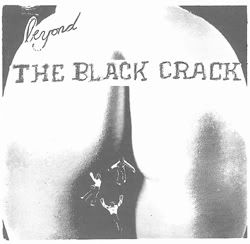
Anal Magic & Rev. Dwight Frizzell, BEYOND THE BLACK CRACK


Cavern Custom, 1976; reissued by Paradigm; apparently available
14 tracks, 69:07

I'll get this out of the way: The title, cover, and some of the song titles on this album are VERY hard to get past. Thankfully, it isn't a juvenile series of dirty jokes, but rather a serious and amazing avant-garde treasure. Rev. Dwight Frizzell (yes, the title is official) is the mainstay on every track. I'm assuming Anal Magic was more a collective name for his projects than an actual group, since the bands listed are actually Black Crack and the Sole Survivors and Fredrik's Cosmic Spaced Out Blues Band and Orchestra. There's also a collection of five tracks collectively known as "Turtle Music", as well as a couple bonus tracks from a later Frizzell composition called "The Wandering Madness Of Basilea, The Great Mother". Most of this album seems to have been recorded live, but only the Cosmic Blues Band tracks have any audience sounds. "Black Crack and the Sole Survivors" is a massive thirteen minute slice of weirdness. Rattling percussion, random vocalisations, and strange sounds are the order of the day. The liner notes say it was recorded live on three seperate dates, and the results seem to be an audio collage of these performances. "Black Crack" is an absolute gem of experimental music. If you passed this off as a track by Faust or Nurse With Wound, nobody would question it. In fact, this track alone explains why Anal Magic was on the infamous NWW list. The following three tracks are by the Cosmic Blues Band, and were recorded live at a church chili supper. The songs have goofy titles like "Hot Fudge" and "Get It Out Of Your System", but the music itself is a heavenly slice of post-Sun Ra strangeness, punctuated by Frizzell's experimental use of an oscillator and other electronics. It's a delightful mix. The "Turtle Music" tracks were mostly recorded live on "the midget pyramid in McCoy Park, Independence, Missouri". They are mostly percussion and wind instrument jams, accompanied on "Pre-Transformation Of Turtle To Bird" by the sounds of children playing. One of the kids is heard asking Frizzell "What are you doing this for?"; his response is simply "I'm making a recording!". Throughout these tracks, various sounds from the park are heard, lending an unearthly atmosphere. The final track, "O What Joy It Is To Know You Have A Turtle Heart", is a splendid saxophone drone, recalling Terry Riley's sax playing. The bonus material begins with the aforementioned "Basilea" tracks. These are heavily electronic works, concluding with Harry Truman's speech on the atomic bomb accompanied by the sounds of a geiger counter and tape-modified voices. The final bonus track is a "1997 remix" of unused Black Crack material. While just over two minutes in length, this track (amusingly titled "How To Avoid Simultaneity") is a great capper to a unique album. The combinations of diverse avant-garde styles may be a little inaccessible, but repeated listens make this a surprisingly solid album, comparable to other outsiders of the period such as Zweistein. The bonus tracks meld seamlessly with the original LP material, and the sheer sense of adventure carried throughout is refreshingly unique. HIGHLY recommended, but good luck finding it; the 1998 repress was a limited edition of 1000, and the original LP was limited to a scant 200 copies.

Postscript: For a two-minute snippet of "Black Crack and the Sole Survivors", other reviews (not all positive), and a brief history, please check out the following link: http://www.stalk.net/paradigm/pd06.html

UPDATE! Paradigm has reissued this! Get it before it goes out of print again!